
Most tub-to-shower conversions run between $2,500 and $10,000, with a national average around $5,500. The single biggest factor that pushes a project toward the high end is not the tile you pick — it is whether your plumbing and drain need to move. Material choices matter, but a drain relocation through a concrete slab can add $1,500–$2,000 or more on its own.
Here is a quick snapshot to help you triage your budget:
- Budget tier: prefab acrylic or fiberglass kit, same drain location, framed glass door; most conversions in this category begin at $2,500 total.
- Mid-range tier: custom tile, updated fixtures, minor plumbing adjustments, semi-frameless door
- Premium tier: natural stone, full layout change, drain relocation, frameless glass, heated floor
Table of Contents
- What does a tub-to-shower conversion actually cost on average?
- How material choices drive your shower remodel cost
- Where your labor dollars actually go
- Hidden costs that catch homeowners off guard
- How long does a tub-to-shower conversion take?
- Is it cheaper to replace the tub or convert it to a shower?
- Does Medicare or insurance cover accessibility conversions?
- Why waterproofing is the one place you cannot cut corners
- How to choose the right contractor for your conversion
- Key Takeaways
- What homeowners consistently get wrong about this project
- Ready to get a real estimate for your Bucks County bathroom?
- Useful sources and further reading
What does a tub-to-shower conversion actually cost on average?
National cost data indicates a typical range from lower-mid level to upper-mid level for standard installations, with premium custom work climbing past that. An average cost estimate reflects a mid-range tile shower with modest plumbing work and a semi-frameless door. — a realistic target for most homeowners who want something durable and attractive without going custom.
Where your project lands depends on three things: the materials you choose, whether any plumbing moves, and what surprises appear once the old tub comes out.
| Project Bucket | Typical Total Range | Typical Timeline | Best Use Case |
|---|---|---|---|
| Budget / Basic | $2,500–$3,500 | 1–3 days | Rental property, quick refresh, same footprint |
| Mid-Range | $3,500–$7,500 | 4–7 days | Primary bath upgrade, tile finish, updated fixtures |
| Premium / Custom | $7,500–$10,000 | 1–3 weeks | Master bath, natural stone, full layout change |
Regional pricing shifts these numbers. Labor rates in the Philadelphia metro area and Bucks County tend to run higher than rural markets, so a mid-range project priced at $5,500 nationally might quote closer to $6,500–$7,500 locally. Always get at least two written bids from licensed contractors in your specific market.
How material choices drive your shower remodel cost
The material path you choose sets the floor and ceiling on your entire budget. Prefab versus tile is the primary fork in the road, and the cost difference between them is substantial.
Prefab acrylic and fiberglass kits are the most budget-friendly option. The unit itself costs $400–$1,000, and installation typically wraps in a single day. These systems are factory-sealed, so waterproofing is built in — no membrane, no curing time. The trade-off is aesthetics and longevity. Acrylic can scratch and yellow over time, and the look reads as entry-level to most buyers.
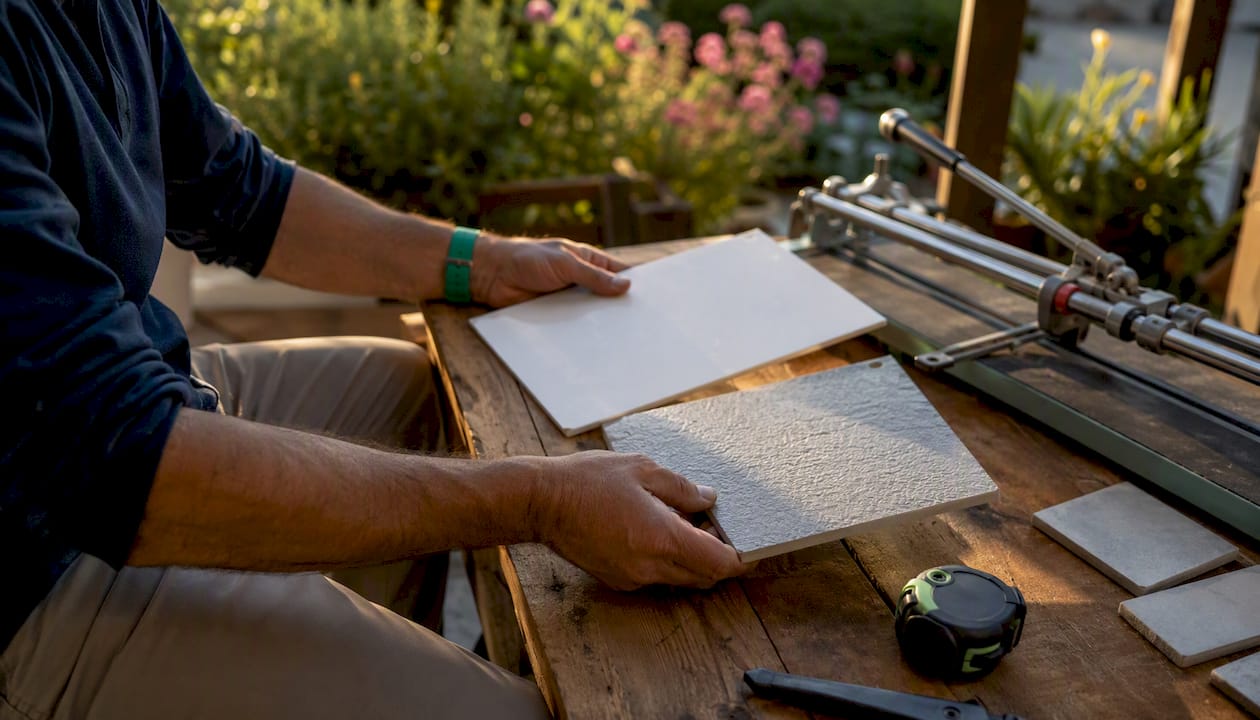
Solid-surface panels (brands like Swanstone or similar acrylic composites) sit between prefab and tile. Material costs run $1,500–$3,500, and they install faster than tile while offering a cleaner, more finished look. Grout-free surfaces also mean less maintenance.
Ceramic and porcelain tile is the most popular mid-range choice. Materials for a standard 36" x 36" to 36" x 48" shower run $2,500–$8,000 depending on tile selection, and labor adds significantly on top. The upside: tile is durable, timeless, and adds real resale value. The downside: grout needs sealing and eventual re-grouting.
Natural stone (marble, travertine, slate) is the premium tier. Stone requires sealing, careful installation, and a skilled setter. Expect material costs alone to push past $4,000–$8,000 for a full surround, with labor to match.
Glass enclosure options add another layer of cost:
- Framed sliding door: $400–$800 installed
- Semi-frameless door: $700–$1,500 installed
- Fully frameless door: $1,200–$2,500 installed
- Custom large frameless systems: $3,000–$4,500
Pro Tip: If resale value is your goal, a well-tiled shower with a semi-frameless door consistently outperforms a prefab kit in buyer perception — and the cost difference is often recoverable in the sale price.
The renovation principle that guides material selection is simple: prefab surrounds are far cheaper and quicker, while custom tile demands longer timelines and higher labor costs. Decide which side of that trade-off fits your situation before you call a single contractor.
Where your labor dollars actually go
Labor is a significant portion of the total project cost on a tub-to-shower conversion. Understanding the line items helps you evaluate quotes and spot gaps.
- Demolition and disposal: removing the old tub, surround, and any damaged backer board. Expect $300–$600, more if the tub is cast iron or if disposal fees are high locally.
- Plumber rough-in and valve work: relocating or replacing the shower valve, supply lines, and rough-in connections. Typically $400–$900 for a straightforward swap.
- Drain relocation: the single most variable labor item. A minor shift runs $500–$800; moving the drain across the room or cutting through a concrete slab can reach $1,500–$2,000 or more.
- Waterproofing membrane installation: applying and curing the membrane before any tile goes down. Ranges $200–$500 depending on method and square footage.
- Tile setting and grouting: $8–$25 per square foot for labor, depending on tile size, pattern complexity, and local rates.
- Glass door installation: $150–$400 for labor on top of the door unit cost.
- Electrical and ventilation: upgrading a bathroom exhaust fan or adding a GFCI outlet typically runs $150–$400.
- Permit and inspection: $50–$1,000 depending on your municipality and the scope of plumbing or structural work involved.
| Labor Item | Typical Low | Typical High |
|---|---|---|
| Demo and disposal | $300 | $600 |
| Plumber rough-in | $400 | $900 |
| Drain relocation | $500 | $2,000+ |
| Waterproofing membrane | $200 | $500 |
| Tile labor | $8/sq ft | $25/sq ft |
| Glass door install | $150 | $400 |
| Electrical / vent | $150 | $400 |
| Permit / inspection | $50 | $1,000 |
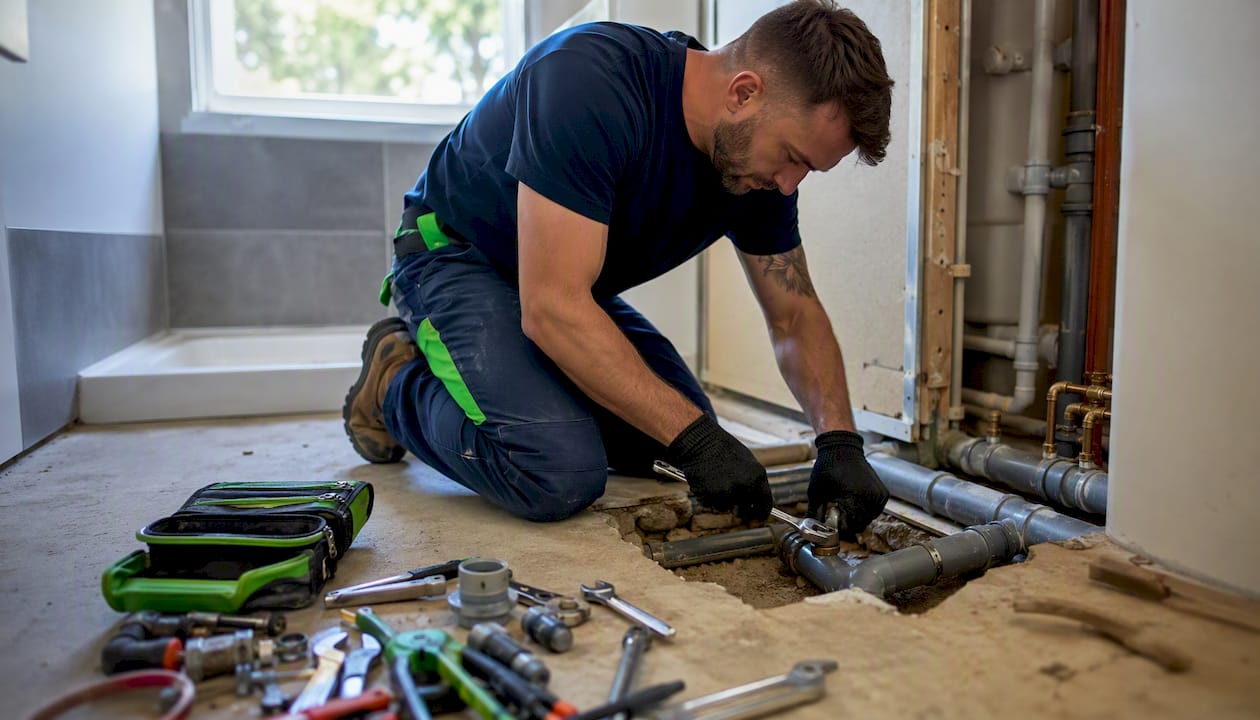
Drain relocation deserves special attention. A standard tub drain sits at the end of the alcove, which works for some shower layouts. But centering the drain — or moving it to accommodate a linear drain or a new floor slope — requires additional framing, new joist drilling, or concrete work. Costs escalate rapidly once a slab is involved. If your quote does not specify the drain location plan, ask before you sign anything.
Hidden costs that catch homeowners off guard
Hidden costs often arise after tub removal, such as subfloor repair or replacement, mold remediation, window reframing if required, backer board replacement, potential expensive drain under-slab rerouting, and potential permit back-charges for required rework.
Waterproofing shortcuts are worth calling out specifically. A contractor who skips a proper membrane to save a day and a few hundred dollars is setting you up for a shower leak through the ceiling two years later — a repair that costs far more than the membrane would have. Proper waterproofing is not optional on a tile shower; it is the difference between a 20-year installation and a 5-year problem.
Pro Tip: Add a contingency line around 10–15% of the project quote to cover unforeseen repairs and surprises. A contractor who builds this into the estimate upfront is being honest with you — not padding the bill.
How long does a tub-to-shower conversion take?
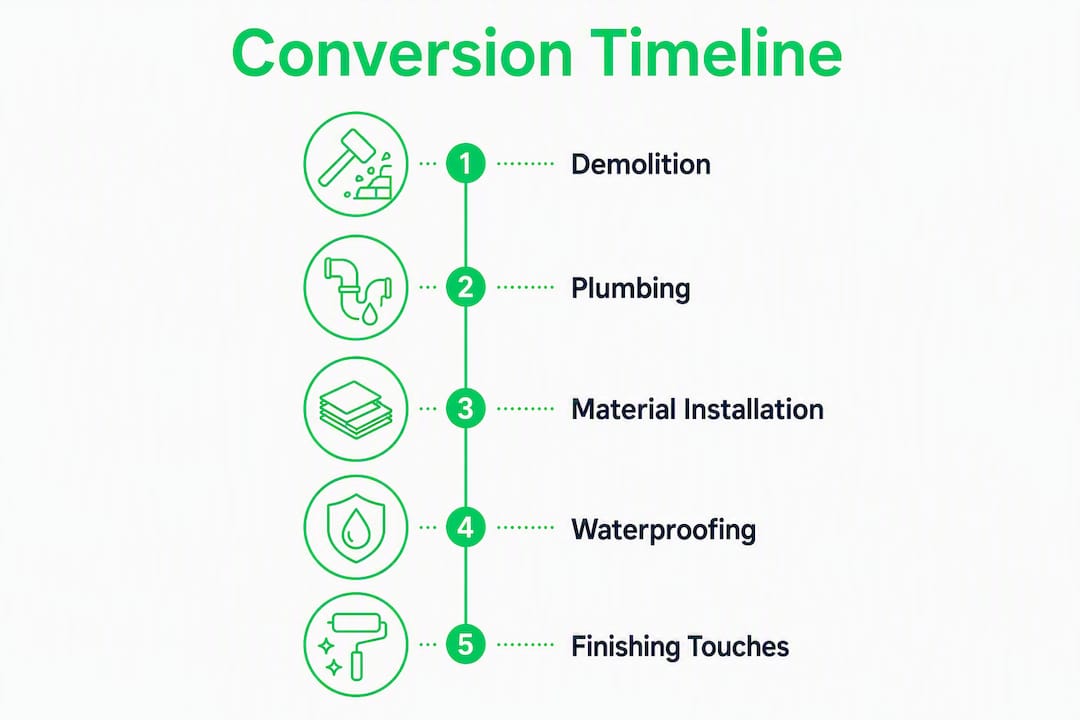
Project timeline depends on material choice and plumbing complexity, ranging from a few days for prefab installs to up to two weeks for custom tile or natural stone with full curing and fabrication times.
Permit and inspection timing adds to the calendar in many jurisdictions. Some municipalities turn permits around in 2–3 days; others take 2–3 weeks. Glass panels for frameless enclosures are typically custom-fabricated and can take 1–2 weeks to arrive after measurement. Specialty tile ordered from a distributor adds similar lead time.
The factors that most commonly extend a project beyond the original estimate: hidden subfloor damage discovered during demo, plumbing reroutes that require a second plumber visit, and tile or glass that arrives damaged and needs reordering. A realistic schedule for a mid-range tile shower, from demo to final inspection, is 7–10 calendar days when you account for cure times and inspections.
Is it cheaper to replace the tub or convert it to a shower?
The short answer: converting to a shower in the same footprint is almost always less expensive than replacing a tub with a new tub of the same quality. But the right choice depends on your household’s needs and your home’s resale profile.
| Option | Typical Cost Range | Resale Impact | Best For |
|---|---|---|---|
| Tub-to-shower conversion (same footprint) | $2,500–$10,000 | Positive in master bath; neutral in secondary bath | Adults-only households, accessibility needs |
| Replace tub with new tub (same location) | $2,500–$3,500 | Neutral to positive | Families with young children, buyer-appeal preservation |
| Full layout change (new shower, new location) | $10,000–$18,000 | Positive if done well | Master bath remodel, accessibility renovation |
A few considerations worth noting:
- Keeping the same drain location saves $500–$2,000 in plumbing costs regardless of which direction you go.
- Real estate agents consistently advise keeping at least one full bathtub in a home if you have children or plan to sell within 5 years — buyers with young families often filter out tub-free homes.
- Accessibility conversions (walk-in shower, zero-threshold entry, grab bars) add cost upfront but can be partially offset by grants or home-equity financing.
On DIY versus professional: a prefab kit swap is within reach for a skilled DIYer who is comfortable with basic plumbing connections. But pulling permits, moving drains, and installing waterproof membranes correctly requires licensed trades in most jurisdictions. A DIY tile shower that fails waterproofing inspection — or never gets inspected — becomes a liability when you sell. The permit and professional installation cost is real protection.
Does Medicare or insurance cover accessibility conversions?
Standard Medicare Parts A and B generally do not cover home remodeling, including tub-to-shower conversions, even when the modification is medically necessary. Some Medicare Advantage plans include limited home-modification benefits, but coverage is plan-specific and typically requires physician documentation of medical necessity.
Other funding routes worth exploring:
- VA grants: the Specially Adapted Housing (SAH) grant and the Home Improvements and Structural Alterations (HISA) grant both cover accessibility modifications for eligible veterans.
- State and local programs: many states administer home-modification assistance programs through Area Agencies on Aging or community development block grants. Eligibility and amounts vary widely.
- Medicaid waiver programs: some state Medicaid waivers cover home modifications for qualifying individuals with disabilities.
- Home equity line of credit (HELOC): a common financing route for homeowners with sufficient equity, typically at lower interest rates than personal loans.
- Personal loans: available through banks, credit unions, and online lenders; useful when equity is limited.
- Contractor financing: many remodeling contractors offer payment plans or partner with financing companies; read the terms carefully before signing.
For medically necessary modifications, the documentation path matters. A physician’s letter specifying the functional need (e.g., fall risk, mobility limitation) strengthens any application for grant funding or Medicare Advantage reimbursement. For accessible bathroom design guidance, a certified aging-in-place specialist (CAPS) can help you specify modifications that meet both functional and funding requirements.
Why waterproofing is the one place you cannot cut corners
Waterproofing is where tile shower installations succeed or fail. A prefab acrylic or fiberglass unit is inherently waterproof — the factory-sealed shell handles moisture containment by design. A tile shower is only as waterproof as the membrane beneath it, and that membrane is only as good as the installer who applied it.
Poor membrane installation is the leading cause of post-job moisture damage in tile showers. A correctly installed continuous membrane — whether sheet-applied or liquid-applied — must cover the floor pan, extend up the walls a minimum of 6 inches above the curb or threshold, and wrap all corners and penetrations without gaps or thin spots. Skipping this step, or using an undersized membrane, leads to water infiltrating the wall cavity, rotting the framing, and eventually causing structural damage that costs far more to repair than the original waterproofing would have.
Industry best-practice waterproofing methods for tile showers:
- Continuous sheet membrane (e.g., Schluter Kerdi, Laticrete Hydro Ban Sheet): bonded directly to the substrate before tile; highly reliable when seams are properly lapped and sealed.
- Liquid-applied membrane (e.g., Laticrete Hydro Ban, RedGard): brushed or rolled on in multiple coats; effective when applied at the correct thickness and allowed to cure fully between coats.
- Mud bed with waterproof liner: traditional method using a sloped mortar bed and a PVC or CPE liner; durable but requires skilled installation to slope correctly to the drain.
A checklist to verify waterproofing in any contractor quote:
- Membrane brand and product name specified in writing (not just “waterproofing membrane”)
- Installer’s experience with that specific membrane system
- Cure time scheduled before tile installation begins
- Flood test or inspection step included before tile goes down
- Warranty on the waterproofing installation (separate from the tile warranty)
If a quote says “waterproofing included” without specifying the product or method, ask for clarification in writing. Vague language on this line item is a red flag.
How to choose the right contractor for your conversion
Getting the right contractor matters as much as getting the right materials. A low bid from an unlicensed crew can cost you twice what a fair bid from a licensed contractor would have — once for the original work, and once to fix it.
Essential questions to ask every contractor:
- Are you licensed and insured in Pennsylvania (or your state), and can you provide proof of both?
- Will you pull the required permits, and is permit cost included in the quote?
- Who performs the plumbing work — your own licensed plumber or a subcontractor?
- What waterproofing system do you use, and can you specify the brand and product in the contract?
- What is your timeline, and what are the scheduled inspection points?
- Can you provide references from similar bathroom conversion projects in the past 12 months?
- What does your warranty cover, and for how long?
- How do you handle unexpected costs like subfloor damage or mold?
- Is there a contingency line in the estimate, and how is it reconciled at project end?
- What is your payment schedule — and do you require more than 30–50% upfront?
Red flags to watch for:
- A bid significantly lower than all others with no clear explanation
- Cash-only payment requests
- No written scope of work or contract
- Pressure to start immediately without a permit
- Reluctance to provide license number or insurance certificate
A fair, complete quote should include line items for: demolition and disposal, plumbing rough-in, waterproofing materials and labor, backer board, tile materials and labor, grout and sealer, glass enclosure (unit plus installation), permit fees, and a contingency line. If any of these are missing, ask why before you sign.
Key Takeaways
A tub-to-shower conversion costs between $2,500 and $10,000 for most homeowners, with material choices and drain relocation as the two biggest budget levers — and a 10–15% contingency is the single most important number to build in before you approve any quote.
| Point | Details |
|---|---|
| Expected cost range | Most conversions fall between $2,500 and $10,000; the national average is around $5,500. |
| Biggest budget lever | Drain relocation through a slab adds $1,500–$2,000 or more; keep the drain in place when possible. |
| Contingency planning | Budget 10–15% above the quoted price to cover subfloor damage, mold, or other hidden issues. |
| Waterproofing verification | Always get the membrane brand and product specified in writing before signing any tile-shower contract. |
| Jaghomesnow for local projects | JAG Home Enhancements handles tub-to-shower conversions in Bucks County and nearby areas with written scopes, licensed trades, and transparent estimates. |
What homeowners consistently get wrong about this project
Most homeowners focus almost entirely on the finish — the tile pattern, the showerhead, the glass door style. Those choices matter for aesthetics, but they are rarely what determines whether a conversion goes smoothly or turns into a months-long headache.
The real risk in a tub-to-shower project is what you cannot see before demolition starts. Rotted subfloor, mold in the wall cavity, a drain that cannot stay where it is — these are the surprises that blow budgets and extend timelines. The homeowners who come out of this project satisfied are the ones who planned for contingencies, asked hard questions about waterproofing before signing, and chose a contractor based on references and written scope rather than the lowest number on the page.
There is also a tendency to underestimate how much the drain location matters. Many homeowners assume the drain can go anywhere, and that the contractor will figure it out. In reality, moving a drain even a foot or two in the wrong direction can mean cutting through a concrete slab — a job that adds real cost and real time. Ask about drain placement on the first call, not after demo starts.
At JAG Home Enhancements, we see these patterns regularly. The projects that go smoothly are the ones where the homeowner came in with realistic expectations, a contingency budget, and a clear scope of work agreed upon in writing. That is the standard we hold ourselves to on every job.
Ready to get a real estimate for your Bucks County bathroom?
JAG Home Enhancements brings licensed, experienced trades to tub-to-shower conversions across Bucks County, Montgomery County, and nearby communities. Every project starts with a detailed written estimate that breaks down materials, labor, waterproofing, and permits by line item — no vague “labor included” language, no surprises after demo day.
We work with homeowners at every budget level, from a clean prefab swap to a full custom tile build with frameless glass. Our team handles permits, coordinates licensed plumbers, and schedules inspections so you do not have to manage the moving parts yourself. If hidden damage appears during demo, we document it, explain the options, and get your approval before any additional work begins.
To request a written estimate for your bathroom remodeling project in Bucks County, reach out to JAG Home Enhancements today. We will walk through your space, discuss your goals, and give you a clear number you can actually plan around.
Useful sources and further reading
- Bathtub to Shower Conversion Cost Calculator — CostToRenovate: interactive calculator with national average data, drain relocation costs, and glass door pricing.
- Bathtub to Shower Conversion: Cost, Tips and More — Fixr: project overview with cost averages and material comparisons.
- Shower Leak Through Ceiling: Fix It Before It Gets Worse — JM Plumbing: practical guidance on waterproofing failures and what happens when membrane installation is skipped or done poorly.
- Bathroom Remodeling in Bucks County — JAG Home Enhancements: local service page covering bathroom renovation options, accessibility upgrades, and project examples in the Bucks County area.