

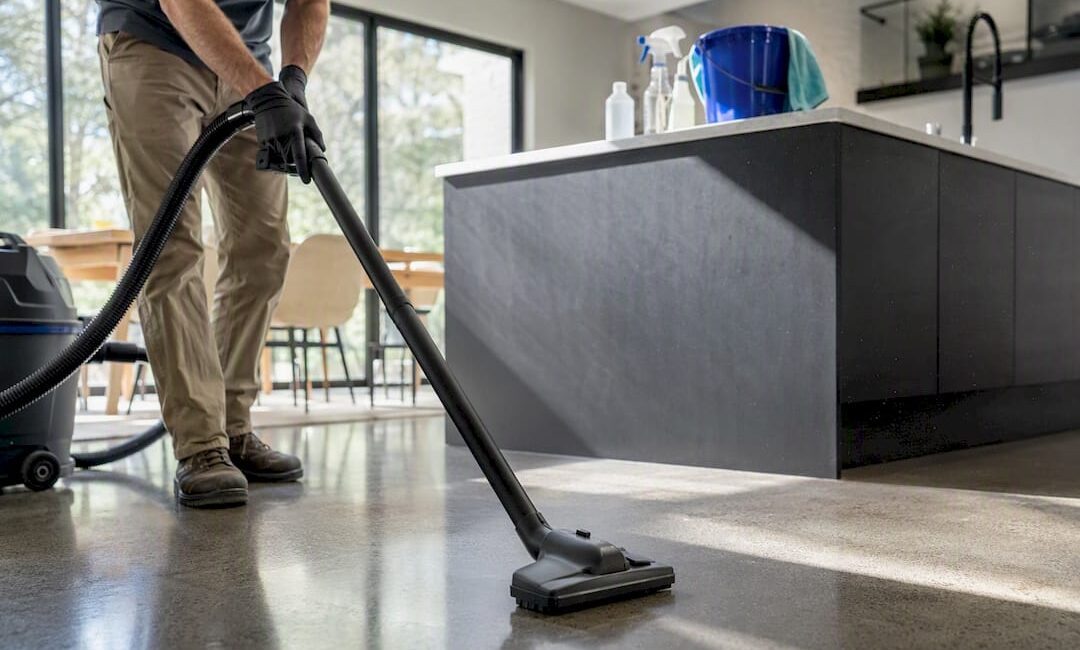
Most remodel contracts include a basic broom clean that clears out debris, tools, and equipment when the crew leaves. That is not the same as occupancy-ready cleanliness, and homeowners who assume otherwise are often surprised. The fix is simple: confirm exactly what “final clean” means in your contract, and put the remedy in writing before you sign anything.
TL;DR:
- Confirm in writing whether your contract covers only broom clean or includes a thorough final clean with detailed scope and acceptance criteria.
- Specify the contractor’s responsibility for disposal of waste and hazardous materials, including requiring disposal receipts for lead or asbestos removal.
- Insist on a clear, signed checklist for final cleaning, tied to payment release, and document deficiencies with photos and a punch list during the final walkthrough.
- Request that contractor cleanup include HEPA-grade dust removal if drywall sanding, tile cutting, or refinishing were performed indoors.
- Include a self-help clause allowing removal of unresolved cleaning deficiencies by a third-party contractor, with cost deduction from final payment.
Table of Contents
- What Does “Post Remodel Cleaning” Actually Include?
- How Do You Put Cleanup Terms Into the Contract?
- What Should You Inspect During the Final Walkthrough?
- When Do You Need a Specialist Deep Clean?
- Who Handles Disposal and Hazardous Waste?
- How JAG Home Enhancements Handles Post-Remodel Cleanup
- A Contractor’s Honest Take on Cleanup Disputes
- Sources
What Does “Post Remodel Cleaning” Actually Include?
Two very different jobs get lumped under the same term, and the confusion causes most disputes at project’s end.
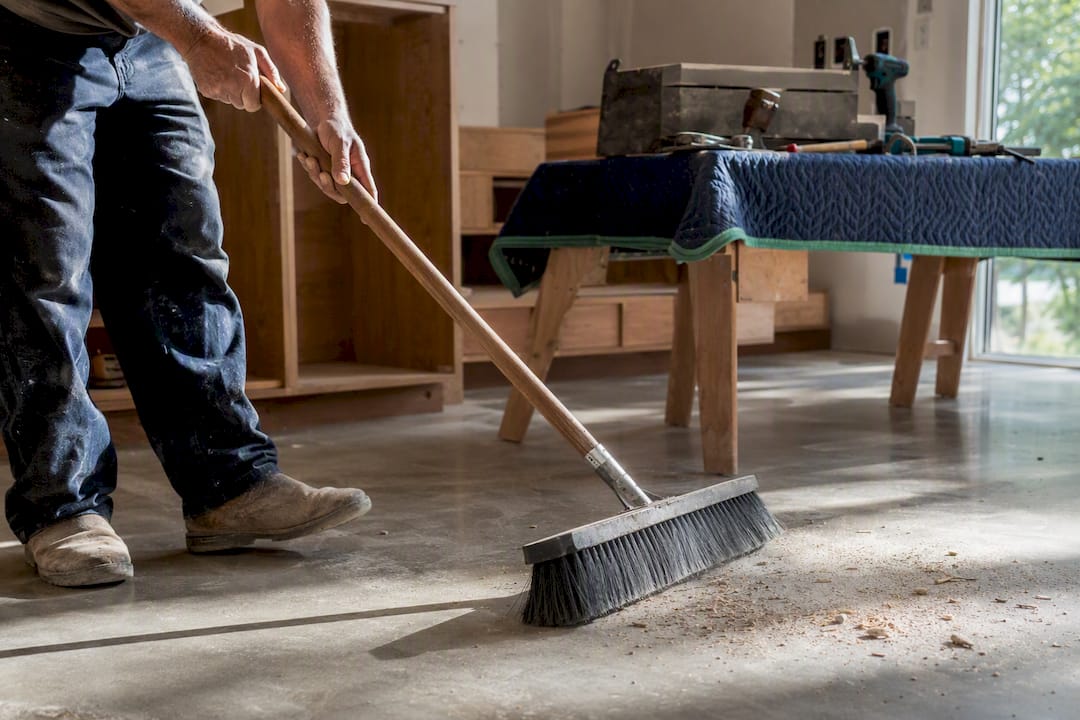
A broom clean (sometimes called a rough clean) is the industry baseline. It covers sweeping floors, hauling away scrap material, removing tools and equipment, and clearing large debris so the space is safe to walk through. Most residential contracts include this as a standard provision, but it was never designed to leave your home spotless. Think of it as clearing a construction site, not preparing a living room.
A final clean (also called final detail) is a separate, more thorough phase. According to construction cleanup standards, this stage restores the space from “post-construction condition” to owner-ready, addressing things a broom never touches:
- Fine dust on flat surfaces, sills, and light fixtures
- Adhesive residue, drywall dust film, and mortar haze on tile or glass
- Interior cabinet and drawer wipe-downs
- Window tracks, hardware, and vent covers
What final clean typically excludes: HEPA-grade particulate extraction, laundering soft goods like curtains or rugs, and HVAC duct cleaning. Contractors often subcontract this detailed work to a cleaning crew and price it as a line item rather than folding it into labor costs. Ask which one your contract covers before assuming both are included.
How Do You Put Cleanup Terms Into the Contract?
Verbal promises about cleanup evaporate the moment there is a dispute. A solid home improvement contract spells out scope, timing, money, and remedy, four things that should never be left to memory. BBB guidance on home improvement contracts puts it plainly: get everything in writing, because a detailed contract is what prevents disagreements later.
Here is what to request in writing:
- Scope language distinguishing broom clean from final detail, with each task listed
- Timing tied to substantial completion and again after punch-list repairs are finished
- A cleaning line item in the price breakdown, not a vague inclusion buried in “general labor”
- Disposal responsibility stated explicitly as the contractor’s duty
- A payment holdback (often 5 to 10 percent) released only after final clean is accepted
Ask your contractor for a sample final-clean scope or the name of the subcontractor who performs it. Attach a cleaning checklist as a signed exhibit to the contract. This turns a vague expectation into a document both sides can point to at handoff.
Pro Tip: Ask your contractor to add a self-help clause: if the final clean does not meet the documented checklist within a set number of days, you can hire a third party and deduct that cost from the final payment. It costs nothing to ask for, and it gives you real leverage instead of an argument.
Photograph problem areas, keep a dated punch list, and tie final payment release to specific, written acceptance criteria rather than “when the contractor says it’s done.”
What Should You Inspect During the Final Walkthrough?
A rushed walkthrough is how dust and residue get missed until move-in day, when it is much harder to get anyone back on-site. Work room by room and slow down.
- Floors and baseboards. Check corners and along walls where dust settles and brooms miss.
- Cabinets and drawers. Open every one. Fine drywall dust collects inside even when the exterior looks clean.
- Windows and sills. Look for haze, tape residue, and dust in the track.
- Fixtures and hardware. Wipe a finger across faucets, handles, and light fixtures.
- Vents and registers. Remove covers if possible; dust here signals it circulated through your HVAC system.
- Behind and under appliances. A common blind spot for construction debris.
Once you spot deficiencies: photograph each one with a timestamp, compile a dated punch list, hand it to the contractor in writing, and hold back the agreed cleaning-related funds until items are resolved. Ask that your contract include acceptance language like “final payment is due upon written homeowner sign-off that final clean meets the attached checklist,” not just “upon completion.”
When Do You Need a Specialist Deep Clean?
Sanding drywall, cutting tile, and refinishing floors all generate fine, often respirable dust, and a portion of it is silica particulate that settles into places a broom clean simply cannot reach. Angi’s reporting on post-construction cleanup notes that remodeling creates enough of this fine dust that contractor cleanup frequently falls short of the air quality most homeowners expect at move-in.
Signs you should require HEPA vacuuming or a second-pass touch-up clean:
- Any drywall sanding, demolition, or hardwood refinishing occurred indoors
- Ductwork or registers were open to the work area during construction
- Household members have respiratory sensitivities or young children
Many homeowners schedule a specialist deep clean even after the contractor’s final clean is complete, because HEPA-grade extraction addresses particulate a standard vacuum recirculates. If you want this covered, name it as a line item, identify who performs it, and define acceptance criteria in the contract rather than assuming it is bundled into “cleanup.”
Who Handles Disposal and Hazardous Waste?
Removing debris and disposing of it lawfully is standard contractor responsibility, and it should never fall back on you by default. Sample cleanup and waste management contract language commonly requires contractors to keep a neat job site and complete both progress and final cleaning operations before payment processes.
Where it gets more serious: older homes may contain lead paint, asbestos, or materials classified as regulated waste under RCRA. In those cases, you have the right to require licensed subcontractors for handling and removal.
- OSHA governs worker safety on-site during demolition and cleanup
- EPA/RCRA rules apply to lawful disposal of regulated waste and hazardous materials
- Ask for disposal receipts or manifests when hazardous materials are involved, and add this expectation directly into your contract
How JAG Home Enhancements Handles Post-Remodel Cleanup
At Jaghomesnow, we treat a clean job site as part of the craftsmanship, not an afterthought tacked on at the end. That means daily broom-clean maintenance throughout the project, a final-detail checklist attached to your contract as an exhibit, and photographic documentation before we hand the keys back to you. When a project calls for HEPA vacuuming or vent cleaning, we coordinate that specialist work and document completion against the same checklist you signed off on. If you’re comparing contractors, ask each one for exactly this level of written detail before you commit.
A Contractor’s Honest Take on Cleanup Disputes
Three things belong in every remodel contract, no exceptions: a written definition of broom clean versus final detail, a payment holdback tied to written acceptance, and a self-help clause letting you hire a third party if cleanup falls short. If you’re standing in a half-cleaned house after your contractor calls the job done, don’t argue in person. Document it with photos, send a dated punch list in writing, and withhold the agreed funds until it’s resolved. And if your remodel involved sanding or demolition, plan your specialist deep clean for after punch-list work wraps, not before. Homeowners planning a kitchen or bathroom remodel should raise these terms before signing, not after the drywall dust settles.
— Jeff
Sources
- Who Is Responsible for Cleanup After Construction? | Angi
- What to include in your home improvement contract | BBB
- New construction final clean: checklist and best practices | Construction Cleanup Authority
- Cleaning and waste management contract language (HBA preamble example)