
If cold air creeps in around your windows every winter, the fix usually starts with finding where the air is actually getting in. Most drafts come from cracked caulk, worn weatherstripping or gaps behind the trim, and all three can be sealed. Sometimes the window itself is the problem, and then repair or replacement is the lasting answer. This guide shows you how to tell the difference, what to do this weekend, and when to call a contractor.
TL;DR
- Test before you seal. A strip of paper, a lit incense stick or a damp hand will show you where the air moves.
- Caulk gaps around the frame and trim, then add weatherstripping where the sash meets the frame.
- Window film, rope caulk and insulated curtains are good stopgaps for the coldest weeks.
- A cold feeling near glass is not always a leak. Convection from cold glass can feel like a draft.
- Warped frames, rot or failed seals on older windows point toward professional repair or replacement.
Table of Contents
- Why windows feel drafty in winter
- How to find where the air is coming in
- Quick fixes you can do this weekend
- Condensation on the glass in winter
- Our perspective: fix the window, not just the symptom
- When caulk and weatherstripping are not enough
- Planning window work with JAG
- FAQ
- Sources
Why windows feel drafty in winter
Two different things make you feel cold near a window, and they need different fixes.
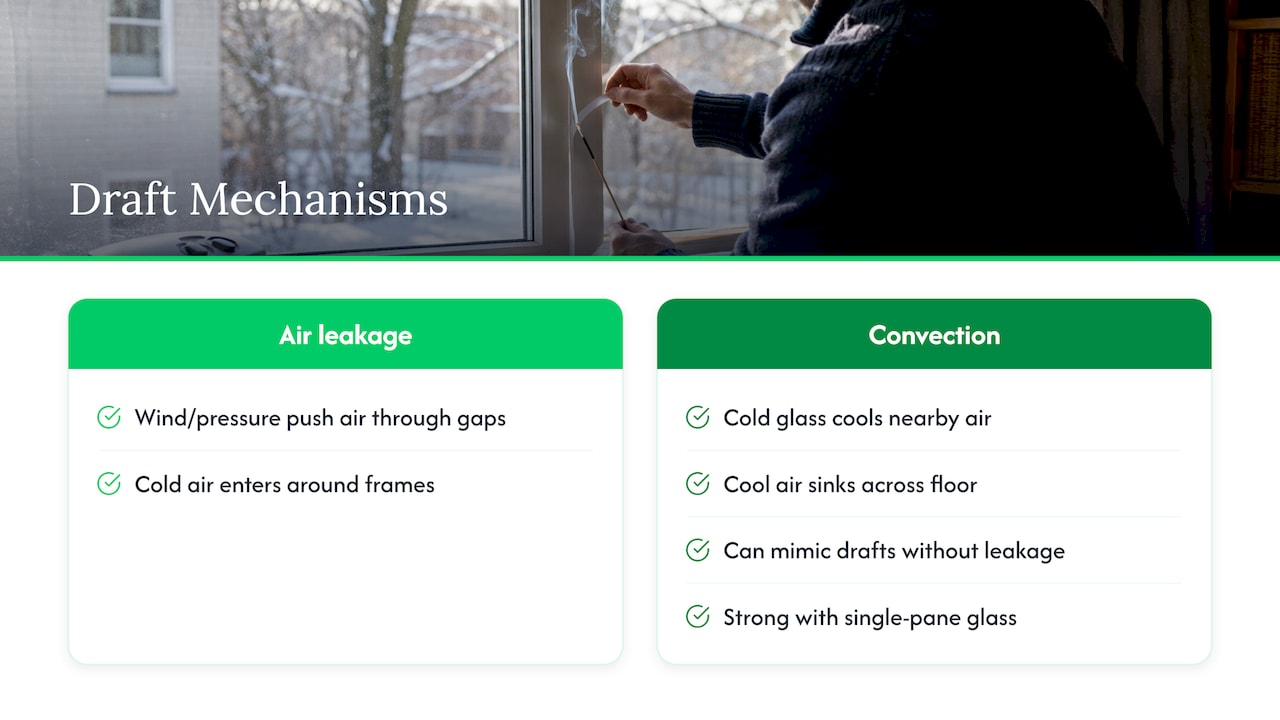
The first is real air leakage. Wind and pressure differences push air through cracks and gaps around window frames. Warm air rising inside your house also pulls cold air in at lower levels. Smarter House explains that this air movement is driven by wind and by differences in air pressure.
The second is convection. Cold glass cools the air next to it, that air sinks, and you feel a cool current slide down the window and across the floor. The NFRC consumer guide notes that these currents can mimic a draft even when no air is leaking. If your windows are single-pane or lack insulated glazing, this effect can be strong.
It also helps to know that windows are not always the culprit. The Center for Energy and Environment points out that windows are where people notice heat loss, but weak air sealing and insulation elsewhere can make windows seem leaky when they are not.
Why it matters beyond comfort
Air leaks cost money and can cause damage. The EPA’s air sealing fact sheet says air leakage accounts for 25 to 40 percent of the energy used for heating and cooling in a typical U.S. home. The Department of Energy’s Guide to Air Sealing adds that leaks strain your heating equipment and can let in moisture that warps wood and leads to mold.
In Bucks County, where January nights regularly drop well below freezing, a small gap gets tested hard. If you want a broader look at what winter does to a house, see our guide to how winter weather impacts your home’s exterior.
How to find where the air is coming in
Pick a cold, breezy day, close the windows and turn off any fans. Then try these simple tests, one window at a time.
- The paper test. ENERGY STAR suggests closing the window on a piece of paper. If the paper slides back and forth easily, the window could be tighter.
- The incense test. Hold a lit incense stick near the seams and the sash. If the smoke is pushed in one direction, you have found a leak. Keep it away from curtains.
- The wet hand test. Energy Trust of Oregon describes lightly dampening your hand and moving it slowly around the frame edges. Cold air will feel noticeably cooler on wet skin.
- A visual check. ENERGY STAR lists other signs of leaks: visible gaps around trim, dust or insects coming in, outdoor odors indoors and peeling paint around the frame.
Mark each leak with a small piece of painter’s tape so you can find it again when you are holding a caulk gun.
Where leaks usually hide
- The joint between the trim (casing) and the wall
- The gap between the frame and the rough opening behind the trim
- The meeting rail on a double-hung window, where the two sashes come together
- The sash edges, where old weatherstripping has compressed or cracked
- Cracked or dried-out caulk on the exterior, which Energy Trust says is a common cause
The This Old House team gives a useful sense of scale: a quarter-inch gap along the full width of a meeting rail adds up to the area of a sizable hole in your wall, according to their air sealing guide for windows. Small gaps matter.
When a pro audit makes sense
If several rooms feel cold and you cannot tell why, the cause may be larger than one window. The Department of Energy notes that a certified home energy auditor uses a blower door test and thermal imaging to locate leaks, and that BPI Building Analyst and RESNET HERS Rater are the two nationally recognized certifications (see the Guide to Air Sealing).
Quick fixes you can do this weekend
Once you know where the air is moving, match the fix to the gap. Wirecutter recommends sealing gaps around the frame (jamb and casing) with caulk first, then using weatherstripping around the window itself if needed. Their reporting says you can treat several rooms in an afternoon with less than $50 in supplies.
Caulk the frame and trim
Caulk is for gaps that do not move: the joints around trim and the frame. The Center for Energy and Environment suggests caulking wherever a gap is wide enough to fit a credit card or a fingernail. For larger gaps behind the trim, it recommends closed-cell spray foam.
The Department of Energy’s guide lists acrylic latex caulk and high-temperature silicone among the common choices. Run painter’s tape along both edges for clean lines, apply a steady bead and smooth it before the caulk skins over.
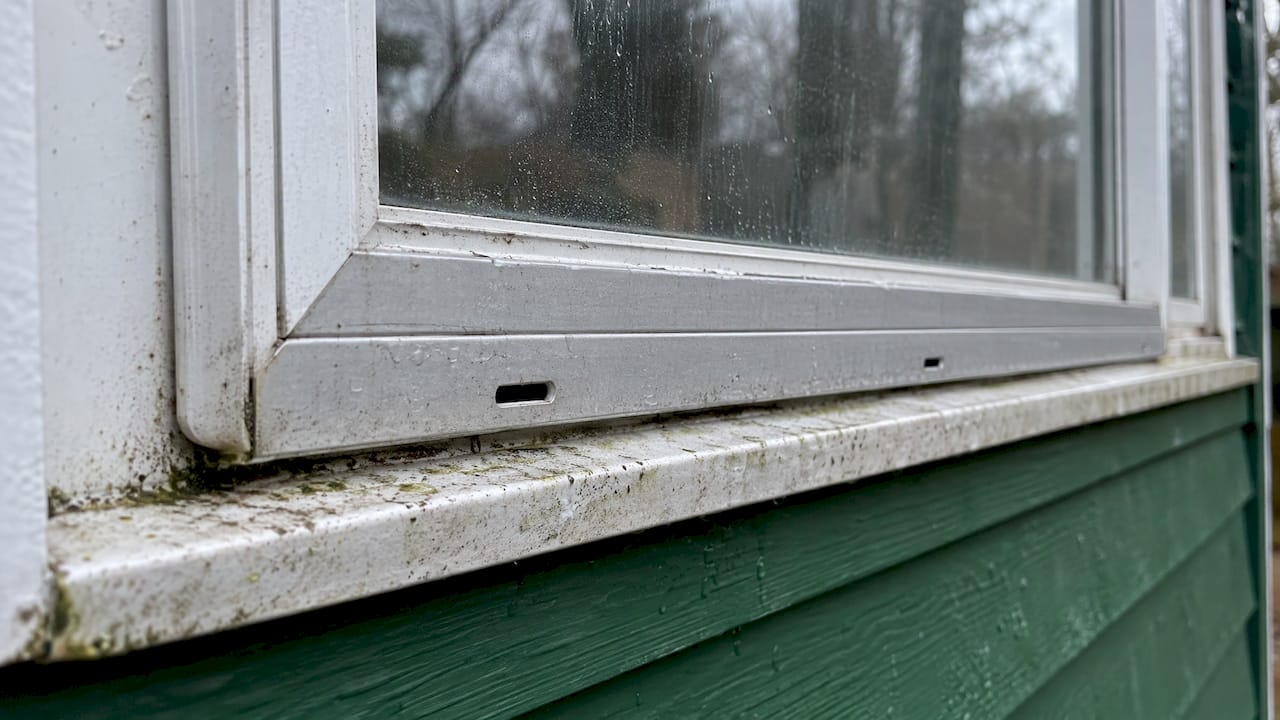
One caution from This Old House: never caulk across the bottom of a storm window. Weep holes along that edge let trapped rainwater drain, and sealing them can cause moisture problems.
Weatherstrip the moving parts
Weatherstripping is for parts that open and close. The Department of Energy’s guide lists tension seal, felt, reinforced foam, rubber tape, metal gaskets and bulb or fin seals. Smarter House puts weatherstripping at roughly $8 to $10 per window, and notes that it is more permanent than rope caulk and still lets the window open.
On double-hung windows, check the sash lock too. This Old House explains that clamshell-style locks can pull the two sashes together tightly and reduce the need for extra weatherstripping.
Stopgaps for the coldest weeks
If you need relief tonight, these options work without any construction:
- Rope caulk. Smarter House says it costs under $1 per window and takes minutes. It is reusable and best on windows you do not plan to open until spring.
- Interior window film. The Center for Energy and Environment recommends it, and the Minnesota Department of Commerce notes that shrink film on the interior is an easy, inexpensive way to air-seal windows that are hard to repair.
- Insulated curtains. They cut the cool current you feel from the glass and add a layer of comfort on a cold January morning.
Think of these as bridges. They buy you comfort while you decide whether the underlying window needs a longer-term fix.
What sealing can do for your house
The Department of Energy’s Building America air sealing guide says air sealing measures can typically reduce whole-house energy use by 10 to 20 percent, and more in older or especially leaky homes. It compares insulation to a wool sweater and air sealing to a windbreaker: you want both.
Condensation on the glass in winter
Foggy or wet windows are a separate issue from drafts, but they often show up together. The EPA explains that moisture condenses on window glass because the glass is cold, and that storm windows and caulking keep the interior glass warmer and reduce condensation.
The EPA’s moisture control guidance also recommends:
- Running exhaust fans in kitchens and bathrooms so moisture goes outside
- Venting the clothes dryer outdoors
- Turning off humidifiers or kerosene heaters if you see moisture on windows
- Adding insulation or storm windows to warm cold surfaces, with an inside storm window working better than an outside one
If the fog is trapped between two panes of glass, that is a different problem. Our four-step diagnostic checklist for condensation between panes walks you through it.
Our perspective: fix the window, not just the symptom
We walk through homes in Bucks and Montgomery County every winter where someone has taped plastic over the same window for years. It works for a season, and it tells us the window deserves a closer look.
Our approach is to find the cause first. Sometimes it is a bead of failed caulk and a tired weatherstrip, and a careful repair makes the window comfortable again. Sometimes the frame has moved, the trim has gaps nobody can see, or the glass is single-pane and sheds cold into the room all day. Each of those has a different answer, and we would rather tell you honestly which one you have.
When replacement is the right call, the details of installation matter as much as the window. A good window set poorly will still leak at the edges. We manage the whole project, from the first consultation through the final walkthrough, and we keep the job site clean and safe while we work.
New, energy-efficient windows are one of the most lasting ways to make a house quieter, warmer and more comfortable. They also add to the look and value of the home. If you are weighing options, we are glad to talk it through with you.
Jeff
When caulk and weatherstripping are not enough
Sealing handles most drafts, but some windows have aged past what a tube of caulk can solve. These signs suggest a professional should look at the window:
- Frames that are warped, soft or rotting, so the sash no longer closes squarely
- Sashes that rattle or will not lock firmly
- Repeated leaks in the same spot after you have resealed it
- Single-pane glass or no insulated glazing, where the cold-glass effect is strong
- Fogging between the panes, which suggests a failed seal
- Rising heating bills even after you have sealed the obvious gaps
The NFRC FAQ says that if windows are not efficient for your climate, particularly if they lack insulated glazing, the sensation may be cold room air sinking along the glass, and an energy-efficient replacement is the solution. It also notes that if a window is installed square, plumb and level and the leak is between frame and sash, the cause may be the window’s construction or design rather than installation.
Repair or replace?
There is no single rule, and the Minnesota Department of Commerce is clear that even aging windows can often be repaired and tightened, extending their life by many years. A reasonable way to decide:
| Situation | Likely path |
|---|---|
| Cracked caulk, worn weatherstripping, gaps behind trim | Reseal and weatherstrip |
| Sound frames, but a loose or sticking sash | Repair and adjust hardware |
| Warped or rotting frames, many windows failing | Replacement |
| Single-pane glass that stays cold all winter | Replacement with insulated glazing |
| Fog between panes | Glass or window replacement |
A contractor who looks at the actual windows can tell you which row you are in. That visit is also a good time to ask about installation details such as flashing and insulation around the frame.
Costs and incentives
The price of replacement depends on the window type, size, frame material and how many openings you are doing. We do not publish set prices because every house is different, so we quote after seeing your windows in person.
Incentives change over time, so check current details before you plan. Our guides on ENERGY STAR and KEEP loans for Pennsylvania windows and the energy efficient window tax credit explain what homeowners generally need to know.
Planning window work with JAG
If your windows are the weak point in your home’s comfort, we can help you sort out the cause and carry out the fix. JAG Home Enhancements provides replacement windows and entry door installations, along with trim work and repairs, for homeowners in Bucks County, Montgomery County and nearby areas.

See how we approach replacement windows in Bucks County or browse our exterior remodeling services. Winter is also a smart time to plan spring projects, and our winter exterior renovation planning guide explains why.
FAQ
How do you tell if your windows are drafty?
Close the window on a strip of paper and tug it. If it slides freely, the window could seal better. You can also move a lit incense stick or a damp hand around the frame and watch for smoke movement or a cold sensation. Do this on a windy day for the clearest results.
What is the best way to stop a draft around a window?
Match the material to the gap. Caulk the fixed joints around the frame and trim, and use weatherstripping where the sash meets the frame. For a fast winter fix, rope caulk or interior window film works on windows you will not open. If the frame is warped or the draft returns, have a contractor inspect it.
Why is it cold near my window even when it is sealed?
Cold glass chills the air touching it, and that air sinks and flows across the floor. This convection can feel like a draft without any air leaking. Insulated curtains help, and windows with insulated glazing reduce the effect over the long term.
How do I reduce condensation on windows in winter?
The EPA advises moving moisture outdoors with exhaust fans, venting the dryer outside and switching off humidifiers if windows are wet. Storm windows and caulking also warm the interior glass. If the fog sits between the panes, the seal has likely failed.
When should I replace a drafty window instead of repairing it?
Consider replacement when frames are warped or rotting, the sash will not close squarely, resealing has not held, or the glass is single-pane. A professional assessment can confirm whether a repair will last.
Sources
- Sealing Behind Window & Door Trim Project, ENERGY STAR
- Guide to Air Sealing, U.S. Department of Energy
- Find Out If Your Home Has Air Leaks, Energy Trust of Oregon
- Windows and Doors, Smarter House
- New air sealing fact sheet, U.S. EPA
- Fixing drafty windows, Center for Energy and Environment
- Frequently Asked Questions, NFRC Consumer Guide
- How to Fix Drafty Windows for Less Than $50, Wirecutter
- Practical Air Sealing Techniques for Windows, This Old House
- Building America Air Sealing Guide, U.S. Department of Energy
- What are the main ways to control moisture in your home, U.S. EPA
- Repairing and Maintaining Doors and Windows, Minnesota Department of Commerce