


There is no federal energy efficient window tax credit for installations completed in 2026. The Energy Efficient Home Improvement Credit under Section 25C of the tax code applied only to qualifying property placed in service between January 1, 2023 and December 31, 2025. If your windows went in during 2025, you can still claim the credit on your 2025 tax return filed in 2026. If installation finished in 2026, no federal window credit applies.
Here is what to do right now based on your situation:
- If your windows were installed and fully operational by December 31, 2025, gather your NFRC labels, itemized invoices, and manufacturer certification, then claim the credit on Form 5695 with your 2025 federal return.
- If your project finished in 2026, skip the federal credit search and redirect your budget toward state programs, utility rebates, and insurance incentives that remain active this year.
- Regardless of timing, prioritize U-factor and SHGC performance values when selecting windows. Energy savings and resale value outlast any one-time incentive.
Table of Contents
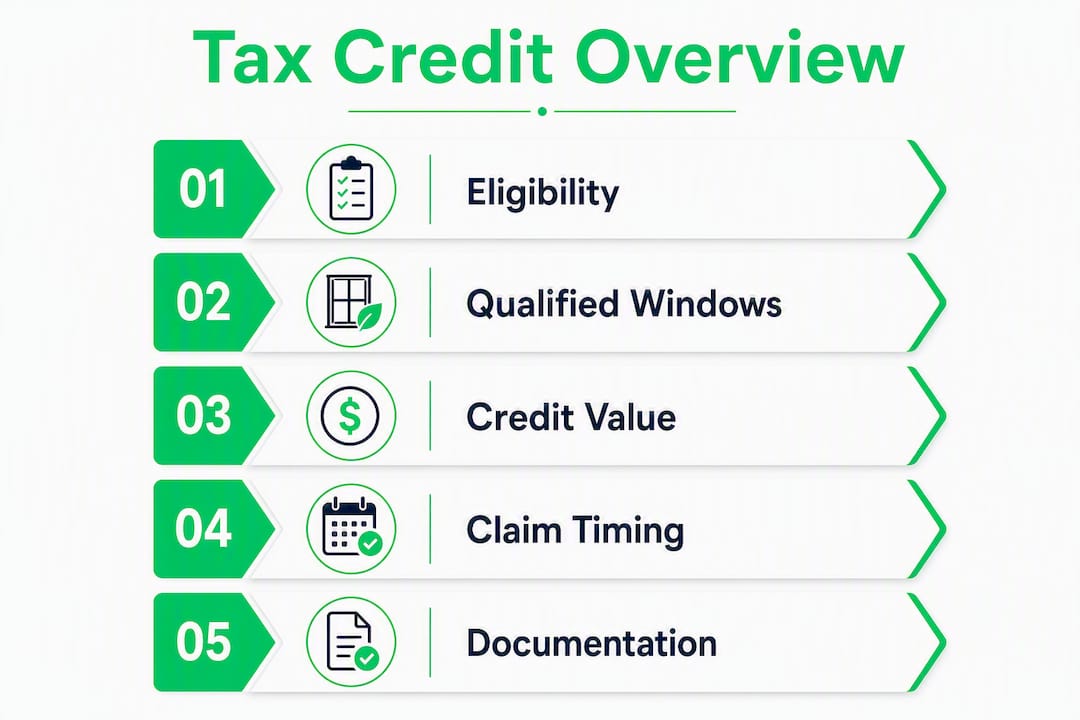
- Which windows qualified for the energy efficient window tax credit
- How much the credit was worth and how the caps worked
- Who could claim the credit and when the timing cut off
- What costs counted and which documents to keep
- How to claim the credit on your 2025 tax return
- Common mistakes that cost homeowners their credit
- Where to find energy saving window rebates and state incentives in 2026
- Key Takeaways
- Why professional installation protects your documentation
- Jaghomesnow handles window replacement and the paperwork that comes with it
- Authoritative sources for further research
Which windows qualified for the energy efficient window tax credit
Not every window with an ENERGY STAR label met the bar for Section 25C. The credit required ENERGY STAR Most Efficient certification, a higher performance tier than standard ENERGY STAR. That distinction matters because a window can carry the basic ENERGY STAR label and still fall short of the Most Efficient threshold.
The Most Efficient designation is climate-zone specific. A window that qualifies in the Northern zone may not meet the Solar Heat Gain Coefficient (SHGC) requirements in the Southern zone. Before assuming your product qualified, you needed to confirm the certification matched your home’s climate zone, not just the brand’s marketing materials.
| Criteria | What it means for eligibility |
|---|---|
| ENERGY STAR Most Efficient label | Required for windows and skylights under Section 25C |
| Climate-zone U-factor | Must meet zone-specific threshold on NFRC label |
| Climate-zone SHGC | Must meet zone-specific threshold on NFRC label |
| Manufacturer certification statement | Written confirmation from manufacturer that product meets IRS criteria |
| Decorative treatments (blinds, shutters, tinting) | Explicitly excluded by IRS — do not count toward the credit |
The International Energy Conservation Code (IECC) prescriptive path influenced eligibility for other building envelope components like insulation and air sealing, but for windows the ENERGY STAR Most Efficient route was the clearest path. Decorative treatments were explicitly excluded because they do not function as building envelope components under IECC criteria.
Your manufacturer certification statement is a written document from the window maker confirming the product meets IRS Section 25C requirements. It is separate from the NFRC label. Most manufacturers post these on their websites; you can also request one directly from your supplier or installer.
Pro Tip: Even with the federal credit gone for 2026 installs, chasing the right U-factor and SHGC for your climate zone still pays off. ENERGY STAR v7.0 performance windows deliver year-over-year energy savings that compound over time, and they support long-term home value in ways a one-time credit never could.
How much the credit was worth and how the caps worked
The Section 25C credit was worth 30% of the product cost for qualifying windows and skylights, capped at a certain aggregate limit per tax year. That cap sat within a broader annual cap that covered windows, doors, insulation, and certain other envelope improvements combined. Additional total credit amounts were possible only when you added heat pumps or heat pump water heaters, which carried their own separate sub-limit.
Here is how the math played out in practice:
- A homeowner spends an amount on qualifying window products (labor excluded). Thirty percent of that amount is calculated, but the credit is capped for windows, so the final credit is limited by that cap.
- A homeowner spends a lower amount on qualifying window products. Thirty percent of that spending is under the limit, so the credit matches 30% of the product cost.
- A homeowner spends an even smaller amount on qualifying window products. Thirty percent of that amount yields a credit below the cap.
| Improvement category | Credit rate | Annual cap |
|---|---|---|
| Exterior windows and skylights | 30% of product cost | $600 aggregate |
| Exterior doors | 30% of product cost | — |
| Insulation, air sealing, envelope | 30% of product cost | $1,200 combined with windows/doors |
| Heat pumps, heat pump water heaters | 30% of project cost | $2,000 separate sub-limit |
| Home energy audits | 30% of cost | — |
| Overall annual maximum | — | $3,200 (all categories combined) |
A few quick checks to see whether a contractor’s quoted “credit included” line item was realistic: confirm the product cost alone (not labor) was at least $2,000 to reach the $600 cap; verify the window carried ENERGY STAR Most Efficient certification; and check that your total envelope credits did not already consume the $1,200 combined limit before windows were counted.

Who could claim the credit and when the timing cut off
The primary residence rule was strict for windows. To claim the Section 25C credit for exterior windows and skylights, the home had to be located in the United States and owned and used by the taxpayer as their principal residence. Renters could not claim it. Second homes did not qualify for windows, though some other categories in the statute allowed broader property types.
The placed-in-service date is the installation completion date, not the contract signing date or the purchase date. This is the single most important timing rule. A window ordered in October 2025 but installed in January 2026 does not qualify for the credit. The IRS ties eligibility to when the property was fully installed and operational, and installer documentation is the evidence that establishes that date.
Landlords renting out properties could not claim the window credit even if they paid for the installation. The credit was designed for owner-occupants of principal residences, not investment or rental properties.
The timeline is simple: installation completed by December 31, 2025 means you claim on your 2025 return filed in 2026. Installation completed on January 1, 2026 or later means no federal window credit is available.
What costs counted and which documents to keep
Only product costs counted toward the credit. Per IRS rules, labor for installation of qualifying windows was generally not eligible. That means if your contractor’s invoice bundled product and labor together, you needed an itemized breakdown to isolate the qualifying product cost before calculating 30%.
Here is the documentation checklist every homeowner should retain:
- NFRC label or a copy showing U-factor, SHGC, and the product identifier for your climate zone
- ENERGY STAR Most Efficient certification confirmation for the specific product model
- Manufacturer certification statement confirming the product meets Section 25C requirements
- Itemized invoice separating product cost from labor, with the installation completion date clearly noted
- Proof of payment (bank statement, credit card record, or canceled check)
- Installer sign-off or final project completion document establishing the placed-in-service date
- Qualified Manufacturer Identification Number (QMID) for products manufactured in 2025, as required by the IRS for that tax year
One point that catches homeowners off guard: the Section 25C credit is non-refundable and cannot be carried forward to future tax years. If your 2025 federal tax liability was lower than the credit amount, the unused portion is simply lost. If you owed $300 in taxes and your credit was $600, you received $300 of benefit, not $600. Homeowners with low tax liability in 2025 should confirm the actual value of the credit with a tax professional before filing.
How to claim the credit on your 2025 tax return
If your qualifying windows were installed by December 31, 2025, here is how to file the credit correctly on your 2025 return:
- Complete Form 5695 (Residential Energy Credits). The Energy Efficient Home Improvement Credit appears in Part II of the form.
- Enter only the product cost for qualifying windows and skylights, not the full invoice total if it includes labor.
- Report the manufacturer’s QMID on the form where required. For windows manufactured in 2025, the IRS required the manufacturer’s four-digit QM code on the return. Confirm this with your manufacturer’s certification statement.
- Carry the credit amount from Form 5695 to your Form 1040. The credit reduces your tax liability dollar-for-dollar, not your taxable income.
- Retain all supporting documentation (NFRC labels, manufacturer certification, itemized invoice, installer sign-off) in your tax records for at least three years in case of audit.
If your tax liability for 2025 is modest, speak with a tax professional before filing. Because the credit is non-refundable, a preparer can help you confirm the actual benefit and avoid surprises. The IRS instructions for Form 5695 and the ENERGY STAR product eligibility pages are the two primary resources to verify your specific product and credit amount before you file.
Common mistakes that cost homeowners their credit
Most errors fall into a handful of predictable categories. Knowing them ahead of time keeps your claim clean.
- Confusing the purchase date with the placed-in-service date. The IRS uses installation completion, not when you bought the windows or signed the contract. A December 2025 purchase installed in February 2026 does not qualify.
- Counting labor costs toward the 30% calculation. Labor for window installation was not eligible. Only the product cost counts, which is why an itemized invoice is non-negotiable.
- Including decorative treatments in the credit calculation. Blinds, shutters, and window tinting do not meet IECC prescriptive criteria and are explicitly excluded by the IRS.
- Relying on a contractor quote that lists a federal credit for a 2026 install. Some older quotes or sales pitches still reference the credit without noting the expiration. Verify the placed-in-service date and contract language before signing.
- Missing NFRC labels or manufacturer certification. Without these, the IRS has no way to verify product eligibility. If you no longer have the physical label, contact the manufacturer for a replacement certification.
- Claiming the credit on a rental property or second home. Windows in those properties did not qualify under Section 25C.
- Forgetting the QMID for 2025-manufactured products. For installations in 2025, the IRS required the manufacturer’s four-digit QM code on the return. A missing QMID is a common reason a preparer flags or rejects the credit.
Where to find energy saving window rebates and state incentives in 2026
Because the federal window credit is unavailable for 2026 installs, state programs, utility rebates, and insurance incentives are now the primary savings opportunities. These programs vary significantly by location, but they are worth researching before you finalize any window project this year.
| Source | What to look for | How to search |
|---|---|---|
| DSIRE (Database of State Incentives for Renewables & Efficiency) | State tax credits, rebates, and loan programs for energy-efficient windows | dsireusa.org — filter by state and measure type |
| State energy office | Direct rebate programs and weatherization assistance | Search “[your state] energy office window rebate 2026” |
| Local utility company | Rebates for qualifying window upgrades tied to efficiency standards | Your utility’s website or billing statement program page |
| Homeowner’s insurance | Premium discounts for wind or wildfire mitigation upgrades | Ask your agent about home hardening discounts |
| California-specific example | FAIR Plan insurance premium discounts and CWMP grants for qualifying window upgrades | California Department of Insurance and CWMP program pages |
California offers one of the more developed state-level frameworks. The FAIR Plan has offered insurance premium discounts for home hardening measures, and the California Wildfire Mitigation Program has provided grants that can offset window upgrade costs for qualifying homeowners. These programs are not universal, but they illustrate the kind of localized savings that can meaningfully reduce project costs when federal credits are off the table.
To apply for most rebate programs, you will need your utility account number, a contractor estimate, the product spec sheet showing NFRC values, and proof of installation date. Gathering these before installation, not after, speeds up the application process considerably.
Key Takeaways
The federal energy efficient window tax credit under Section 25C ended for property placed in service after December 31, 2025, meaning 2026 installations have no federal credit to claim, but 2025 installs can still be claimed on Form 5695 filed with the 2025 return.
| Point | Details |
|---|---|
| No federal credit for 2026 installs | Section 25C expired December 31, 2025; only 2025 placed-in-service installs qualify. |
| Credit value for 2025 installs | 30% of product cost, capped at $600 for windows and skylights within the $1,200 annual envelope limit. |
| Documentation is non-negotiable | Keep NFRC labels, manufacturer certification, itemized invoices, and installer sign-off for any 2025 claim. |
| Non-refundable, no carryforward | Unused credit from 2025 is lost; confirm your tax liability before filing to know your real benefit. |
| Jaghomesnow for local installs | Jaghomesnow provides window replacement with itemized invoicing and documentation support in Bucks County and surrounding areas. |
Why professional installation protects your documentation
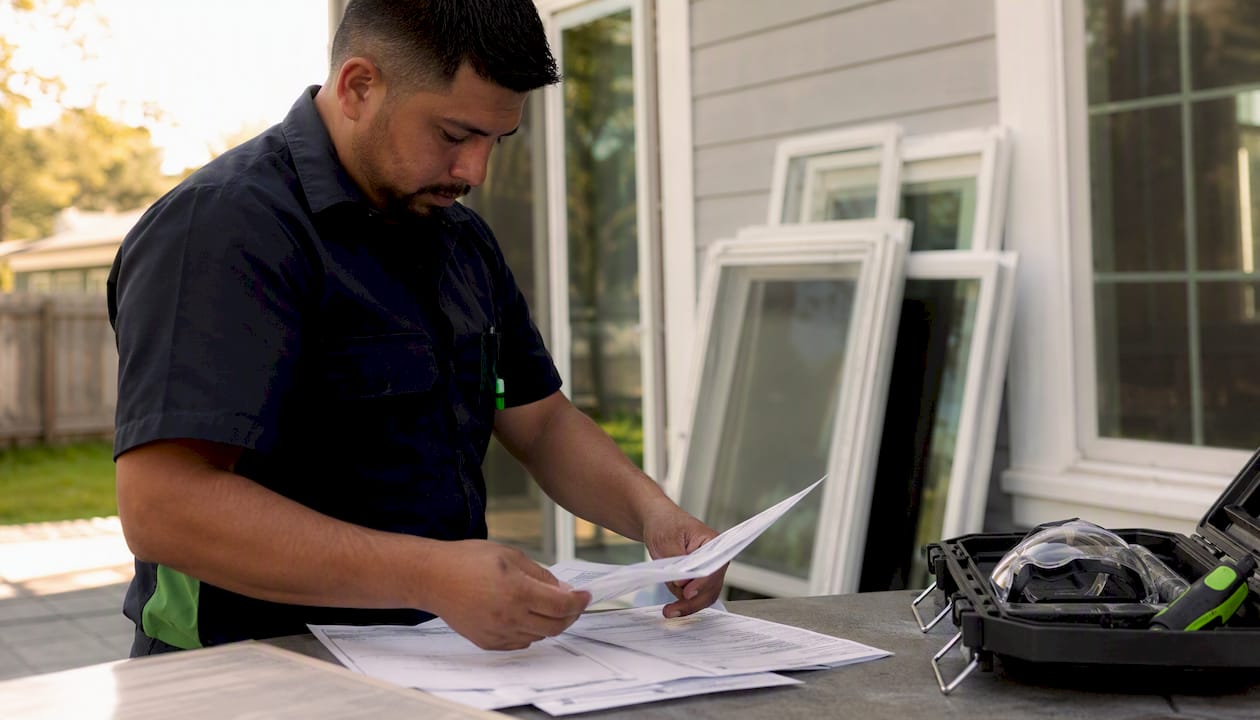
The paperwork side of a window tax credit claim is where most homeowners run into trouble, and it is also where a professional installer makes a real difference. When we complete a window replacement project, the final packet includes an itemized invoice separating product from labor, the installation completion date, and copies of NFRC labels and manufacturer certifications. Those are exactly the documents the IRS expects to see if a 2025 return is audited.
Beyond paperwork, a contractor who knows energy performance specifications can steer you toward products with the right U-factor and SHGC for your climate zone. That matters whether you are claiming a 2025 credit or simply trying to lower your heating and cooling bills for the next 20 years. Chasing a label without understanding the underlying numbers is how homeowners end up with windows that look efficient on paper but underperform in practice.
For homeowners planning 2026 projects, a knowledgeable installer can also help you identify and stack local incentives. State programs, utility rebates, and insurance discounts each have their own application requirements, and having a contractor who has navigated those processes before saves time and reduces the risk of missing a deadline or submitting incomplete paperwork.
Pro Tip: When your project is complete, request a final packet from your installer that includes the manufacturer certification statement, NFRC label copies, and a signed completion document with the installation date. That packet is your audit defense and your rebate application in one place.
Jaghomesnow handles window replacement and the paperwork that comes with it
If you completed a qualifying window installation in 2025 and need documentation to support your credit claim, or if you are planning a 2026 project and want to position yourself for state and utility incentives, Jaghomesnow is ready to help. We install energy-efficient replacement windows throughout Bucks County, Montgomery County, and nearby areas, and we deliver the itemized invoices, NFRC label copies, and manufacturer certification statements that make the paperwork side straightforward.
Our window replacement services cover product selection for your climate zone’s U-factor and SHGC targets, professional installation with a signed completion document, and full documentation support for rebate or credit applications. We also handle kitchen remodeling and a full range of interior and exterior renovations, so if you are bundling projects to maximize your home’s efficiency and value, we can plan that with you too. Contact Jaghomesnow for a project estimate and get the documentation process started on the right foot.
Authoritative sources for further research
Use these primary sources to verify product eligibility, filing requirements, and current program availability. Save or print the IRS pages before filing, and bring the manufacturer’s NFRC entry to your tax preparer.
- IRS Energy Efficient Home Improvement Credit page: the primary IRS source for Section 25C rules, placed-in-service definitions, and QMID requirements for 2025 production.
- IRS Form 5695 (PDF): the actual form used to claim the Residential Energy Credits on your 2025 return.
- IRS Form 5695 Instructions (PDF): line-by-line guidance for completing the form correctly, including where to enter the QMID.
- IRS FAQ on Energy Efficient Home Improvements: explicit answers on what qualifies and what is excluded, including decorative treatments.
- ENERGY STAR Windows & Skylights Tax Credit page: product-level eligibility, Most Efficient certification lookup, and climate-zone criteria.
- ENERGY STAR Federal Tax Credits overview: broader summary of all credits available through 2025 and the $3,200 combined maximum.
- DSIRE (dsireusa.org): the most complete database of state and utility incentive programs; filter by state and measure type to find active 2026 rebates.
As of mid-2026, no active federal legislation has reinstated the Section 25C window credit for 2026 or later installations. Monitor the IRS credits page and Congressional updates for any changes. State and utility programs, by contrast, are actively funded and worth checking now.