

A warranty on remodeling work is the contractor’s written promise to fix defects in how the job was done for a set period. It is separate from the manufacturer’s warranty on the products, and it only helps you if it is written down, specific about what is covered, and clear about how to make a claim. Before you sign, you should be able to point to the sentence in your contract that says who fixes what, for how long, and how fast.
This guide is for homeowners in Bucks County, Montgomery County and the rest of Pennsylvania who are about to hire a contractor for a kitchen, bathroom, deck, roof or addition. It explains the layers of coverage, what a typical term looks like, what is usually excluded, and what Pennsylvania law adds on top. At JAG Home Enhancements we manage projects from the first consultation through completion, and a clear, written scope is where a good warranty starts.
TL;DR
- A workmanship warranty covers the contractor’s labor and installation. A manufacturer warranty covers the product itself. You usually need both.
- Pennsylvania’s own contractor warranty form sets a 12-month term for defects in materials and workmanship, with a clear repair-or-replace duty.
- Exclusions (wear and tear, misuse, storms, work by others) decide what a warranty is really worth, so read them before you sign.
- Pennsylvania requires a written, signed home improvement contract with specific terms, and contractors doing $5,000 or more a year must register.
- Get the claim process in writing: who to call, how to report, and how quickly the contractor responds.
Table of Contents
- The three layers of protection on a remodel
- How long does a workmanship warranty last?
- What a warranty usually excludes
- What a written remodeling warranty should say
- What Pennsylvania law adds
- How to make a warranty claim
- Why the warranty is only part of the choice
- Our perspective
- Talk to us about your project
- FAQ
- Sources
The three layers of protection on a remodel
When something goes wrong after a project, the first question is which layer applies. Most remodels carry three.
- The contractor’s workmanship warranty. This covers the labor: how the work was installed, set, sealed, joined or fastened.
- The manufacturer’s product warranty. This covers defects in the product itself, such as shingles, windows, composite decking, fixtures or appliances.
- Legal protections. Pennsylvania’s home improvement law and general consumer protection rules sit behind whatever the contract says.
The roofing industry draws the line clearly. According to the National Roofing Contractors Association’s explainer on workmanship warranties, a workmanship warranty covers labor and technique, such as fasteners in the wrong place, flashing cut or sealed incorrectly, or underlayment applied outside manufacturer instructions. A perfect shingle installed badly is a workmanship claim. A defective shingle installed perfectly is a manufacturer claim.
The same logic applies indoors. A tile that cracks because the tile itself was flawed points to the manufacturer. A tile that loosens because the surface underneath was not prepared properly points to the installer. Knowing which is which saves you weeks of being passed between two phone numbers.
What a workmanship warranty typically covers
Workmanship coverage addresses defects in how the work was performed. In a remodel, that usually means things like:
- Joints, seams or connections that fail
- Water getting in because of poor flashing or sealing
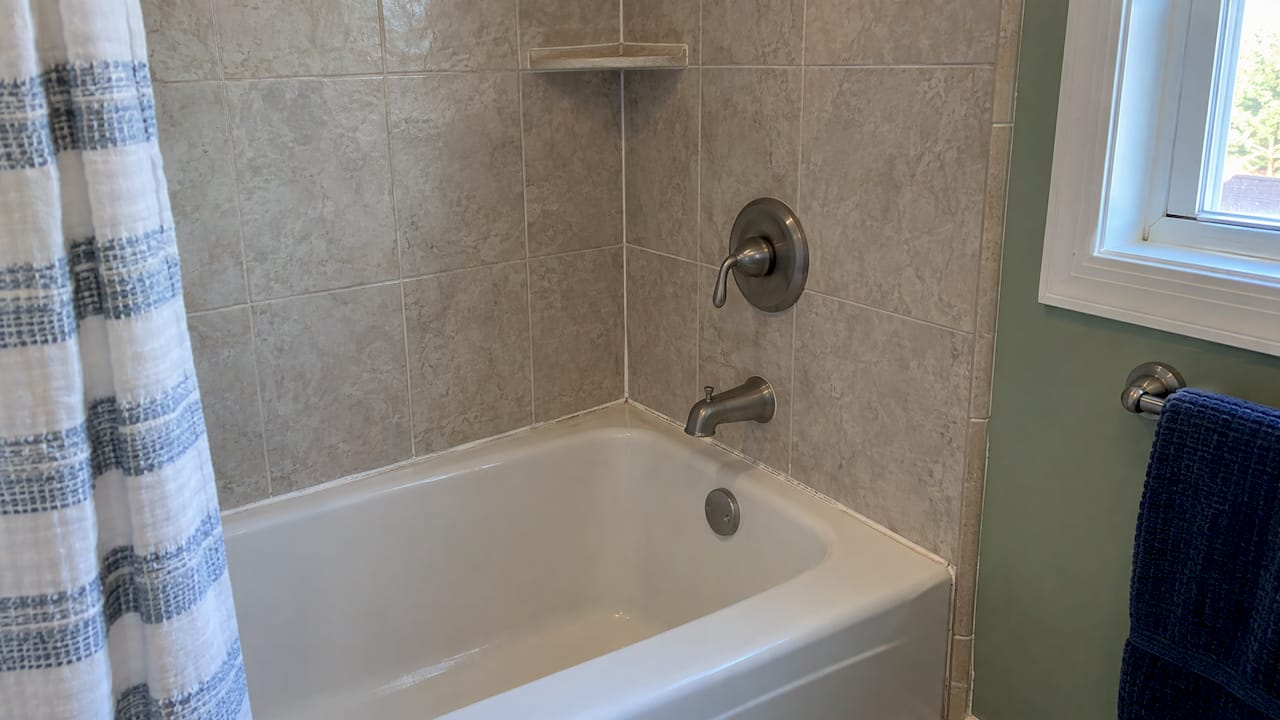
- Tile that was not properly set, or grout and caulk that fail early
- Framing or structural connections that shift
- Trim, doors and windows that were not installed square or sealed correctly
- Deck boards, railings or ledger connections that loosen from installation errors
It does not cover the material itself, and it does not cover problems that start after the job from something other than the work.
Does the manufacturer cover the labor?
Usually not. Manufacturer warranties generally replace or repair the defective product. They are often long: roofing materials, window seals and decking can carry warranties measured in decades. Labor to remove and reinstall a defective product is a detail that varies by product and by warranty, so read the manufacturer’s document rather than assuming. If you want to go deeper on roofing specifically, our guide to roofing warranties explained for homeowners walks through both layers.
How long does a workmanship warranty last?
There is no single national number. Terms are set by the contract, and they vary by trade and by the contractor.
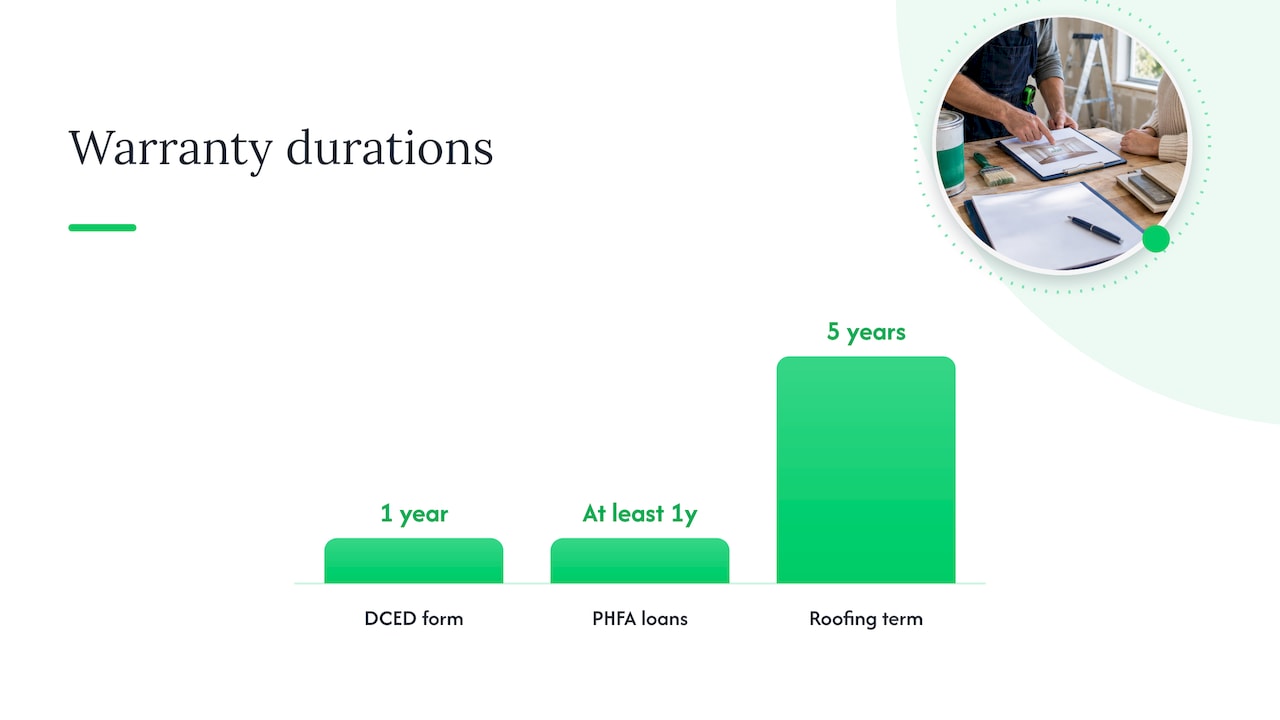
Pennsylvania gives a useful reference point. The state Department of Community and Economic Development publishes a Contractor General Warranty form that warrants all improvements, materials, mechanicals, appliances and fixtures to be free of defects in materials and workmanship for 12 months from the contractor’s signature. It applies to the current owner and to successors, and it obligates the contractor to repair or replace defective items. Pennsylvania Housing Finance Agency guidance for its home improvement loans likewise requires the contractor to give the homeowner at least a one-year warranty on workmanship and materials.
So one year is a familiar baseline for remodeling interiors. Longer terms exist, especially in roofing. The NRCIA notes that five years is a common roofing workmanship term because it covers the stretch in which most installation defects show up, after the roof has been through a full cycle of seasons and a few real storms.
| Part of the project | Who warrants what | What to look for in writing |
|---|---|---|
| Roofing | Contractor warrants installation; manufacturer warrants shingles | Workmanship term in years, flashing and penetrations covered |
| Kitchen and bath | Contractor warrants installation; manufacturers warrant cabinets, fixtures, appliances | Leaks, tile and grout, cabinet installation, who handles appliance claims |
| Decks | Contractor warrants framing, fastening, railings; manufacturer warrants decking boards | Ledger and footing work, railing connections, board fastening |
| Windows and doors | Contractor warrants installation and sealing; manufacturer warrants glass, seals, hardware | Water and air leaks at the opening, trim and flashing |
| Basements and additions | Contractor warrants framing, finish work and connections; manufacturers warrant products | Moisture-related workmanship, permits and inspections |
A longer term is not automatically better. A five-year promise full of exclusions can protect you less than a one-year promise written clearly. Read the scope before the number.
What a warranty usually excludes
Exclusions are what make coverage specific. The Pennsylvania DCED form lists the common ones:
- Abuse, misuse, negligence or accident
- Normal deterioration from wear or exposure
- Items that were not part of the contract or an approved change order
- Damage from windstorm, tornado, lightning, hail or other acts of nature
Workmanship warranties in the industry also commonly exclude damage from owner modifications, defects in materials the owner supplied, and work done by other contractors afterward. The NRCIA points out that exclusions let you cover the rest through maintenance, a manufacturer claim or property insurance.
That last point matters in Pennsylvania, where freeze and thaw cycles, summer storms and heavy snow are part of a home’s life. Storm damage is generally an insurance matter, not a workmanship matter. If a storm hits your roof, our guide to roof insurance claims in Pennsylvania explains the timelines and paperwork. For moisture problems that appear well after any warranty period ends, this overview of home insurance and moisture damage shows how to think about what a policy may or may not cover.
Maintenance is part of the deal
Most warranties assume you keep up with reasonable care. A deck needs periodic cleaning and sealing as its material requires. Gutters need to drain away from a new roof edge. Caulk around a shower needs to be checked. Keep the maintenance instructions from your contractor and the manufacturer, and keep photos from the day the project was finished. Both help if you ever need to make a claim.
What a written remodeling warranty should say
A warranty is only as useful as its wording. Before you sign, look for these items in your contract or in a separate warranty document.
- The term and its start date. Is it 12 months, two years, five years? From what date: completion, final payment, or signature? The state form counts from the contractor’s signature.
- What is covered. Labor and installation, materials, or both. Named trades or the entire project.
- What is excluded. Wear and tear, misuse, acts of nature, owner-supplied materials, other contractors’ work. You want these listed, not implied.
- The contractor’s duty. The DCED form says the contractor must repair or replace defective items. Your document should say the same, at no cost to you for the covered defect.
- How to make a claim. A phone number, an email, and whether you need to report in writing.
- Response time. How soon the contractor will inspect after you report a problem.
- Transfer. Whether the warranty passes to a new owner if you sell. The state form extends to successors, which matters if you remodel to increase resale value.
- Manufacturer paperwork. Who registers product warranties, and where the documents are kept.
If a term is vague, ask for it to be made specific before you sign, not after something breaks. That is also true of price structure. Our comparison of fixed price versus time and materials explains how the way a project is billed shapes what is written into the scope.
What Pennsylvania law adds
Pennsylvania’s Home Improvement Consumer Protection Act, passed in 2008, sets rules for contracts and contractors. Three points matter to you as a homeowner.
The contract must be in writing. Under the Act, a home improvement contract is not valid or enforceable unless it is written and legible, includes the contractor’s registration number, is signed by both parties, and includes approximate start and completion dates, a description of the work and materials, and a right-of-rescission notice. A law firm’s analysis in the Construction Legal Edge newsletter notes that a contract missing even one required element may not be enforceable as written, as the state Supreme Court’s 2014 Shafer Electric v. Mantia decision shows. A complete contract protects both sides.
Contractors must register. The Attorney General’s office explains that contractors performing $5,000 or more of home improvements a year must register. The registration number belongs on the contract and in advertising. Check that it is there.
Your rights do not end with the warranty. The same law firm analysis explains that the Act’s one-year call-back warranty is separate from your other legal rights, and an owner may still bring an action and recover damages for defects found after that period. If you hit a problem, the Attorney General’s Bureau of Consumer Protection is the state office that takes consumer complaints.
Legislation can change. Senate Bill 1324, introduced in May 2026, would raise the Act’s coverage threshold from $500 to $1,000 and change registration provisions. It was referred to committee, so check the bill page for its current status. For a specific legal question about your own contract, talk with a Pennsylvania attorney.
How to make a warranty claim
If something fails during your warranty period, a calm and documented approach works best.
- Find your documents. Contract, warranty, change orders, final invoice and manufacturer paperwork.
- Document the problem. Take dated photos or video. Note when you first saw it and what the weather was like.
- Report it in writing. Email the contractor with a short description and the photos. Follow the claim process in your warranty.
- Let the contractor inspect. A visit is how a workmanship issue is told apart from a product defect or storm damage.
- Ask about the product. If the cause is the material, the manufacturer’s warranty comes into play, and your contractor’s paperwork should show how to file.
- Keep a record. Save every message and note dates of every visit.
If a contractor does not respond, send a second written notice, then contact the Attorney General’s Bureau of Consumer Protection. If significant money is involved, an attorney can review your contract and the law.
Why the warranty is only part of the choice
A warranty repairs a problem after it appears. The better outcome is fewer problems to begin with. That comes from careful scoping, permits and inspections done right, tidy and safe job sites, and a contractor who answers the phone. The warranty tells you what happens if something slips through. The process tells you how likely that is.
This is why we suggest reading the whole picture before you hire. Our checklist for choosing a remodeling contractor and our guide to choosing a remodeling contractor in Bucks County cover registration, insurance, references and contract details. For work on older properties, where hidden conditions are common, see remodeling older homes in Bucks County. And since a clean finish matters when you are judging a final result, our piece on what your contract should cover for post-remodel cleaning helps you define done.
Our perspective
A warranty is a conversation that should happen before the first day of work, not after the first problem. When we sit down with a homeowner, we want the scope, the materials and the expectations on paper, because that is what keeps a project on time, on budget and free of surprises.
In our experience as a Bucks County remodeler, the homeowners who feel best at the end of a project are the ones who knew what to expect at every stage. That is why we focus on clear communication, honest recommendations and full project management from consultation through completion. We keep the job site clean and safe, and we stay available when you have questions.
Our advice is simple. Ask for every promise in writing. Ask which part is workmanship and which part belongs to the manufacturer. Ask how to reach us if something needs attention. A remodel should last for years, and the best protection is craftsmanship that blends beauty and durability, backed by a contractor who stands behind the work.
Jeff
Talk to us about your project
Whether you are planning a kitchen or bathroom remodel, a new deck in Doylestown, a roof replacement or an addition, we take the project from consultation to completion and give you personal attention along the way. Bring your questions about scope, materials and what you want in writing, and we will walk through them with you.
Start with our home remodeling services in Bucks County to see what we build, then reach out for a consultation.
FAQ
What is a standard workmanship warranty on remodeling work?
One year is a common baseline. Pennsylvania’s official contractor warranty form uses a 12-month term for defects in materials and workmanship. Some trades, such as roofing, commonly use longer terms, and the length is set by your contract.
Should labor be covered under a warranty?
Yes. A workmanship warranty exists to cover labor: the installation, setting, sealing and connections. Materials are typically covered by the manufacturer, so a complete picture includes both. Ask your contractor to state clearly which part is which.
What are the three types of warranty on a remodel?
The contractor’s workmanship warranty, the manufacturer’s product warranty, and the legal protections that sit behind both. In Pennsylvania, those include the Home Improvement Consumer Protection Act and consumer protection law.
What if a contractor does not honor the warranty?
Report the problem in writing with photos, then send a follow-up notice if there is no response. You can file a complaint with the Pennsylvania Attorney General’s Bureau of Consumer Protection. For a dispute over significant money, a Pennsylvania attorney can review your contract and your rights, which continue after the call-back period.
Sources
- Your 5-year workmanship warranty for roofing, explained (NRCIA)
- Pennsylvania DCED Contractor General Warranty form
- PHFA borrower guidance for home improvement loans
- Pennsylvania Home Improvement Consumer Protection Act, Act 132 of 2008
- Construction Legal Edge, Summer 2015
- PA Attorney General: Home Improvement Contractor Registration
- Pennsylvania Senate Bill 1324