
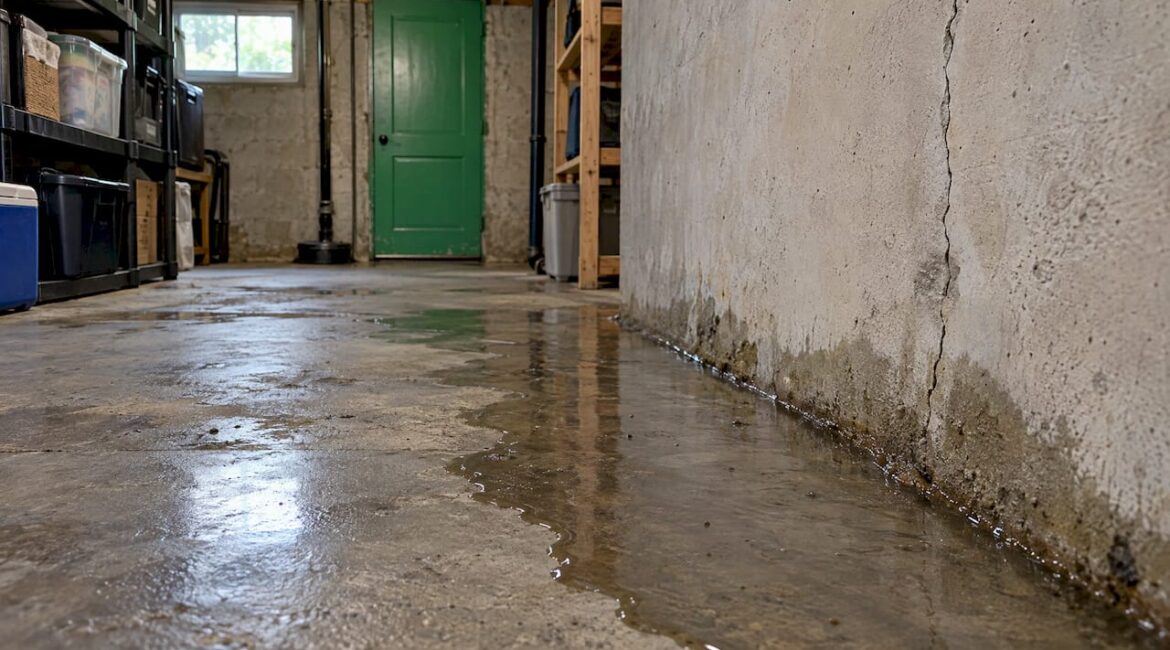
Water in a basement after heavy rain almost always comes from outside the house first: roof runoff, soil that slopes toward the foundation, or groundwater pressing on the walls and floor. The fix that lasts deals with where the water goes before it reaches the wall, not just the wet spot you can see. Patching the inside is a stopgap. Before you finish, furnish or remodel a basement, the water source has to be understood and handled, and that is how we plan every basement project at JAG Home Enhancements for homeowners in Bucks County and nearby.
This guide covers what to do in the first hours, how to read the pattern of the leak, how to dry the space, which repairs hold and which only delay the problem, and how to protect the investment if you plan to remodel.
TL;DR
- Stay out of standing water until the power is off and the gas, structural and contamination risks are ruled out. Call your insurer after you photograph the damage.
- Most rain-related basement water starts outside: clogged gutters, short downspouts, poor grading, or saturated soil pushing water through cracks and joints.
- Dry the space within 24 to 48 hours if you can, with fans, a dehumidifier and a wet-dry vacuum or pump.
- Caulk and cement patches are temporary. Lasting results come from moving water away from the foundation.
- If a remodel is on your list, solve the moisture first, then choose finishes that suit a below-grade room.
Table of Contents
- What to do in the first hours
- Why water gets in after rain
- Read the leak to find the cause
- Drying the basement safely
- Fixing basement wall leaks: stopgaps and real solutions
- Quick reference: pattern, likely cause, first move
- Before you remodel a wet basement
- Why one team for the whole house helps
- Our perspective
- FAQ
- Sources
What to do in the first hours
Safety comes before cleanup. State Farm’s guidance is to stay out of standing water until electrical, gas and structural hazards have been addressed. It lists the situations in which you should not go down at all: water touching outlets, cords, appliances or the panel; deep, moving or fast-rising water; possible sewage or chemicals; a gas smell or hissing; visible damage to walls, floors or the foundation; or a local evacuation order.
If you can reach the panel from a dry spot, turn off the basement power. The CDC says to turn off main power from a dry location, and to call an electrician if you would have to wade to reach it. It also says that if you smell gas you should turn off the main gas valve, open windows, leave right away, and call the gas company or fire department from outside, avoiding anything that could spark.
Once it is safe to be in the space:
- Stop the source if it is a burst pipe by closing the main water valve.
- Photograph and video every affected area before you move or throw out anything. AAA advises documenting damage first and then calling your insurer with your policy number and a specific description of how the water got in.
- Start removing water and moving air.
Floodwater can carry germs, chemicals and sharp objects. If the water is deep, comes from a sewer backup or an unknown source, leave it to a qualified water-mitigation professional and a licensed electrician. A plumber handles sump pump, drain and pipe failures. This Old House points to water more than a few feet deep, visible structural damage, electrical damage or sewage contamination as the cases for hiring a professional water-removal company.
Why water gets in after rain
Rain does not simply fall and vanish. It soaks the soil, and gravity moves it downhill and down, toward your basement. The Missouri Department of Natural Resources explains that water exerts 0.43 psi for each foot of depth, and that fully saturated soil can push about 3 psi against a basement floor. That is enough to force water through cracks, around the floor perimeter and through other openings.
The volume is bigger than most homeowners expect. University of Minnesota Extension notes that a 1-inch rain puts about 1,250 gallons of water on the roof of a 2,000-square-foot house. Without working gutters, downspouts and grading, some of that ends up in the basement.
In practice, the usual suspects are these:
- Gutters and downspouts. Clogged or leaking gutters spill water beside the foundation. Leaves clogging gutters is a common reason runoff lands exactly where you don’t want it.
- Short downspouts. The City of Knoxville’s stormwater guide points to downspouts that end at the corner of the house with no splash pad, along with lawn and driveway runoff sloping toward the house.
- Backfill soil. The soil replaced around a foundation after excavation is looser than undisturbed ground, so water travels through it easily and settles against the wall.
- Rising groundwater. Seasonal high water tables are a frequent contributor. K-State Extension identifies run-in from near the building, a high water table and flooding as the three general routes for water into a basement.
- Failed or clogged drains. Perimeter drains and sump systems that are blocked or poorly installed let water back up toward the wall.
- Window wells, doorways and stairwell drains. Prince George’s County, Maryland, says direct inflow through these openings, or through above-ground wall cracks, is the easiest type to spot because it happens during or just after rain.
Read the leak to find the cause
Where and when the water shows up tells you a lot. Before anyone quotes a repair, spend an hour with a flashlight and a notebook.
Timing and appearance
The Prince George’s County guide separates two patterns. Surface-water seepage begins shortly after rain starts, ends some time after it stops, is silty and shows up only in certain spots. Direct inflow is visible at an opening while it is raining or right afterward. Water that lingers for days after the rain has stopped points toward groundwater rather than roof runoff.
What to inspect
MU Extension’s Michael Goldschmidt recommends checking walls and floors for cracks or breaks, checking drainpipes for clogs and feeling around basement windows for moisture. Areas where walls meet are the most prone to seepage. Add a few more checks of your own:
- Walk the outside during the next rain. Watch where gutters overflow and where water pools.
- Look for a whitish, chalky residue on masonry. The Knoxville guide describes it as minerals left behind when groundwater is drawn up through the wall and evaporates.
- Check that the sump pump runs and the floor drain flows.
- Note whether wet spots line up with a downspout, a deck, a window well or a roof valley above.
A second set of eyes helps. Our team can look at the house from roof to footing during a consultation, because water problems rarely stay in one trade’s territory. For a quick primer on common sources, this overview of common sources of basement seepage walks through the usual inspection points.
Drying the basement safely
Speed matters. NC State Extension recommends drying wet areas within 24 to 48 hours, and Cal State LA’s water-intrusion procedure says carpet can often be salvaged if clean-water flooding is addressed within that same window.
The CDC’s guidance for drying is straightforward: remove standing water with a wet-dry shop vacuum, a water transfer pump or a sump pump, wear rubber boots, open windows if the weather allows, and use fans and dehumidifiers. Place fans at a window or door so they blow air outward, which avoids spreading mold through the house.
A few practical points:
- Keep indoor humidity low. NC State suggests staying below 60 percent, ideally 30 to 50 percent.
- Pull out soaked carpet, pad and anything porous that can’t be dried quickly.
- Let a professional check and clean a flooded HVAC system before you run it. The CDC warns that it can spread mold through the house.
- A home closed up for several days after flooding should be assumed to have mold, per the same CDC guidance.
How long drying takes depends on how much water came in, how humid the air is and how much material got wet. Concrete and framing hold moisture longer than they look. Don’t rebuild, paint or lay flooring until the space is truly dry.
Fixing basement wall leaks: stopgaps and real solutions
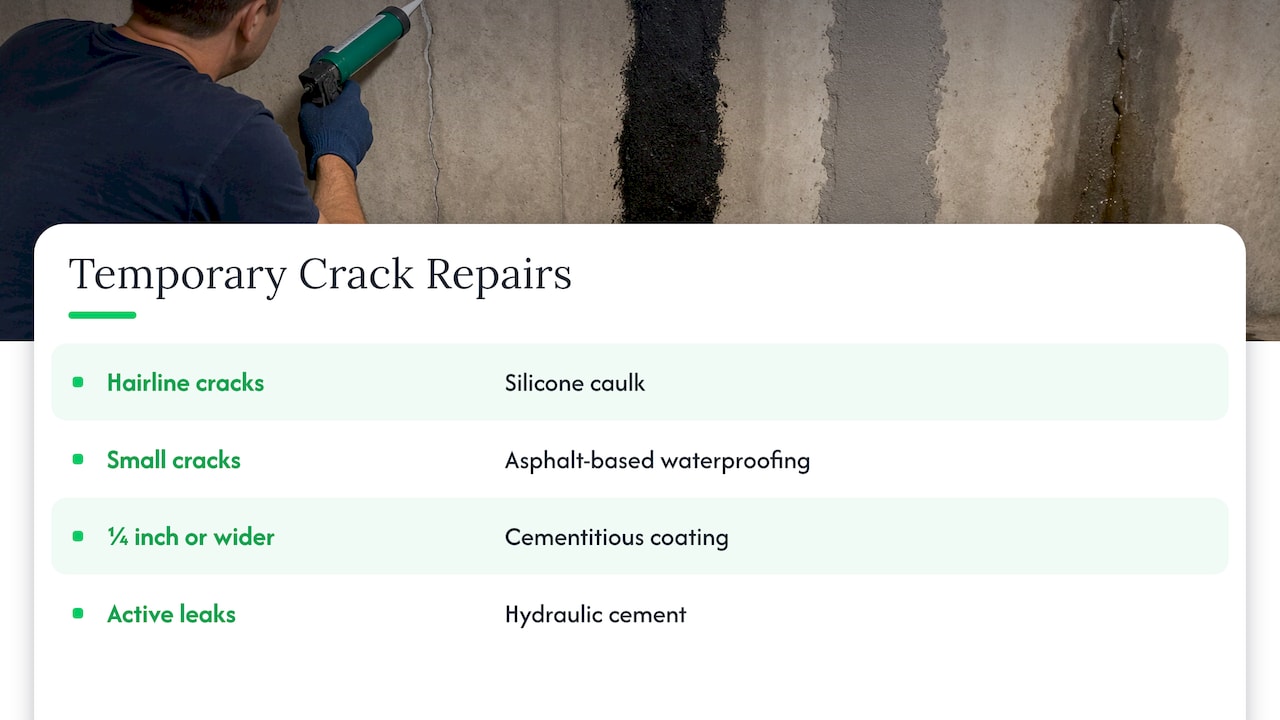
Here is the honest picture. MU Extension describes temporary crack repairs: silicone caulk for hairline cracks, asphalt-based waterproofing for small cracks, a cementitious coating for cracks a quarter inch or wider, and hydraulic cement for active leaks. These can buy time. The same source explains that water follows the path of least resistance, so once you patch one crack, water can find another place to enter.
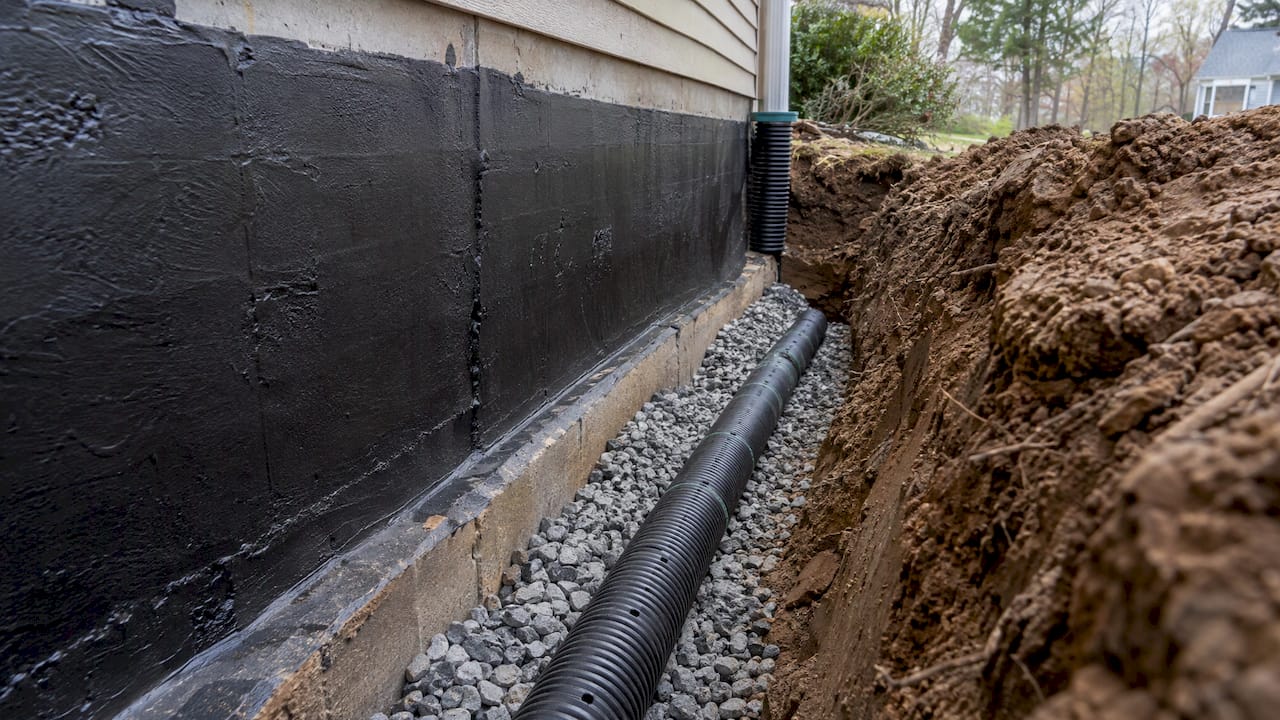
The Missouri DNR makes the bigger point: the aim is to intercept water in a gravel-and-pipe drainage system before it ever reaches the wall. A perimeter drain set at the footing, backfill that lets water through, exterior waterproofing and a vapor barrier work together. The wall itself is the last line, not the first.
Start outside, where it is cheapest
These steps cost the least and address the largest share of rain-related leaks:
- Clean gutters and downspouts, and repair sagging or leaking sections.
- Extend downspouts away from the house. MU Extension says 10 feet out and downhill; NC State gives a range of 6 to 10 feet.
- Regrade so soil slopes away from the foundation and water no longer pools against it.
- Keep foundation plantings from being overwatered, a cause the Knoxville guide names.
- Ask whether a French drain or drain tile is needed where water collects.
Look above the basement too
Basement water is not always groundwater. A failing roof edge, flashing or siding can send rain down the wall cavity and into the foundation area. If wet spots sit under an exterior wall, our checklist on water behind your siding shows what to look for, and the guide on stopping a roof leak after heavy rain covers the roof side. A deck attached to the house can also funnel water toward the foundation, which is why under-deck drainage systems belong in this conversation. A door that doesn’t seal at the bottom is another small entry point, and finding the cause of a door that isn’t sealing is a quick check.
Quick reference: pattern, likely cause, first move
| What you see | Likely cause | First move |
|---|---|---|
| Water at a window well or doorway during rain | Direct inflow of surface water | Clear and slope the well or entry, check the drain |
| Damp patches in certain spots soon after rain starts | Surface water seeping through soil and wall | Fix gutters, downspouts and grading |
| Water along the wall base that lingers days after rain | High or rising groundwater | Drain system at the footing or interior drainage plan |
| Wet spot under an exterior wall or below a deck | Roof, siding or deck runoff | Inspect flashing, siding and deck drainage |
| White chalky film on masonry | Moisture moving through the wall | Reduce moisture sources, then dry and monitor |
| Water backing up from a floor drain | Drain or sewer problem | Call a plumber or the wastewater utility |
Before you remodel a wet basement
A finished basement is only as good as the dryness underneath it. If you are planning a family room, guest suite or home office, handle the moisture first, then build. Laying flooring, framing walls and hanging drywall over a damp slab invites mold and ruined finishes.
That sequence is built into how we approach a basement project. Moisture is part of the planning conversation, not an afterthought. Our guide to basement moisture control for Bucks County homeowners explains what we look at, and our piece on basement flooring options that stand up to damp conditions helps you choose materials suited to a below-grade room. If you are weighing insulation, see when basement ceiling insulation pays off.
A useful rule of thumb: don’t spend money on finishes until the basement has gone through a few heavy rains without water showing up.
Why one team for the whole house helps
Water problems cross trades. The cause may sit in the roof, the siding, the deck, the grading or the foundation, and the damage shows up in the basement. When different contractors each look at only their piece, it is easy to fix a symptom and miss the source.
JAG Home Enhancements offers roofing, roof repair and storm damage work, siding installation and replacement, replacement windows, entry doors, custom decks, exterior renovations and basement remodeling. Our approach is full project management from consultation through completion, with clear communication and a clean, safe job site. If your wet basement is the first step toward a finished one, that continuity keeps the plan in one place.
See our basement remodeling services and our roofing, siding and roof repair services to see how we can help. To explore what a finished space can look like, read about finished basement remodeling in Bucks County.

If your basement is taking on water and you want a clear plan before you build, contact us through our site and we will start with a consultation.
Our perspective
We hear the same story from homeowners across Bucks County: the basement was fine for years, then one big storm changed everything. The first instinct is to buy a tube of sealant and move on. We understand it. But water takes the easy path, and a patch on the inside usually just sends it somewhere else.
What we believe is simple. A dry, usable basement starts with where the water goes outside, and with honest recommendations about what the house actually needs. That means looking at gutters, grading, roofline, siding and decks as part of the same system, then planning the remodel around what we find.
We would rather tell you to wait on finishes than put new flooring and drywall over a slab that is still taking on moisture. Long-lasting results come from sequence: fix the cause, confirm it is dry, then build the room your family wants. That is how we manage a project from the first consultation through completion, with a clean job site and a phone that gets answered.
Jeff
FAQ
Is it normal to get water in the basement after heavy rain?
It is common, but it is not something to accept. Saturated soil can press on the foundation with enough force to push water through cracks and joints, as the Missouri DNR explains. Repeated seepage usually means gutters, grading or drainage need attention, and the sooner you address it, the less damage and mold risk you face.
How long does it take to dry out a wet basement?
Plan on getting the space dry within 24 to 48 hours of the water arriving, using fans, a dehumidifier and a wet-dry vacuum or pump. Full drying of concrete, framing and other materials can take longer than the surface suggests. Don’t close up walls or install flooring until everything is dry.
Can I fix basement wall leaks with caulk or hydraulic cement?
These materials can slow a leak temporarily. MU Extension notes that patches may last only a year or two, and that water often finds another route. For a lasting result, move water away from the house with working gutters, extended downspouts, proper grading and, where needed, drain tile.
When is a wet basement unsafe to enter?
Stay out if water may be touching electrical equipment, if it is deep or moving, if it may contain sewage, if you smell gas, or if you see structural damage. Call a licensed electrician or your utility to deal with power, and call emergency services if people or the structure are in immediate danger.
Should I finish my basement if it has leaked before?
Finish it once the cause is found and the space has stayed dry through heavy rain. Moisture behind new walls and under new floors leads to costly redo work. We can talk through the sequence and the right materials during a consultation.
Sources
- State Farm: What to do when your basement floods
- AAA: What if my basement floods after heavy rain?
- CDC: Reentering your flooded home
- This Old House: How to clean, dry and repair a flooded basement
- Missouri DNR: Basement and yard water problems
- UMN Extension: Moisture in basements
- City of Knoxville: Tips for wet basements
- K-State: Dry basements and crawl spaces
- Prince George’s County: Homeowner’s guide to drainage problems
- MU Extension: First aid for leaky basements
- NC State Extension: Mold and moisture checklist
- Cal State LA: Water intrusion response procedure
- Wet basement after rain: causes and fixes
- Leaves clogging gutters