

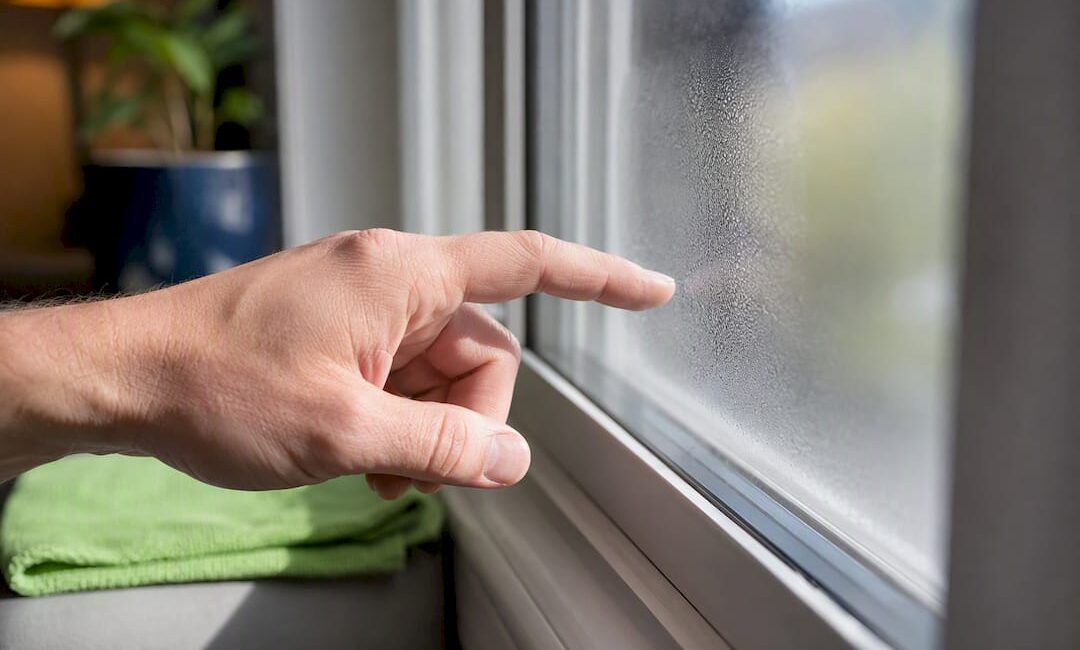
Condensation between panes usually means the insulated glass unit’s seal has failed and the window needs repair or replacement. That haze will not wipe off because the moisture is trapped inside a sealed cavity you cannot reach with a cloth. A professional defogging service can clear the fog for appearance’s sake, but only an IGU or full window replacement restores the lost insulating performance. Before scheduling either, document the damage and check your window’s warranty.
TL;DR:
- Fogging inside double-pane windows indicates a failed seal and saturated desiccant, which cannot be fixed with cleaning or surface wiping.
- Defogging is a temporary, low-cost solution that restores visibility but does not improve insulation performance or prevent fog from returning.
- Replacing just the glass unit (IGU replacement) restores insulation and is suitable if the frame remains in good condition, while full window replacement is better for damaged frames or multiple failures.
- Proper maintenance, such as checking seals, gutters, and avoiding external moisture intrusion, can extend the lifespan of window seals and delay the need for repairs.
- Conditions like persistent fog, mineral residue, or moisture pooling suggest a real seal failure, while surface condensation is normal and temporary.
Table of Contents
- Why Moisture Gets Trapped Inside Double-Pane Windows
- Spotting True Between-Pane Fog Versus Surface Condensation
- What to Do Right Now While You Plan a Permanent Fix
- Defogging, IGU Replacement, or Full Window Replacement
- What These Repairs Typically Cost and How Long They Take
- Simple Habits That Extend the Life of Your Window Seals
- Getting a Professional Opinion Without Guessing
- How We Approach Window Assessments and Repairs
- Get a Straight Answer on Your Foggy Windows
- Sources
- FAQ
Why Moisture Gets Trapped Inside Double-Pane Windows
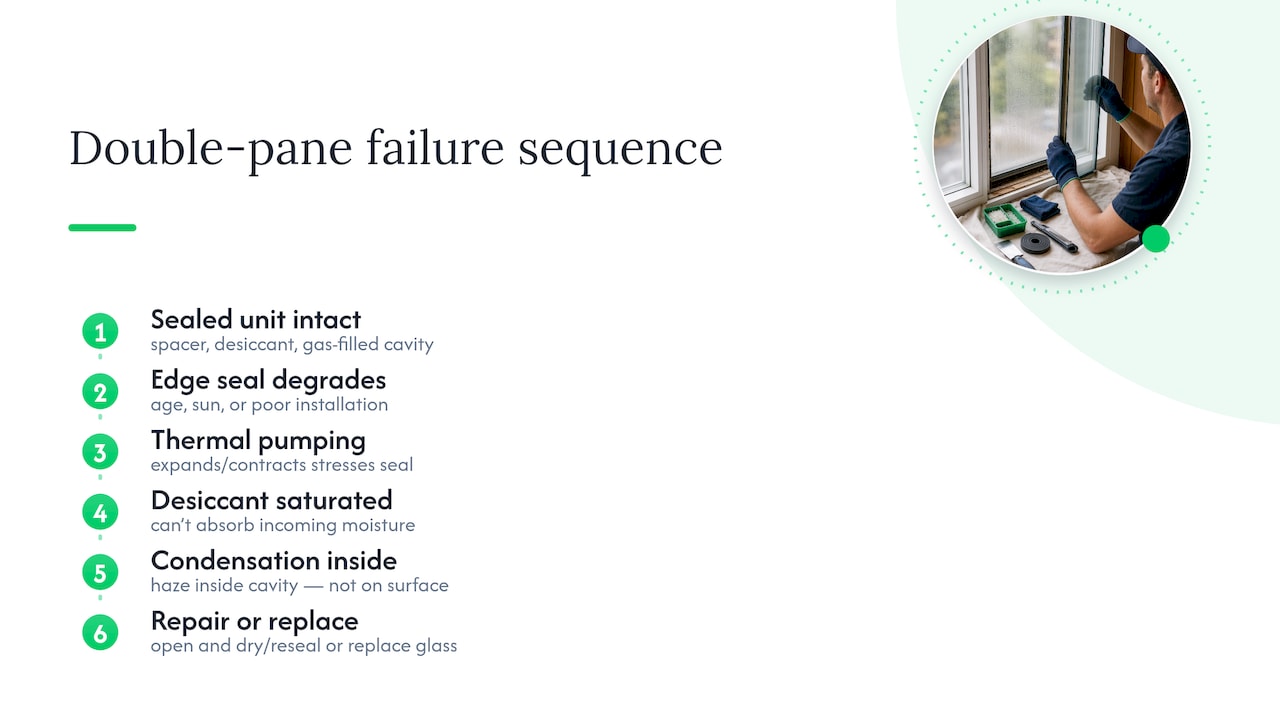
Every double-pane window relies on a small, sealed system to keep it clear and efficient. Two panes of glass are separated by a metal or composite spacer, and that spacer holds a desiccant, a material that absorbs trace moisture left behind during manufacturing. An edge seal locks the whole assembly together, and the sealed cavity is often filled with argon or krypton gas instead of ordinary air, since these gases conduct heat more slowly and help the window insulate.
That system works well for years, sometimes decades. It fails when the edge seal breaks down from age, sun exposure, or poor installation, letting outside air and humidity seep in. Once that happens, a process called thermal pumping speeds the damage: the sealed air space expands in heat and contracts in cold, and that constant flexing stresses the seal every time the temperature swings. Eventually the desiccant becomes saturated and can no longer soak up incoming moisture, so it condenses on the inner glass surfaces instead. Installation problems and frame issues, like a warped sash that puts uneven pressure on the seal, can speed up this failure too.
Here is the part that trips up a lot of homeowners: no amount of glass cleaner fixes this. The moisture is not on the surface you are wiping. It is inside a cavity that was built to stay sealed, and once that seal breaks, the only way to remove the haze is to open the unit, dry it out, and reseal it, or replace the glass entirely.
Spotting True Between-Pane Fog Versus Surface Condensation
Not every hazy window has a failed seal, so a few quick checks can save you an unnecessary repair call. Surface condensation, the kind that forms on the inside of a single pane during a cold morning, usually clears on its own as the room warms up or as you run a fan. Trapped condensation behaves differently: it lingers regardless of the time of day, and no amount of wiping touches it because you are not actually reaching the moisture.
Run through this checklist before you assume the worst:
- Check the timing. Wipe the glass and see if the haze clears by midday. Fog that persists all day, every day, points to a sealed cavity problem.
- Look for a white film. A powdery residue that keeps reappearing after cleaning is often mineral deposit left behind as trapped moisture evaporates and recondenses.
- Watch for pooling water. Water sitting on the sill or dripping down the frame usually signals an external leak, not IGU failure.
- Inspect the surrounding trim and flashing. Staining, soft wood, or bubbled paint near the frame suggests water is getting in from outside rather than being trapped between the panes.
According to InterNACHI, condensation between panes almost always traces back to a failed seal and saturated desiccant, and that fog will not clear because the moisture has nowhere to go. If you suspect a warranty claim or want an accurate repair estimate, photograph the affected window at different times of day, note how long the fogging has been visible, and keep any paperwork from the original installation.
What to Do Right Now While You Plan a Permanent Fix
You do not need to replace a window the day you notice fogging, but a few steps now can prevent the problem from getting worse and keep your home comfortable in the meantime.
- Run exhaust fans in the kitchen and bathroom and consider a dehumidifier if indoor humidity runs high, since reducing moisture indoors limits mold risk and eases strain on other windows.
- Check nearby sprinklers to make sure they are not spraying directly on the glass or frame.
- Inspect the sill and surrounding trim for soft spots or rot, since standing water there points to a drainage issue rather than a sealed-unit failure.
- Consider a temporary interior film or a defogging service if you need the view restored quickly while you plan a permanent repair.
Defogging can clear visibility fast and at a lower upfront cost, but it is a cosmetic fix, not an insulating one. It is a reasonable stopgap for a window you plan to replace within a year or two, but not a long-term answer for a room where energy loss is already a concern.
Pro Tip: Keep a dated photo log of any foggy window. If a manufacturer warranty is still active, that documentation makes the claims process faster and harder to dispute.
Defogging, IGU Replacement, or Full Window Replacement
Once you have confirmed a failed seal, you have three practical paths forward, and each one solves a different part of the problem.
Defogging involves drilling small holes into the sealed cavity, flushing out the moisture, drying the interior, and resealing the unit. According to one industry explainer, this process restores visibility but does not replace the desiccant or the original gas fill, so the window’s insulating value stays reduced and the fog can return within a few years. It works best as a low-cost, short-term fix for a window you are not planning to keep long-term, or for a secondary window where energy performance matters less.
IGU replacement swaps out just the glass unit while keeping the existing frame and sash. This restores full insulating performance, including a fresh gas fill and desiccant, and it is often the more sensible choice when the frame itself is in good shape. Many installers can replace an IGU in-frame rather than recommend a full teardown, which keeps both the cost and the disruption lower.
Full window replacement becomes the better option when the frame or hardware has its own problems, such as rot, warping, or broken locks, or when a window has fogged more than once despite previous repairs. It also makes sense if you are pursuing a broader energy upgrade and want to move to better-performing glass across the house.
A simple way to decide:
- If the frame is solid and this is the window’s first fogging issue, ask about IGU replacement first.
- If the frame shows damage, or the window has failed before, full replacement usually pays off over another round of glass work.
- If budget is tight and the window is due for replacement soon anyway, defogging buys you time without locking in a bigger expense.
Your energy goals matter here too. A failed seal reduces insulating power and comfort, according to ENERGY STAR, and homes in rooms where you already notice drafts or high energy bills tend to benefit more from a real insulating fix than a cosmetic one.
What These Repairs Typically Cost and How Long They Take
Costs vary by region, glass size, and how many windows need attention, but a few patterns hold across most repair jobs. Defogging tends to be the least expensive option upfront since it does not involve new glass or hardware, and it is often completed in a single visit once the technician is on site. It is worth remembering, though, that if the fog returns, you are paying for the service again rather than solving the problem for good.
IGU replacement costs more than defogging because it involves new glass, a fresh gas fill, and a new desiccant, but it usually comes with a longer useful life since you are replacing the failed component rather than patching around it. Turnaround typically involves an initial measurement visit, a lead time while the replacement glass unit is manufactured to match your existing frame, and a relatively quick installation once the part arrives.
Full window replacement carries the highest cost of the three since it includes the frame, sash, and hardware in addition to the glass, and labor time runs longer because the old unit has to come out completely. Timelines stretch further too, particularly if you are ordering custom sizes or upgrading to different glass options.
Warranties change this math in your favor. Many manufacturers cover seal failure for a set number of years after installation, so before you pay out of pocket, check whether your windows are still covered. An installer’s own workmanship guarantee matters as well, since it affects whether a repeat failure gets fixed for free.

Simple Habits That Extend the Life of Your Window Seals
A little routine attention keeps seals lasting closer to their full expected lifespan, which saves you from an early repair bill. Start outside: keep sprinklers, mulch beds, and downspouts from spraying or draining directly against window frames, since standing water accelerates seal breakdown. Check flashing above and around windows each year, since a small gap there lets water track down behind the trim and stress the seal from angles you cannot see.
A short annual routine goes a long way:
- Inspect exterior caulk each spring and recaulk any cracked or missing beads.
- Test hardware, latches, and locks to make sure sashes close fully and evenly.
- Clear weep holes on storm windows so moisture can drain instead of collecting against the glass.
- Watch for early haze at the edges of the glass, which often shows up before fogging spreads across the whole pane.
Cloudy or moist double-pane windows are a sign that it may be time to consider replacement, according to ENERGY STAR, since seal failure at that stage typically means reduced insulating power going forward.
If you are considering an upgrade rather than a repair, look for ENERGY STAR-rated glass with a low solar heat gain coefficient suited to your climate. Also be cautious about adding storm windows over an existing double-pane unit. Certain storm window setups without proper weep holes can trap heat or moisture rather than help, so they are not always the right retrofit.
Getting a Professional Opinion Without Guessing
A qualified contractor should walk through more than just the foggy pane. A thorough inspection covers the frame and sash for rot or warping, the flashing above and around the window, the condition of the IGU edge seal, and any haze pattern that suggests thermal pumping has been at work for a while.
Before you commit to a repair, ask these questions:
- Can you replace the glass unit in the existing frame, or does this require a full window replacement?
- What warranty covers the new glass or window, and for how long?
- Are you insured, and can I see proof of that coverage?
- Can I get a written, itemized estimate before work begins?
- What is the realistic timeline from measurement to completion?
One thing worth avoiding entirely: do not try to drill into or reseal an IGU yourself. It looks simple on paper, but a poor seal invites the same failure right back, often faster than before. Cosmetic fixes belong in a professional’s hands, and they should always be treated as temporary rather than a final answer.
How We Approach Window Assessments and Repairs
When we look at a foggy window, we start with the frame, not the glass. A sound frame with a failed seal is a straightforward IGU replacement, and there is no reason to push a homeowner toward a full teardown when the existing structure still has years of life left in it. We offer in-field IGU replacement where the frame supports it, and we recommend full window replacement when the frame, sash, or hardware shows real damage, or when a homeowner is already planning a broader energy upgrade. The right fix depends on what you plan to do with the house over the next several years, not just on what is cheapest today.
— Jeff
Get a Straight Answer on Your Foggy Windows
Foggy panes are frustrating, but you should not have to guess whether you need a small repair or a full replacement. JAG Home Enhancements handles both, from glass-only IGU work to complete replacement windows and broader exterior renovations, and we start every job with an honest look at your frames before recommending anything.

Request an on-site assessment and we will walk you through what we find, what a written quote covers, and what warranty protection applies to the work. If you are weighing repair against replacement, our window replacement guidance is a good place to start before we take a look in person.
Sources
- Condensation in Double-Paned Windows – InterNACHI®
- Fogged Window Repair: Causes, Defogging, and Insulated Glass Unit Options
FAQ
Why are my windows fogging between the panes?
Fogging between panes almost always means the insulated glass unit’s seal has broken down, letting moisture in and letting the desiccant become saturated. Once that happens, the trapped moisture condenses on the inner glass surfaces and cannot be wiped away from either side.
Can I reseal my double pane windows myself?
Resealing an IGU is a job for a professional, since it involves drilling, drying, and resealing a cavity that needs precise handling to prevent the same failure from happening again. Attempting it yourself risks a weaker seal and a faster repeat of the fogging.
Are double pane windows supposed to sweat?
Occasional surface condensation on the inside of the glass during cold weather is normal and usually clears as the room warms. Persistent fog that stays between the panes all day, though, points to a failed seal rather than typical sweating.
Does condensation on windows mean the house is too cold?
Not necessarily. Surface condensation can relate to indoor humidity levels, but condensation trapped between the panes points to a sealed glass unit that has failed, not to the temperature of your home.