

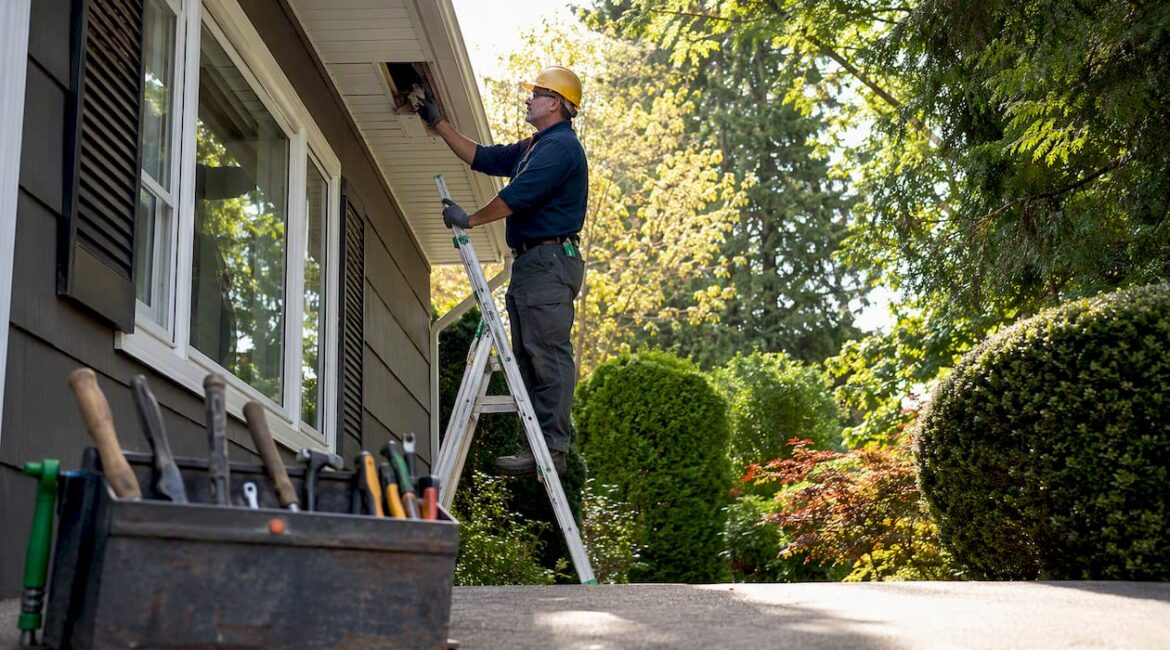
Most homeowners pay for fascia and soffit repair or replacement within a broad range that can be from a few hundred to several thousand dollars, with many projects falling into a moderate cost bracket. Where your project falls depends primarily on two things: how far the damage has spread and which material you choose for the repair.
A few quick numbers to anchor your budget:
- Per linear foot, fascia installation (including labor and materials) typically costs $6–$20 depending on material and job complexity; soffit pricing runs about $1.50–$3 per square foot for materials and labor combined, based on published national averages.
- A typical one-story home with average fascia length and vinyl material, assuming no major hidden damage, will generally incur costs in the range of $1,050–$3,300, with outliers for minimal or advanced repairs.
- Your immediate next step: get three written estimates, ask each contractor to inspect the gutters and rafter tails, and add 15–20% to whatever number they quote for hidden repairs you can’t see yet.
Cost snapshot: Minor soffit repair is generally affordable; fascia board repair costs vary widely; full soffit and fascia replacement is a more significant investment.
Table of Contents
- What does fascia and soffit repair cost by scope?
- What drives the price up or down?
- Which material should you choose?
- Should you repair or replace?
- Does homeowners insurance cover soffit and fascia work?
- What should a contractor estimate include?
- Three worked estimates you can compare to your quote
- Why delaying repairs almost always costs more
- Key Takeaways
- What most homeowners miss about these repairs
- Jaghomesnow handles fascia and soffit work in Bucks County
- Useful sources and next steps
What does fascia and soffit repair cost by scope?
The single biggest variable in any estimate is how much work actually needs to be done. A small patch on one section of soffit is a very different job from replacing the entire perimeter of a two-story home. The table below maps common scopes to realistic national cost ranges.
| Scope | Typical Cost Range | What’s Included |
|---|---|---|
| Minor soffit repair (patch, small section) | $150–$400 | Material patch, caulk, paint touch-up |
| Fascia board repair (one or two boards) | $300–$900 | Board replacement, fasteners, paint |
| Partial replacement (one side of house) | — | Materials, labor, gutter removal/reset |
| Full perimeter replacement (one story) | $3,000–$5,000 | All materials, labor, gutters, disposal |
| Full replacement (two story, advanced damage) | — | Structural repairs, scaffolding possible |
These ranges come from published national data and reflect installed costs, meaning material plus labor. They assume standard accessibility on a single-story home unless noted.
Per-linear-foot and per-panel examples
Contractors price fascia on a per linear foot basis with rates depending on material, and labor charges are hourly. Installed costs for fascia panels vary by material and job specifics.
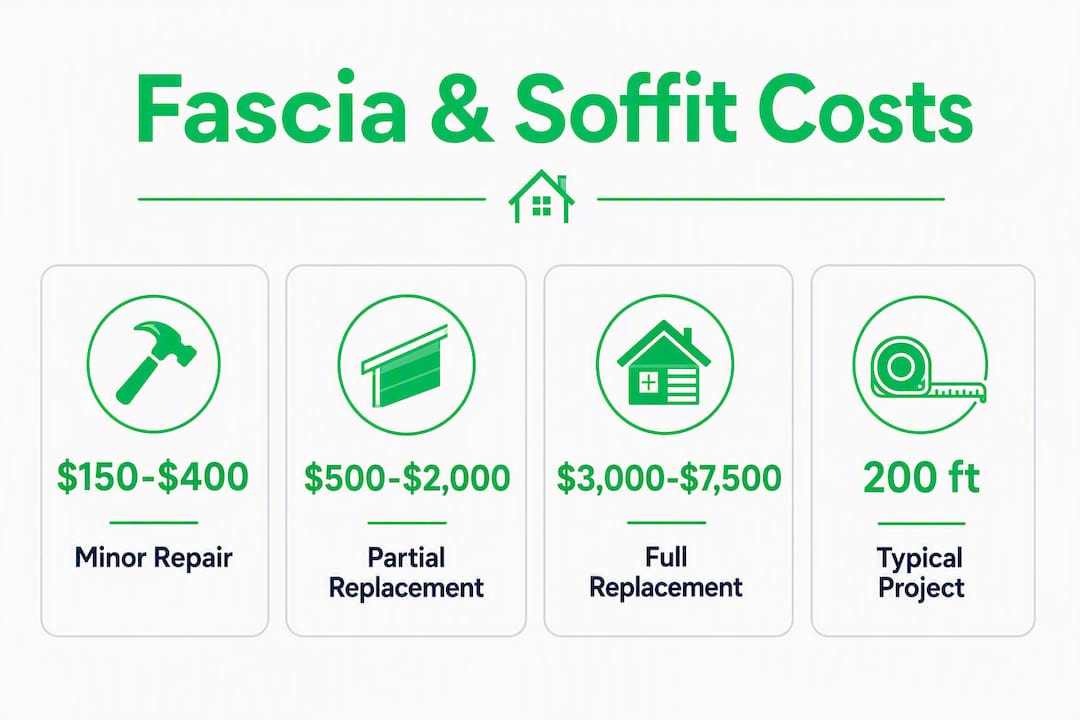
Worked example: one-story home, 200 linear feet
Assumptions: vinyl fascia and soffit, single story, gutters removed and reset, no hidden structural damage.
- Materials (vinyl fascia + soffit): $600–$900
- Labor (8–12 hours at $50–$70/hr): $400–$840
- Gutter removal and reinstallation: $150–$300
- Disposal: $75–$150
- Total (low to high): $1,225–$2,190
Add a contingency percentage for hidden repairs to the initial estimate to create a realistic project budget. That’s a reasonable sanity check for a mid-size one-story home with moderate wear.
Regional note: labor rates in the Northeast, including Bucks County, PA, tend to run toward the higher end of national ranges. Homes with steep pitches, dormers, or difficult rooflines will also push costs up, sometimes significantly.
What drives the price up or down?
Understanding the cost factors helps you compare two very different quotes and figure out which one is actually more complete.
Material choice
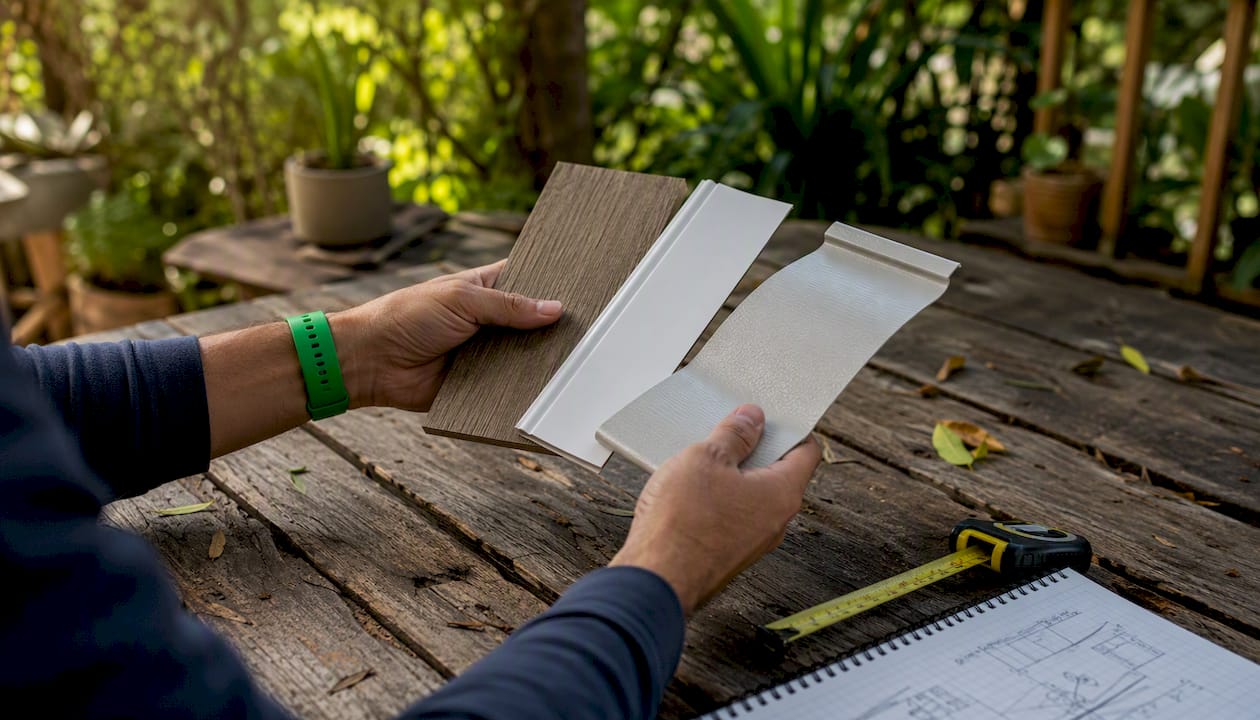
Wood has the lowest upfront material cost but requires frequent maintenance; vinyl and PVC are moderately priced and rot-resistant; aluminum and fiber cement tend to be higher priced but more durable options.
Damage type and spread
Surface peeling or a single soft spot is a minor repair. Dry rot that has spread across multiple rafter tails is a structural problem. Once rot reaches the roof sheathing, you’re no longer looking at a fascia job alone. Contractors consistently report that visible damage almost always hides more rot underneath, which is exactly why the 15–20% contingency exists.
Gutter removal and reinstallation
Fascia sits directly behind the gutters, so any fascia repair almost always requires removing and resetting them. That step alone adds $150–$500 in labor. If your gutters are already aging or sagging, replacing them at the same time saves you from paying for that removal labor twice.
Accessibility and roof height
A single-story ranch with easy ladder access is a straightforward job. A two-story colonial with dormers, steep pitches, or tight corners requires more setup time, possibly scaffolding, and fall-protection equipment. Confirm your roof height and slope with any contractor before signing an estimate, because this factor produces the largest labor-cost variability of any item on the list.
Hidden structural damage
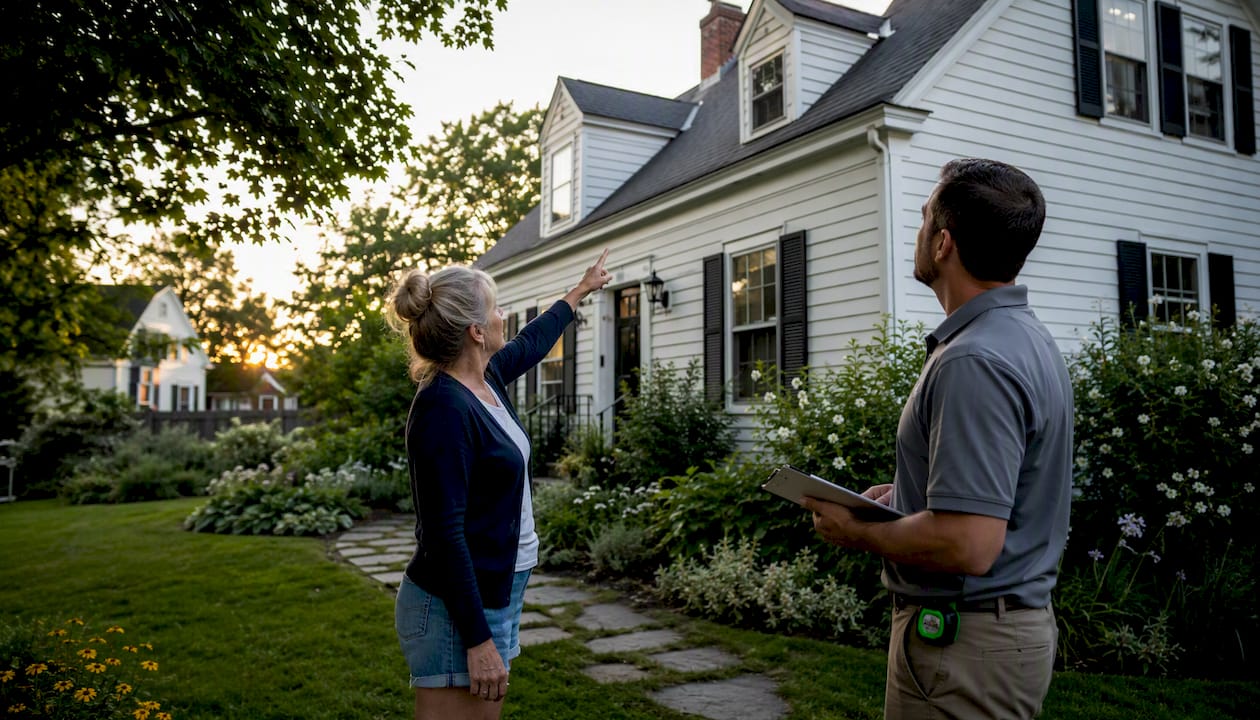
Once soffit panels come off, contractors frequently find rotted rafter tails, deteriorated sheathing, or compromised fasteners that weren’t visible from the ground. Budget an extra 15–20% above your initial estimate specifically for this possibility. It’s not pessimism; it’s standard practice.
Local labor rates and permits
Labor rates vary by region. Most fascia and soffit work doesn’t require a permit, but some municipalities require one when structural repairs are involved. Ask your contractor upfront whether a permit is needed and who pulls it.
Pro Tip: The single most expensive mistake homeowners make is waiting. A small soft spot in the fascia that costs $300 to fix today can spread to the rafter tails and sheathing within one or two wet seasons, turning a minor repair into a $3,000–$5,000 structural job.
Which material should you choose?
Material selection is really a lifecycle decision, not just a budget decision. The table below lays out the trade-offs so you can match the choice to your climate, maintenance tolerance, and long-term goals.
| Material | Installed cost per linear foot | Expected lifespan | Maintenance | Best use case |
|---|---|---|---|---|
| Wood | $6–$20 | — | High (paint every 3–5 yrs) | Historic homes, paintability |
| Vinyl/PVC | $5–$9 | — | Low | Budget-conscious, moisture-prone areas |
| Aluminum | $8–$20 | — | Very low | Low-maintenance, coastal/humid climates |
| Fiber cement | — | — | Low-moderate | High-humidity climates, paint flexibility |
| Composite | $12–$20 | — | Low | Premium look, durability-focused buyers |
Material cost data sourced from published per-foot ranges for installed fascia.
Key trade-offs worth knowing:
- Wood gives you the most flexibility for painting and matching historic trim, but in wet climates like the mid-Atlantic, it needs repainting every few years and is the first to rot.
- Vinyl is the most popular choice for budget-driven replacements and holds up well against moisture, though it can crack in extreme cold.
- Aluminum costs more upfront but rarely needs attention once installed, making it the lower total-cost option over a 20-year horizon.
- Fiber cement, the same material used in high-performance siding installations, handles humidity and temperature swings well and accepts paint cleanly.
When contractors recommend switching materials during a repair, it’s usually because the original wood has rotted repeatedly in the same spot. Moving to aluminum or fiber cement in that situation isn’t an upsell; it’s the practical call that avoids the same repair in five years.
Should you repair or replace?
The general rule is straightforward: patch when the damage is localized and the underlying structure is sound. Replace when rot has spread, rafters are compromised, or gutters need to come off across a large section anyway.
Patching often feels like the cheaper option, but contractors note that the labor cost of working at height and removing gutters is nearly the same whether you’re replacing one board or ten. When a section is near the end of its life, full replacement of that run is almost always more cost-efficient than repeated spot fixes.
Red flags that point toward replacement
- Soft wood across more than two or three rafter tails
- Visible insect tunneling or widespread pest damage
- Repeated leaks in the same area after previous repairs
- Evidence of damage to roof sheathing behind the fascia
- Gutters pulling away from the roofline along a full section
Decision checklist for homeowners
Use this when you’re inspecting damage yourself or reviewing a contractor’s recommendation:
- Press gently on the fascia board. Does it feel spongy or give under light pressure?
- Look for paint that’s bubbling, peeling, or discolored in a pattern (not just one spot).
- Check the soffit panels for sagging, staining, or visible gaps where animals could enter.
- Ask the contractor to show you photos of what’s behind the soffit before they close it up.
- If the gutters are more than 15 years old and need to come off anyway, price out new gutters at the same time.
Pro Tip: If you’re unsure whether to repair or replace, ask the contractor: “If we patch this today, how long before we’re likely back here doing the same job?” A good contractor will give you a straight answer. If the honest answer is “two or three years,” replacement now is the smarter spend.
Does homeowners insurance cover soffit and fascia work?
Usually not for routine wear, rot, or maintenance-related deterioration. Standard homeowners policies exclude damage caused by gradual wear, rot, and poor upkeep. Coverage is more likely when the damage was directly caused by a covered peril such as a windstorm, hail, or a falling tree.
Ice dams and clogged gutters are a common gray area. Insurers typically classify these as maintenance failures, which means the resulting soffit or fascia damage is excluded. If you’re in Bucks County and experienced a major storm, document everything before any repairs begin.
How to document a claim
- Take dated photos immediately after the storm or event, before any temporary repairs.
- Get a written inspection report from a licensed contractor that identifies the cause of damage.
- Request an itemized estimate that separates storm-caused damage from pre-existing wear.
- Gather any records of prior maintenance (gutter cleaning receipts, past inspection reports).
- Submit all documentation to your insurer and ask specifically which line items are covered under your policy’s peril definitions.
If insurance won’t cover it
- Home repair or improvement loan (personal loan or contractor financing)
- Home equity line of credit (HELOC) for larger replacement projects
- Phased replacement: address the worst section now and budget the rest over 12–18 months
- Some utility programs or local housing assistance funds offer grants for exterior repairs; check with your county housing office
What should a contractor estimate include?
A complete, written estimate is your best protection against surprise costs. Here’s what a professional fascia and soffit quote should break down:
- Materials: type, brand, and quantity (linear feet of fascia, square footage of soffit)
- Labor: either per-linear-foot or hourly, with estimated hours
- Gutter removal and reinstallation (or replacement, if recommended)
- Disposal of old materials
- Hidden-damage allowance or contingency note
- Permit costs, if applicable
- Paint or finish details (primed only, one coat, or full finish coat)
- Warranty on both materials and labor
Questions to ask before signing
- What material are you recommending, and why is it the right choice for my roofline?
- Who pulls the permit if one is required?
- What happens if you find rotted rafter tails once the soffit comes off?
- Does the warranty cover both the material and the installation labor?
- Will you reinstall my existing gutters, or do you recommend replacing them?
On timing: a minor repair (one or two boards) typically takes one to two days. A partial replacement covering one side of a house runs two to four days. A full-perimeter replacement on a two-story home can take a full week, longer if scaffolding is required or hidden structural repairs emerge. When scaffolding or fall-protection equipment is needed, expect an additional line item of $200–$500 or more depending on the setup. For guidance on choosing a roofing contractor, the same vetting principles apply: verify licensing, insurance, and references before any work begins.
Three worked estimates you can compare to your quote
These examples use explicit assumptions so you can scale them to your own home.
Assumptions for all three examples
- Labor rate: $55/hr (mid-range Northeast)
- Gutter removal and reinstallation included unless noted
- 15% contingency for hidden repairs included in the “realistic budget” line
- No permit required (standard residential repair)
| Line item | Minor repair | Partial replacement | Full replacement |
|---|---|---|---|
| Scope | 2 fascia boards, 1 soffit panel | — | Full perimeter, 200 linear feet, fiber cement |
| Materials | — | — | $1,225–$2,190 |
| Labor | — | $600–$900 | — |
| Gutter removal/reset | Not required | $150–$300 | $300–$500 |
| Disposal | — | $75–$150 | $150–$300 |
These figures align with published national ranges for minor to full replacement scopes. To adapt them to your home, multiply the per-linear-foot labor and material figures by your actual roofline length, then adjust upward for two-story access or complex rooflines.
If your contractor’s quote is significantly below the base total for your scope, ask what’s not included. A low bid that omits gutter removal, disposal, or a contingency allowance isn’t actually cheaper; it just moves the surprise to the invoice.
Why delaying repairs almost always costs more
Visible fascia damage is rarely the full story. Once rot starts in a fascia board, it spreads along the rafter tails and into the roof sheathing faster than most homeowners expect. What looks like a $400 repair from the ground can be a $3,000 structural job once the soffit panel comes off. The 15–20% contingency rule exists because hidden damage is the norm, not the exception. Early action is almost always the lower-cost path.
Contractors consistently report that homeowners who act at the first signs of trouble, peeling paint, a soft spot, or a small gap, spend significantly less than those who wait until the damage is obvious from the driveway.
Pro Tip: Schedule a gutter cleaning every fall and use that visit to have someone physically press on the fascia boards while they’re up there. Catching a soft spot in October costs far less than discovering structural rot in March after a Bucks County winter. Proper roofing ventilation also reduces moisture buildup that accelerates rot, so check your attic vents during the same seasonal inspection.
Seasonal timing matters too. Spring and early fall are the best windows for exterior repairs in the mid-Atlantic. Contractors are more available, temperatures allow paint and caulk to cure properly, and you avoid the freeze-thaw cycles that can worsen existing damage over winter.
Key Takeaways
Fascia and soffit repair costs range from $150 for a minor patch to $7,500 or more for full perimeter replacement, with material choice and damage spread determining where your project lands.
| Point | Details |
|---|---|
| National cost range | Most projects run $300–$7,500; the typical mid-range home pays $1,050–$3,300 all in. |
| Per-foot rule of thumb | Budget $6–$20 per linear foot installed for fascia; $1.50–$3 per square foot for soffit. |
| Hidden damage contingency | Add 15–20% to any estimate for rotted rafter tails or sheathing found after removal. |
| Insurance guidance | Routine rot and wear are excluded; coverage may apply for windstorm, hail, or fallen-tree damage with proper documentation. |
| Jaghomesnow local service | Jaghomesnow serves Bucks County homeowners with on-site estimates, material selection guidance, and full fascia and soffit replacement. |
What most homeowners miss about these repairs
There’s a tendency to treat fascia and soffit work as purely cosmetic, something to address when the curb appeal starts to suffer. That framing leads to the most expensive mistake in exterior home maintenance: waiting.
The structural reality is that fascia boards protect the rafter tails, and soffits protect the underside of the roof deck from moisture and pests. When either fails, the damage doesn’t stay contained. A single rotted fascia board left through a wet winter in Bucks County can mean replacing three rafter tails and a section of sheathing by spring. The repair bill doesn’t double; it can quadruple.
The other thing homeowners consistently underestimate is the value of bundling. If your gutters are aging and your fascia needs replacement, doing both in one mobilization saves you a full gutter-removal labor charge on the next project. The same logic applies to broader exterior work: if the roofline is showing stress in multiple places, a single comprehensive inspection is worth more than three separate contractor visits over two years.
My practical advice: don’t let a contractor talk you into a patch when the surrounding boards are already soft. And don’t let sticker shock on a full replacement push you toward a patch that buys you 18 months at best. Get the scope right the first time, choose a material that matches your climate, and build the contingency into your budget from day one.
Jaghomesnow handles fascia and soffit work in Bucks County
When you’re ready to move from estimate to action, Jaghomesnow gives Bucks County homeowners a clear, no-guesswork path. We install and replace fascia and soffit in wood, vinyl, aluminum, and fiber cement, handle gutter removal and reinstallation as part of the same project, and back our work with a labor warranty. You get one crew, one timeline, and one point of contact from inspection to cleanup.

To get an accurate quote, we need three things from you: a rough measurement of your roofline perimeter (or just the affected section), a few photos of the damage, and a note on roof access (single story, two story, any dormers or steep pitches). From there, we schedule an on-site visit and provide a written, itemized estimate with no hidden line items. If you’re planning other exterior work at the same time, such as siding replacement or window upgrades, we can scope it all in one visit and often save you mobilization costs by bundling.
Request your on-site estimate at jaghomesnow.com and we’ll get back to you within one business day.
Useful sources and next steps
- How Much Does Soffit and Fascia Repair Cost? (2026) | Angi — National cost ranges, per-linear-foot figures, and gutter bundling guidance
- How Much Does Fascia Board Replacement Cost? | Angi — Material cost per linear foot and lifespan comparisons
- Soffit and Fascia Repair Cost Guide | HomeGuide — Insurance exclusions and documentation guidance
- Fascia Board Replacement Cost | This Old House — Per-linear-foot installed cost ranges and material guidance
- Fiber Cement Siding Installation Bucks County PA | Jaghomesnow — Local fiber cement installation services and material options
- Roofing Ventilation Bucks County | Jaghomesnow — How attic ventilation affects moisture and soffit longevity
- Winter Weather Impact on Your Home’s Exterior | Jaghomesnow — Seasonal risks that accelerate fascia and soffit damage in Bucks County
- Choosing a Roofing Contractor | Reps of Texas — Contractor vetting checklist applicable to any exterior repair hire