

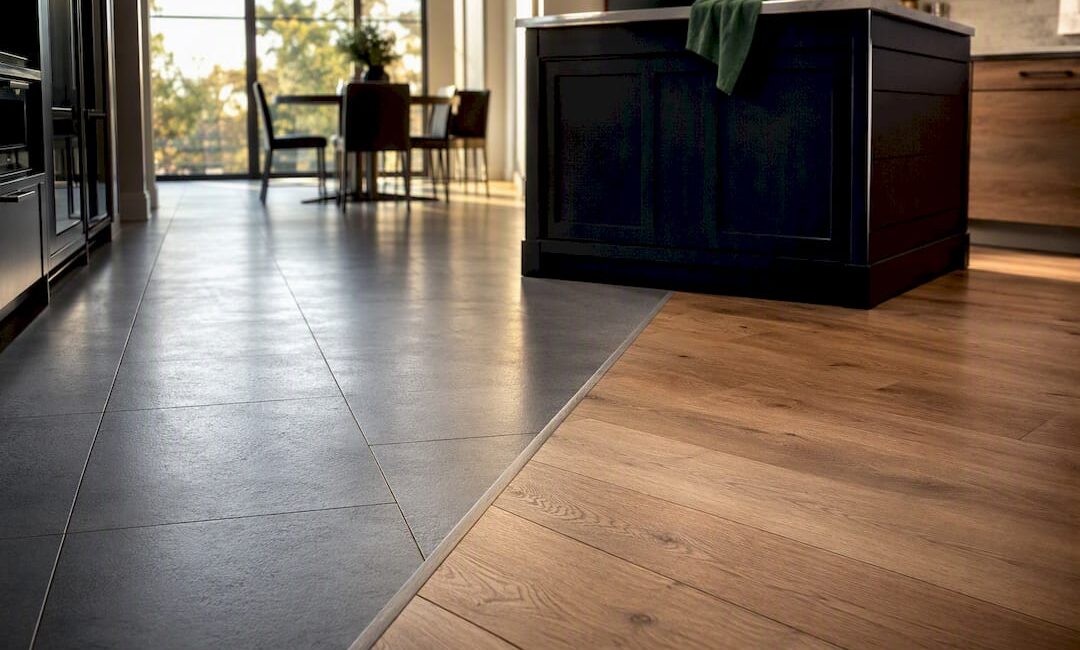
Porcelain tile and luxury vinyl plank are the two most practical kitchen flooring options for most households. Porcelain wins on permanence and resale value, while LVP wins on comfort, waterproof convenience, and budget. Engineered and solid hardwood remain popular for their warmth and looks, but both carry moisture trade-offs. The right pick depends on your household’s traffic, spill risk, and how long you plan to stay in the home.
TL;DR:
- Porcelain tile offers the longest lifespan, with effective waterproofing and minimal maintenance, making it ideal for those planning long-term residence.
- Luxury vinyl plank provides genuine waterproofing, quick installation, and comfort, especially suited for busy households with pets or frequent foot traffic.
- Engineered hardwood handles humidity swings better than solid wood but still requires careful spill management to prevent damage over its 20 to 30-year warranty period.
- Proper subfloor testing and preparation are crucial, as skipping moisture tests and using appropriate membranes can drastically reduce the risk of early floor failure.
- Choosing a flooring material should be based on durability and water resistance first, with style and design considerations addressed after ensuring the material’s performance.
Table of Contents
- Kitchen Flooring Options Ranked by Real-World Performance
- Waterproof vs. Water-Resistant: Why the Difference Matters
- How to Choose the Right Kitchen Floor for Your Home
- What a Real Installer Watches For
- Style and Design Choices That Fit Your Kitchen
- Sustainability and Environmental Impact Worth Knowing
- Safety Considerations: Slip Resistance and Air Quality
- Our Take: Durability and Water Resistance Come First
- Let JAG Home Enhancements Handle the Hard Part
- Sources
Kitchen Flooring Options Ranked by Real-World Performance
Not every material sold as “kitchen-ready” actually earns that label once you factor in spills, dropped cast iron pans, and a decade of foot traffic. Here’s how the mainstream materials stack up when you weigh durability, water resistance, and cost together.
-
Porcelain or ceramic tile. Porcelain has a water absorption rate under 0.5%, which makes it effectively waterproof and highly durable. It can last 25 years or longer with minimal wear, and it’s the material we recommend most often for homeowners who plan to stay put. The catch is grout lines, which need periodic sealing to resist staining, and the hard surface itself, which is unforgiving on dropped dishes and tired feet.
-
Luxury vinyl plank or tile (LVP/LVT). Rigid-core LVP is genuinely waterproof, not just water-resistant, and it installs fast, often as a DIY weekend project for smaller kitchens. Installers frequently point to LVP as the practical default for busy households because it balances comfort, price, and performance better than almost anything else on this list. Look for a wear layer of at least 20 mils if you have pets or plan to stay long term.
-
Engineered hardwood. This is real hardwood veneer bonded to a plywood or high-density fiberboard core, and that layered construction makes it more dimensionally stable than solid wood. It handles humidity swings better, but standing water is still its enemy, and most veneers can only be refinished once or twice before you’re replacing the floor.
-
Solid hardwood. Nothing matches the resale appeal or warm, seamless look of solid hardwood running from your living area into the kitchen. But it swells, cups, and gaps with moisture exposure, so it only makes sense for households that are genuinely careful about spills and mats at the sink.
-
Waterproof laminate. Standard laminate has no place in a kitchen, but the newer waterproof lines close that gap at a lower price point than hardwood or tile. Read the fine print before buying, since ordinary laminate can swell at the seams when water sits on it for more than a few minutes.
-
Natural stone. Granite and slate are dense and durable, but marble and travertine are softer and more porous. Expect to reseal those every six to twelve months to guard against etching from acidic spills like lemon juice or wine. A simple sealing routine goes a long way toward preventing that dull, etched look around the sink.
-
Cork. Cork gives you a genuinely warm, cushioned floor that’s kind to your knees during long cooking sessions, but it needs periodic resealing to keep its moderate water resistance intact. It’s a niche pick, best suited to kitchens with light-to-moderate spill risk.
-
Sheet vinyl. With virtually no seams, sheet vinyl creates a continuous waterproof surface at one of the lowest price points available. It won’t win design awards, but for a rental property, a utility kitchen, or a tight renovation budget, it does the job without drama.
Waterproof vs. Water-Resistant: Why the Difference Matters
“Waterproof” and “water-resistant” get used interchangeably in flooring showrooms, and that’s where a lot of buyer’s remorse starts. Waterproof materials, like porcelain tile and rigid-core LVP, can sit under standing water for hours without structural damage. Water-resistant materials, like engineered hardwood and most laminate, can handle a quick spill wiped up promptly but will warp or swell if water lingers.
- Lifespan and warranty: porcelain tile often carries lifetime warranties on the material itself; LVP typically runs 15 to 25 years depending on wear layer thickness; engineered hardwood usually falls in the 20 to 30 year range if kept dry.
- Comfort underfoot: LVP and cork feel noticeably softer than tile or stone, and both pair well with radiant heat systems, which tile also handles exceptionally well.
- Cost drivers: material price is only part of the bill. Subfloor leveling, moisture testing, grout and sealer, and old-floor removal often add 20 to 40% to a project’s total cost.
- Installer cautions: concrete subfloors need moisture testing before any glue-down installation, tile over plywood needs a decoupling membrane, and floating floors like laminate and click-lock LVP need expansion gaps around the perimeter.
Pro Tip: Ask your installer specifically whether they test subfloor moisture content before starting. A rushed installer who skips this step is the number one reason kitchen floors fail early, regardless of which material you chose.
How to Choose the Right Kitchen Floor for Your Home
Work through this in order rather than falling in love with a sample first.
- Define how your kitchen actually gets used. A household with kids, dogs, and daily cooking has different needs than a couple who orders takeout three nights a week.
- Set a total budget that includes removal of the old floor, subfloor prep, and materials, not just the per-square-foot price on the box.
- Narrow your options to two materials, no more, so you’re comparing apples to apples on samples.
- Bring those samples home and look at them under your actual kitchen lighting, morning and evening, before committing.
- Confirm installation details and warranty terms in writing before signing anything.
Ask any installer or supplier these questions directly:
- Have you tested the subfloor for moisture, and what were the readings?
- What underlayment or decoupling membrane do you recommend for this subfloor type?
- Is the warranty for materials only, or does it cover installation labor too?
- What’s your realistic timeline, and what happens if you hit unexpected subfloor damage?
Walk away from anyone offering a vague one-line warranty, skipping subfloor checks entirely, or quoting a tile installation timeline that seems too fast to include proper curing time.
What a Real Installer Watches For
Subfloor prep decides whether a kitchen floor lasts fifteen years or fails in three. Moisture testing on concrete slabs and decoupling membranes under tile prevent the cracking and grout failures that show up a year or two after a rushed install. Professional installers specialize in high-quality craftsmanship using advanced materials and techniques, with a focus on completing kitchen renovation projects effectively and to homeowner satisfaction.
A few things worth knowing before your project starts:
- Glue-down LVP suits kitchens with uneven subfloors; floating LVP suits flatter subfloors where speed matters more.
- Transitions into adjacent rooms need planning before demo day, not after, especially in open concept layouts.
- A typical 200 to 300 square foot kitchen floor project runs through demo, subfloor prep, installation, and cure or finish time in stages, and a clean, organized job site should be part of that process from day one.
Style and Design Choices That Fit Your Kitchen
Flooring decisions aren’t just about performance. Large-format porcelain tile, often 24 by 24 inches or bigger, has become a favorite among installers because fewer grout lines mean a cleaner, more expansive look that photographs beautifully in open floor plans. Wide-plank LVP delivers a similar “forever floor” feel while staying fully waterproof.
Wood tones are trending toward warmer, less orange finishes; think honey and walnut rather than the yellow oak popular a decade ago. Matte and low-sheen finishes on both tile and vinyl hide everyday footprints and water spots better than high-gloss options, which show every smudge under kitchen lighting.
If your kitchen opens into a living or dining space, matching flooring across the transition creates visual flow that a lot of buyers respond to. Engineered hardwood or wood-look LVP handle that continuity far more naturally than tile, which tends to interrupt the sightline unless the transition is handled deliberately. Patterned tile, herringbone LVP layouts, and mixed-material inlays near a kitchen island are also gaining ground for homeowners who want a defined cooking zone without a full room divider.
Sustainability and Environmental Impact Worth Knowing
Cork stands out as one of the more renewable choices on this list, harvested from the bark of cork oak trees without cutting down the tree itself, allowing the bark to regenerate over years. Solid and engineered hardwood can also be sustainable choices when sourced from responsibly managed forests, though sourcing varies widely by manufacturer and isn’t guaranteed just because a product says “wood.”

Porcelain tile is manufactured from natural clay and minerals fired at high temperatures, and its extremely long service life means less material heading to a landfill over the decades compared to floors you replace every ten years. Vinyl products, including LVP and sheet vinyl, are petroleum-based, which raises legitimate questions about manufacturing impact, though their durability does reduce how often they need replacing.
If environmental impact ranks high on your priority list, ask manufacturers directly about recycled content and end-of-life recyclability rather than relying on marketing language on the box. Some LVP lines now include recycled backing material, but this varies significantly by brand and isn’t yet standard across the industry.
Safety Considerations: Slip Resistance and Air Quality
Slip resistance matters more in a kitchen than almost anywhere else in the house, given the combination of spills, grease, and bare feet. Textured or matte-finish porcelain tile generally performs better underfoot when wet than polished or high-gloss stone, which can turn dangerously slick the moment water hits it. If you’re drawn to natural stone, ask specifically about its slip rating in a wet state, not just its rating in a showroom.
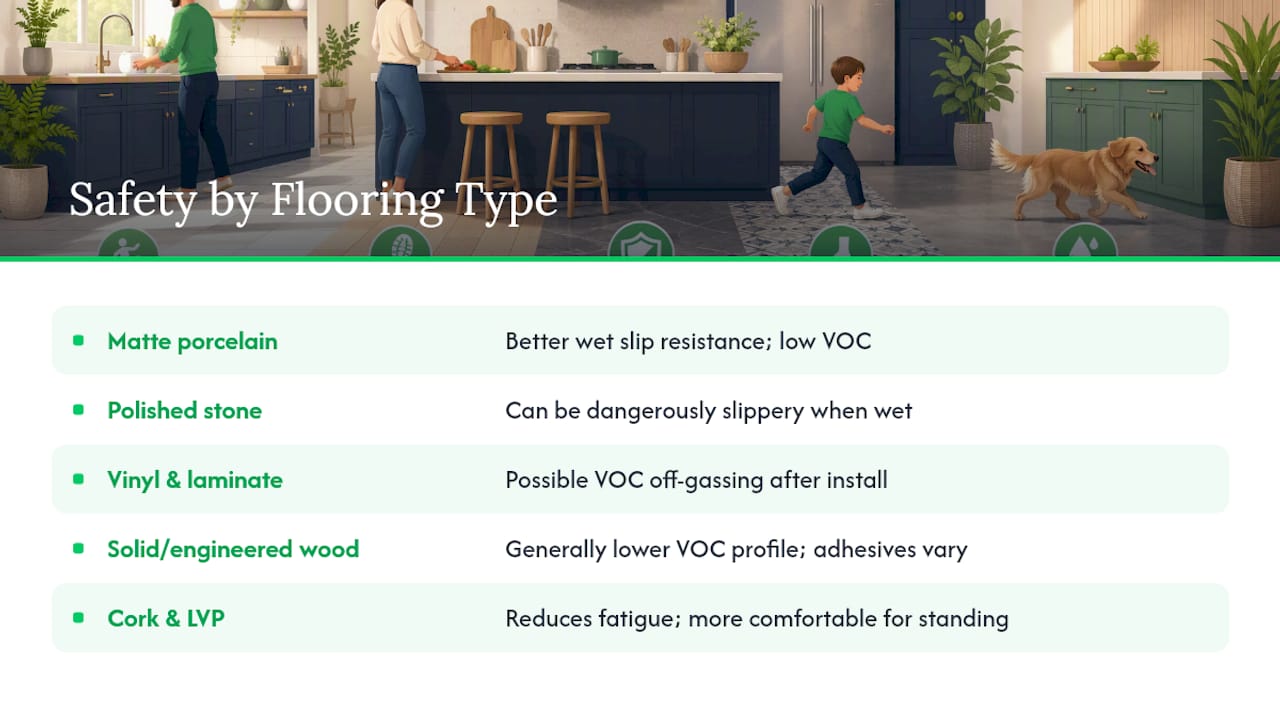
Toxicity is the other consideration, particularly around indoor air quality. Some vinyl and laminate products off-gas volatile organic compounds for a period after installation, so it’s worth asking suppliers for products certified as low-VOC, especially if anyone in the household has respiratory sensitivities. Solid hardwood, engineered hardwood, and tile generally carry a lower VOC profile than budget vinyl or laminate, though finishes and adhesives used during installation can add their own emissions regardless of the base material.
Standing surfaces also matter for comfort and safety over time. Cork and LVP reduce fatigue during long cooking sessions, while tile’s hardness is part of why design professionals often recommend mats at the sink and stove, both for comfort and to cushion the occasional dropped glass.
Our Take: Durability and Water Resistance Come First
Most kitchen flooring advice online leads with aesthetics, color trends, and plank widths. That’s backwards. A gorgeous floor that swells at the seams after your dishwasher leaks isn’t a design win, it’s a five-figure mistake waiting to happen. The research is consistent on this: porcelain and rigid-core LVP dominate professional recommendations precisely because they solve the water problem first, then let you build style choices on top of that foundation.
Where conventional advice falls short is treating hardwood as an equal contender for every kitchen. It isn’t. Engineered hardwood can work beautifully in a low-spill household with good habits, but pretending solid hardwood belongs in every “open concept” kitchen ignores what actually happens near a sink over fifteen years. Prioritize water resistance and subfloor prep before you fall for a wood sample under showroom lighting. Everything else, including color and pattern, is a second decision, not the first one.
— Jeff
Let JAG Home Enhancements Handle the Hard Part
Choosing a material is only half the job. Getting it installed correctly, on a properly prepped subfloor, with the right membrane or underlayment, is where most kitchen floors actually succeed or fail. A remodeling service can handle the whole process for homeowners: material selection guidance, subfloor remediation, and hands-on installation oversight from demo day through the final walkthrough.
Hiring a professional makes the most sense for large-format tile installations, any project requiring subfloor repairs, kitchens getting integrated radiant heat, or full remodels where flooring is just one piece of a bigger scope. If you’re weighing your options and want a second opinion on what actually fits your home and budget, request an estimate for your kitchen remodel and get a straight answer before you commit to a material.
Sources
- Best Kitchen Flooring Options in 2026: All 11 Types Compared
- Best Flooring for Kitchens: An Installer’s Honest Guide (2026)
- Hardwood flooring in kitchens review: pros & cons
- Kitchen Flooring Installation: Pros, Cons, and Buying Guide – D and G Flooring