

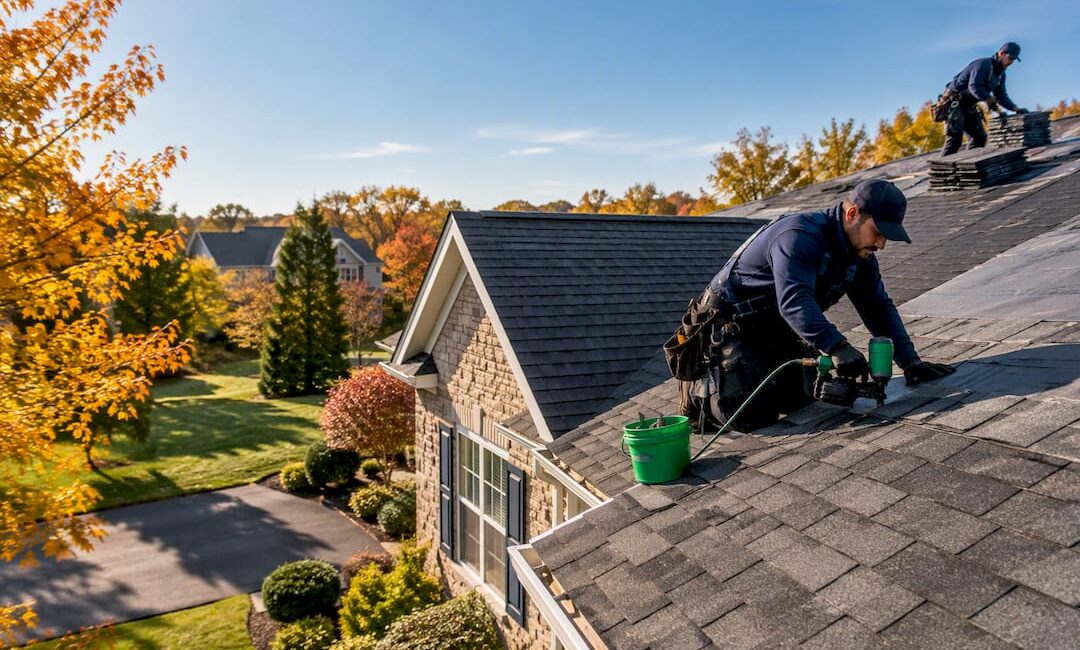
Late summer through early fall, spanning several months around September through November, is generally a preferred window for many Bucks County roof replacements, with late spring (around May and June) also popular. The caveat: if your roof is actively leaking or damaged, don’t wait for the ideal season. Manufacturer temperature limits and township permitting timelines matter more than the calendar once a repair becomes urgent.
TL;DR:
- Roofing in Bucks County is best scheduled from September to November or May to June, but urgent leaks require immediate repairs regardless of season.
- Signs needing urgent replacement include active leaks, curling shingles, repeated repairs, sagging decking, or granule buildup, especially if multiple are present.
- Permitting generally requires an Alterations Level 1 permit, with township-specific paperwork, inspection timelines, and structural considerations influencing scheduling.
- Booking your project six to eight weeks in advance during fall and securing a permit-ready quote helps avoid delays caused by high demand and weather unpredictability.
Table of Contents
- When Is the Best Time to Replace a Roof in Bucks County?
- Why Does Roofing Temperature Actually Matter?
- What Are the Signs You Need a New Roof Now?
- Do I Need a Permit to Replace My Roof in Pennsylvania?
- How Far in Advance Should You Book a Roof Replacement?
- Is It Safe to Replace a Roof in Winter?
- What Happens If You Delay Roof Replacement in the Wrong Season?
- Are Roofing Materials Harder to Get in Certain Seasons?
- How Should You Prepare Your Home for Roof Replacement?
- What Bucks County Homeowners Should Know Before Hiring a Roofer
- Ready to Schedule Your Roof Replacement?
- Sources
- FAQ
When Is the Best Time to Replace a Roof in Bucks County?
Fall wins for a simple reason: the weather cooperates and the shingles do too. Moderate temperatures and predictable dry stretches give roofing crews time to complete the tear-off, dry-in, and shingle-seal process without racing a storm front or fighting extreme heat. Cooler nights also give asphalt shingles time to seal properly before the county’s first hard freeze, which matters more than most homeowners realize.
Late spring, specifically May and June, is the strong runner-up. At Trenton, May normals run about 72.4°F during the day and 51.6°F overnight, similar to the mild conditions Philadelphia sees that same month. That’s close to ideal shingle-sealing weather, and because most homeowners think “summer” rather than “spring” when they think roofing, crews are often less booked in May and early June than they are in July or August.
Here’s how the seasons stack up for a typical Bucks County home:
- Fall (September–November): Best all-around window. Moderate temps, drier stretches, and enough runway before winter for shingles to seal fully.
- Late spring (May–June): Second-best window. Similar temperature range to fall, often lighter contractor demand than peak summer.
- Summer (July–August): Doable, but heat softens asphalt, raises the risk of scuffing, and pushes crews to start early and break during peak sun.
- Winter (December–February): Reserved for emergencies. Cold makes shingles brittle, and hidden frost or ice on the decking creates real safety hazards.
If a specific week looks perfect in October but a cold front is rolling in during your target week in November, the forecast should win over the calendar. Pick your actual install dates from a 10-day forecast, not from “fall is good” alone.
Why Does Roofing Temperature Actually Matter?
Asphalt shingles rely on a heat-activated adhesive strip to seal themselves down after installation. That seal is what keeps wind from lifting shingle edges during a storm two winters later, so the temperature at install time isn’t a comfort issue. It’s a durability issue.
ARMA’s cold-weather installation guidance warns that cold temperatures make shingles more brittle and harder to handle without cracking, and that decks can carry hidden frost or ice that crews might not see until someone’s already standing on it. Manufacturers often recommend hand-sealing tabs in colder weather since the sun won’t do the work for them.
Heat creates the opposite problem. Softened asphalt scuffs easily underfoot, which is why good crews sequence their work around the sun rather than working a south-facing slope at 2 p.m. in August.
Local Temperature Snapshot: Philadelphia’s May normals sit at 74.4°F/54.2°F, landing squarely in the range most shingle manufacturers list as ideal for sealing. October brings similarly moderate conditions.
Skip the generic “40°F rule” you’ll see repeated online. Every shingle line has its own manufacturer-specified installation range, and that number, not a rule of thumb, is what your contractor should be following.
What Are the Signs You Need a New Roof Now?
Some roofs simply won’t make it to the ideal season, and pretending otherwise usually costs more than the replacement itself. Watch for:
- Interior water stains or active leaks, especially ones that appear after normal rainfall rather than a major storm.
- Curling, cracking, or missing shingles across more than a small patch of the roof.
- Repeated patch repairs on the same section within a year or two.
- Sagging roof decking, which signals the structure underneath, not just the shingles, is compromised.
- Granules collecting in gutters, a sign the shingles are past their protective lifespan.
Waiting on any of these usually trades a manageable roofing bill for a much larger one involving insulation, drywall, and mold remediation. If you’re seeing two or more of these signs, our detailed roof replacement checklist walks through a full inspection you can do from the ground.
Do I Need a Permit to Replace My Roof in Pennsylvania?
Most straightforward roof replacements in Bucks County fall under an Alterations Level 1 permit through Pennsylvania’s Uniform Construction Code, according to the PA Department of Labor & Industry. That’s the simple case. If your roofer discovers rotted sheathing underneath the old shingles and needs to replace it, that changes what documentation the permit requires and can affect inspection timing.
Fees, required paperwork, and inspection scheduling all vary by township, so what applies in Doylestown may differ slightly from Warwick Township or Buckingham. Before your contractor shows up, confirm:
- Who’s filing the permit (your contractor typically applies on your behalf, but you should confirm this in writing).
- What documents your township requires, which can include a site plan or proof of insurance.
- How far out inspections are scheduled, since some townships book several days ahead.
- Whether snow load or structural requirements apply to your specific roof pitch and age.
Getting this sorted before your install date keeps a fall booking from sliding into a December scramble. Our guides on avoiding failed inspections and Pennsylvania snow load requirements cover the specifics in more detail.
How Far in Advance Should You Book a Roof Replacement?
Fall is the most requested season for roofing in the Mid-Atlantic, and consumer guidance consistently points to September as one of the most heavily booked months for contractors regionally. That demand means homeowners who wait until October to start calling around often end up pushed into November or later.
Here’s a realistic sequence for booking a fall install:
- Get your estimate scheduled 6 to 8 weeks out, since site visits themselves often need one to two weeks of lead time during busy months.
- Submit your permit application as soon as you sign a contract, since township processing often takes one to three weeks.
- Confirm your install window, then build in one to two contingency days for weather.
- Plan for final inspection and cleanup to add another one to three days after installation wraps.
For an average 2,000 square foot roof, actual tear-off and installation usually takes one to three days depending on pitch, layers of old shingles, and any decking repairs. If you’d rather skip the fall rush entirely, booking in May or June often means faster scheduling. Our spring and summer booking guide explains how that seasonal shift in demand works locally.
Pro Tip: Ask for a permit-ready quote up front, one that already accounts for your township’s documentation requirements. It saves a week of back-and-forth once you’re ready to sign.
Is It Safe to Replace a Roof in Winter?
Winter installation should be the exception, reserved for active leaks or storm damage that can’t wait for spring. ARMA’s guidance is direct about the risks: brittle shingles crack more easily in the cold, and decking can hide frost or ice that turns a routine job into a safety hazard. A responsible crew will postpone rather than work an icy roof.
When an emergency does require a mid-winter fix, the priorities shift to stabilization first:
- Temporary tarping to stop active water intrusion immediately.
- Emergency patch repairs rather than a full tear-off, when the goal is holding through the season.
- Contractor safety protocols, including harnesses and ice checks before anyone steps on the deck.
- A follow-up plan to schedule the full replacement once temperatures allow proper sealing.
If a storm just hit your roof, our 48-hour storm damage checklist covers the immediate steps before a contractor even arrives.
What Happens If You Delay Roof Replacement in the Wrong Season?
Putting off a needed replacement until “the right time” can quietly turn a roofing job into a much bigger renovation. A roof that’s already showing curling shingles or granule loss doesn’t hold steady while you wait for October. It keeps degrading, and Bucks County’s freeze-thaw cycles are particularly hard on compromised roofing, since water that gets under lifted shingles expands when it freezes and pries them further loose.
The bigger risk isn’t the roof itself. It’s what’s underneath. Once water finds a path through failing shingles and underlayment, it typically reaches the decking next, and rotted decking means your “simple shingle swap” now involves structural repairs and a change to your permit paperwork. From there, moisture works into attic insulation and ceiling drywall, and mold can start developing within 24 to 48 hours of sustained dampness.
There’s also a cost dimension homeowners underestimate. A roof that fails mid-winter often forces an emergency repair at premium pricing, followed by a full replacement in spring anyway, essentially paying twice. Waiting through a hot, humid Bucks County summer with a marginal roof carries its own risk too, since afternoon thunderstorms are common and a roof that’s barely holding on rarely survives a summer of them intact.
The practical rule: if your roof shows multiple warning signs, the “ideal season” is whenever your contractor has a safe weather window, not necessarily fall.
Are Roofing Materials Harder to Get in Certain Seasons?
Material availability shifts with regional demand more than most homeowners expect. Standard three-tab and architectural asphalt shingles rarely see true shortages in Bucks County, but popular colors and premium lines can run tight during peak fall booking season, when every contractor in the region is ordering from the same regional distributors at once.
Late summer, ahead of the fall rush, tends to be when lead times are shortest for standard materials. Suppliers haven’t yet hit their seasonal crunch, and contractors are still filling out their fall schedules rather than racing to source last-minute orders. By contrast, ordering in October or November, once demand has peaked, can add a few days to a week onto material delivery if you want a specific shingle color or a specialty product like standing-seam metal accents.
Winter presents a different dynamic. Demand drops, so material availability is generally good, but severe weather can delay regional shipping regardless of what’s in stock. Spring (May and June) tends to land in the middle: demand is picking back up from winter’s lull, but hasn’t hit the fall peak, so lead times stay reasonable.
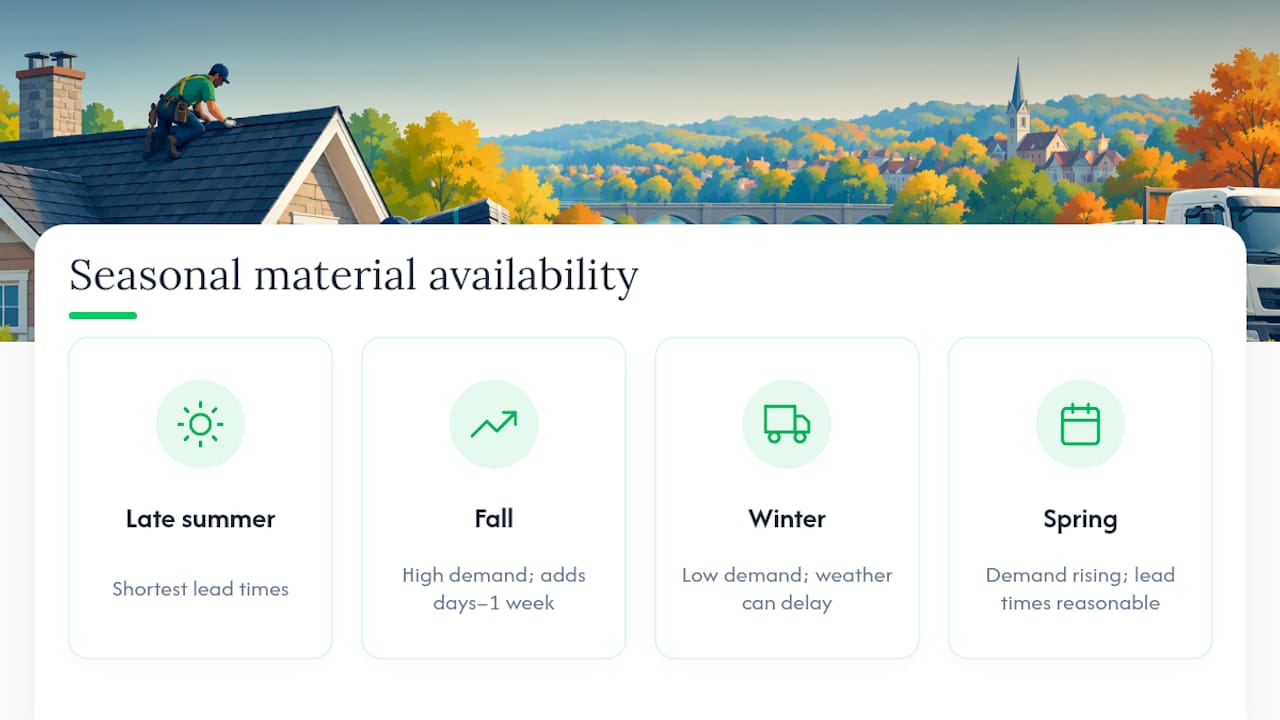
The practical takeaway is to lock your material selection, especially if you want a less common shingle color or a specialty product, at the same time you book your install date. Waiting until two weeks before a fall installation to finalize your shingle choice is the most common way a firm October date slips into November.
How Should You Prepare Your Home for Roof Replacement?
Preparation looks a little different depending on the season, but a few steps apply year-round. Move vehicles out of the driveway and clear a path for material delivery and the dumpster or trailer that will haul away old shingles. Take down anything fragile hanging on interior walls, since the vibration from tear-off can occasionally jar picture frames loose. Cover items in your attic with a tarp, since some dust and debris typically filters down during removal.

In fall, the main extra step is coordinating around foliage. If you have large trees near the roofline, a quick trim beforehand gives crews clearer access and reduces the chance of debris tangling with gutters mid-project. In late spring, pollen and yard work season mean asking your crew about lawn protection, especially if landscaping beds sit close to the foundation where ladders and material staging will happen.
Summer installs benefit from an early conversation about water access for the crew and clear expectations on when work will pause for extreme heat. Winter or emergency jobs need the fastest prep: clearing gutters of ice, marking any skylights or vents crews should route around, and confirming with your contractor what temporary weatherproofing will look like if full installation has to pause mid-project.
Whatever the season, walk the property with your contractor before day one and confirm where materials will stage, where the dumpster will sit, and how they’ll protect your landscaping.
What Bucks County Homeowners Should Know Before Hiring a Roofer
Roof timing questions come up constantly here, and the answer is almost never as simple as “wait for fall.” Bucks County’s freeze-thaw winters and humid summers both put real stress on a compromised roof, and the permit variation between townships means the paperwork side deserves as much planning as the weather side.
Before you sign with any roofing contractor, confirm these points directly:
- Site access and material staging, so you know where the dumpster and delivery trucks will go.
- Attic ventilation plans, since a reroof is the easiest time to fix ventilation issues that shorten shingle life.
- Who’s handling the permit and what your specific township requires.
- A realistic timeline, including weather contingency days.
- Warranty terms, both manufacturer and workmanship.
- Cleanup expectations, including magnetic nail sweeps and dumpster removal timing.
A local Bucks County roofing crew generally navigates township permit quirks faster than a crew unfamiliar with the area, and that familiarity often shows up in fewer scheduling surprises once the permit application actually goes in.
— Jeff
Ready to Schedule Your Roof Replacement?
If you’ve read this far because your roof is showing its age, the next move is simple: get a permit-ready quote before the fall rush fills every local contractor’s calendar. A local roofing service handles roofing replacement and storm damage repair throughout Bucks County, often managing permit paperwork and township coordination to keep projects on schedule.
Crews typically plan around local weather patterns and manufacturer sealing guidelines, maintaining clean and clearly scheduled job sites from the start through final cleanup. Whether you’re looking at a straightforward reroof or you’ve found decking damage that needs attention first, request a no-obligation inspection through our roofing and exterior services page and get a real timeline instead of a guess.
Sources
- Daily Climate Normals for Philadelphia (KPHL)
- PA Department of Labor & Industry: Plan review and inspection requirements
- Martha Stewart: Best time of year to replace a roof
FAQ
Is $30,000 too much for a roof replacement?
It depends heavily on roof size, materials, and complexity, since a large or steep roof with premium shingles can legitimately cost more than a smaller, simpler one. Get a permit-ready quote from a local contractor so you’re comparing an actual bid against your specific roof, not a generic average.
What is the 25% rule for roofing?
Pennsylvania’s current code doesn’t apply this rule uniformly statewide, so check with your township or a local roofing contractor about how repair versus replacement decisions are handled for your specific situation.
Should a 20-year-old roof be replaced?
Many asphalt shingle roofs last well over a decade depending on material quality, ventilation, and installation, so an older roof is worth a close inspection rather than an automatic replacement. Look for curling shingles, granule loss, and any interior water stains as the deciding factors, not just the age on the calendar.
How long does it take to replace a roof on a 2,000 square foot house?
The physical tear-off and installation typically takes one to three days depending on roof pitch and complexity, but the full process, including the site visit, permit approval, and final inspection, often spans several weeks from start to finish. Building in one to two weather contingency days is standard practice for any Bucks County install.