The best pool deck material for a Pennsylvania home is one that handles three things at once: summer sun on bare feet, wet-surface traction, and winters that freeze and thaw the ground over and over. Pavers, sealed travertine and capped composite decking all do well on those counts when they are installed correctly. Plain poured concrete is the cheapest to start with, but it asks the most of you later. We build custom decks, composite decks and outdoor living spaces in Bucks County, so the guidance below is written from the deck builder’s side of the fence: what to choose, what it costs, and what to settle before any work starts.
TL;DR
- Pennsylvania’s freeze-thaw cycle is the main stress on a pool deck, so favor materials with joints or flex, or a surface that is sealed and kept sealed.
- Installed prices in 2026 national data range from about $8 per square foot for plain concrete to $50 or more for natural travertine. Composite and raised decks are priced by design.
- Light colors and textured finishes keep surfaces cooler and safer under wet feet. Darker colors get hotter in direct sun.
- Pools 24 inches deep or more generally need a permit and a barrier. Check with your township before you order materials.
- If your pool sits beside a raised deck or an outdoor living area, capped composite is a durable, low-upkeep choice we install.
Table of Contents
- What a pool deck has to survive in Pennsylvania
- The main pool deck materials compared
- Heat and traction: the two comfort tests
- How Pennsylvania winters change the choice
- Maintenance by material
- What it costs to resurface instead of replace
- Permits, barriers and setbacks
- How to choose: a short decision guide
- Where we fit in
- Our perspective
- FAQ
- Sources
What a pool deck has to survive in Pennsylvania
A pool deck is not a patio. It takes chlorinated or salt-laced splashing, sunscreen, wet bare feet, furniture drag and, from December to March, ice. Water is the common thread. Water that seeps into a crack or an open joint and freezes expands, widens the gap and breaks the surface a little more each winter. That is why surfaces that shed water, drain well and stay sealed outlast ones that soak it up.
Three questions narrow the field fast:
- Will people walk on it barefoot at midday in July?
- Does it stay grippy when wet?
- What does it need every year to survive our winters?
The rest of this guide runs each material through those questions.
The main pool deck materials compared
The table below sums up typical installed costs and lifespans. Prices are 2026 national averages from Pool Cost Estimator’s June 2026 guide. Pennsylvania labor and site conditions move them, so treat them as a planning range, not a quote.
| Material | Installed cost per sq ft | Typical lifespan | Upkeep |
|---|---|---|---|
| Plain concrete | $8–$12 | 20–30 years before major crack repair | Sealing, crack repair |
| Stamped concrete | $14–$22 | 15–25 years | Reseal every 3–5 years |
| Concrete pavers | $16–$28 | 30–50 years | Joint sand, occasional sealing |
| Natural travertine | $25–$50+ | 50–100 years if sealed properly | Regular sealing |
A standard 15-by-30-foot pool typically needs 400 to 700 square feet of deck, per the same guide. At those sizes, the gap between plain concrete and travertine is the difference between a few thousand dollars and a five-figure project.
For a wider look at how common paving options stack up, this comparison of paving material types is a handy overview before you start collecting quotes.
Poured concrete
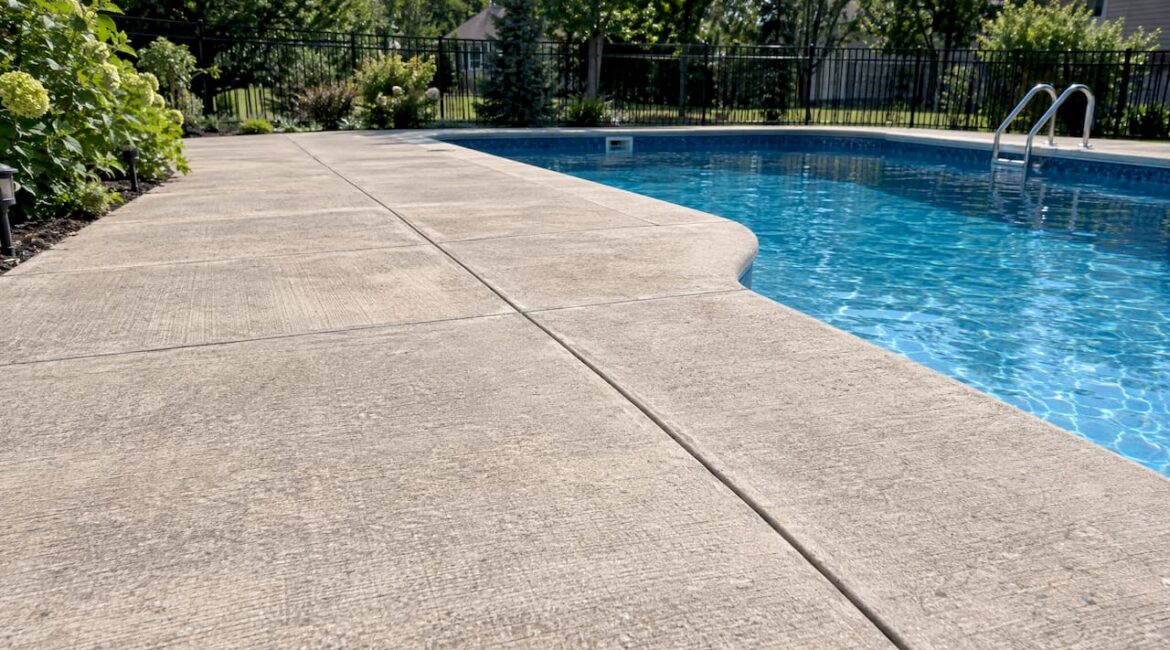
Broom-finished concrete is the budget baseline. It is slip-resistant when the finish is textured, and it is a good canvas for coatings. The trade-off is heat and cracking. The same cost guide reports plain concrete reaching 120–145°F at the surface in direct sun. A single slab also cracks as soil freezes and heaves beneath it, so control joints and a well-compacted base matter more than the concrete mix.
Stamped concrete
Stamping adds pattern and color at a modest premium. It looks good on day one, but the surface needs resealing every three to five years, and a sealer that is too glossy can turn slick when wet. If you choose stamped, ask for a textured, slip-resistant sealer.
Pavers
Interlocking concrete pavers sit on a compacted base with sand-filled joints, so the surface can flex slightly with the ground instead of cracking as one piece. A damaged paver can be lifted and replaced without tearing out the whole deck. The upkeep is keeping joints filled, since weeds and washed-out sand let water in. Per One and Done Prep’s July 2026 paver cost guide, a paver pool deck of 400–600 square feet typically costs $4,000 to $18,000, and Northeast and Mid-Atlantic labor runs $12–$18 per square foot. Porcelain pavers add $2–$4 per square foot in labor because they need specialized cutting equipment.
Travertine and natural stone
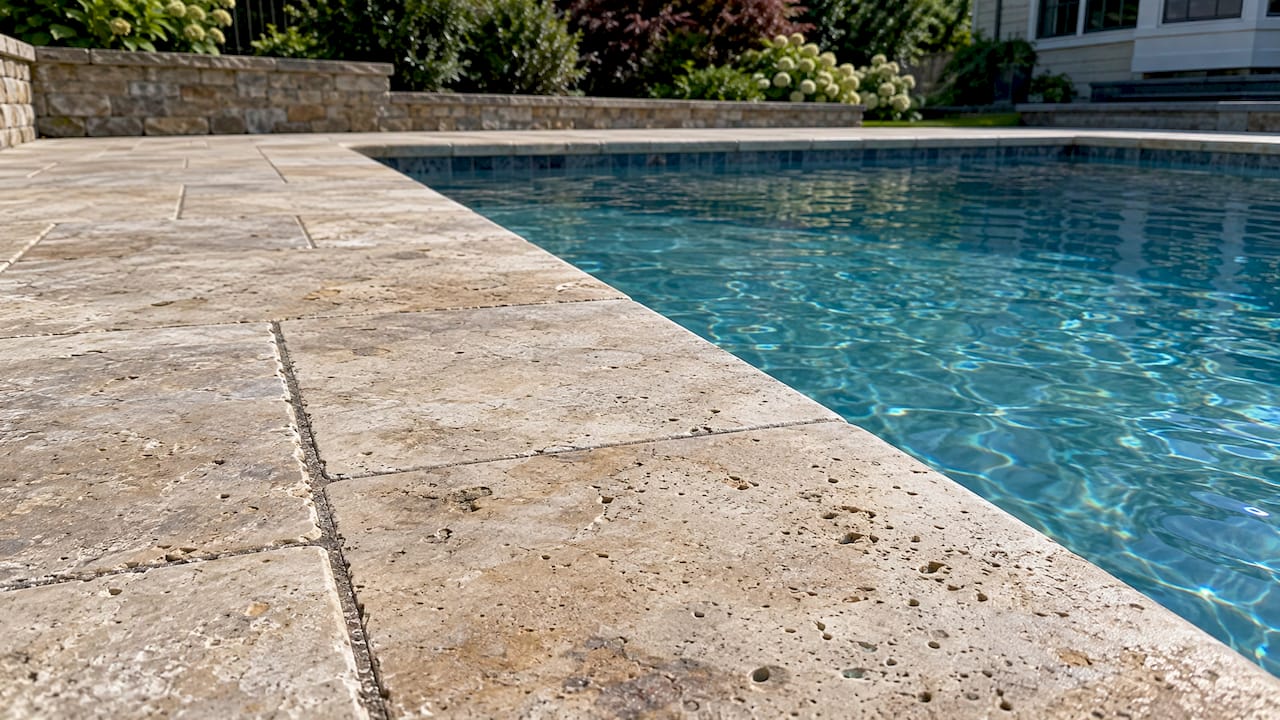
Travertine is the premium choice. The same cost guide reports its surface running 20–35°F cooler than concrete in midday sun, which is why it is a favorite for barefoot areas. It is porous, so it needs a quality sealer and regular resealing in a freeze-thaw climate. Expect to pay for that beauty: $25 to $50 or more per square foot installed.
Capped composite decking
If your pool has a raised deck beside it, or you are building a deck-style surround on an above-ground or semi-in-ground pool, composite is worth a hard look. It does not splinter, never needs staining, and resists moisture better than bare wood. Manufacturers are explicit about heat, though. TimberTech says its capped PVC decking runs up to 30°F cooler to the touch than competing products and offers 40% better traction, while noting that all decking gets hot in the sun and darker colors feel hotter. That points to a simple rule: pick a lighter shade for pool-side boards. Our guide to composite deck colors walks through how shade affects heat and how it looks against your siding and pool.
Heat and traction: the two comfort tests
Choose by the surface you will actually stand on in August.
- Light colors beat dark ones. PoolChecker’s 2026 guide reports cool pavements running 10–16°F cooler than conventional paving and recommends light colors or cool-deck coatings for concrete.
- Texture matters as much as color. A smooth, polished finish looks great dry and is a hazard wet. Look for broom finishes, tumbled or sandblasted stone, and grooved or textured composite boards.
- Walk the sample. Set a sample in direct sun and step on it, then wet it and step again. You will learn more in two minutes than from any brochure.
How Pennsylvania winters change the choice
Frost is the factor that separates a deck that looks good at year five from one that looks good at year twenty. Three habits help any material:
- Drainage first. The deck should slope slightly away from the pool and the house so water does not sit on it or run under it.
- A proper base. Pavers and slabs both depend on well-compacted, well-drained base material. Skimping here is the most common cause of heaving and settling.
- Keep surfaces sealed or joints filled. Open pores and open joints let water in. Frozen water breaks surfaces.
Avoid rock salt on concrete, stamped concrete and stone. Salt speeds up surface flaking on concrete. Use sand for winter traction, and shovel snow promptly instead of letting it melt and refreeze.
For raised decks and composite decking, frost reaches the footings, not the boards. Footing depth is a code matter in Pennsylvania, and we cover it in our deck footing requirements guide.
Maintenance by material
Upkeep is where a cheap surface can become the expensive one. Use this as a yearly routine.
- Concrete: Wash in spring, fill hairline cracks before winter, and reseal on schedule. PoolChecker says coated concrete should be resealed every two to three years, with a cool-deck recoat expected after 10 to 15 years.
- Stamped concrete: Reseal every three to five years, per the cost guide above, and use a slip-resistant additive.
- Pavers: Rinse, re-sand joints, pull weeds early and reset any paver that sinks.
- Travertine and natural stone: Use a penetrating sealer made for pool use, rinse off sunscreen and chemicals, and reseal when water stops beading.
- Composite: Sweep, rinse and wash with soap and water. No staining or sanding.
If your deck is a wood or older composite structure beside the pool, our seasonal deck maintenance checklist gives a month-by-month rhythm, and our guide to resurfacing an old deck covers what to do when boards are tired but the frame is sound.
What it costs to resurface instead of replace
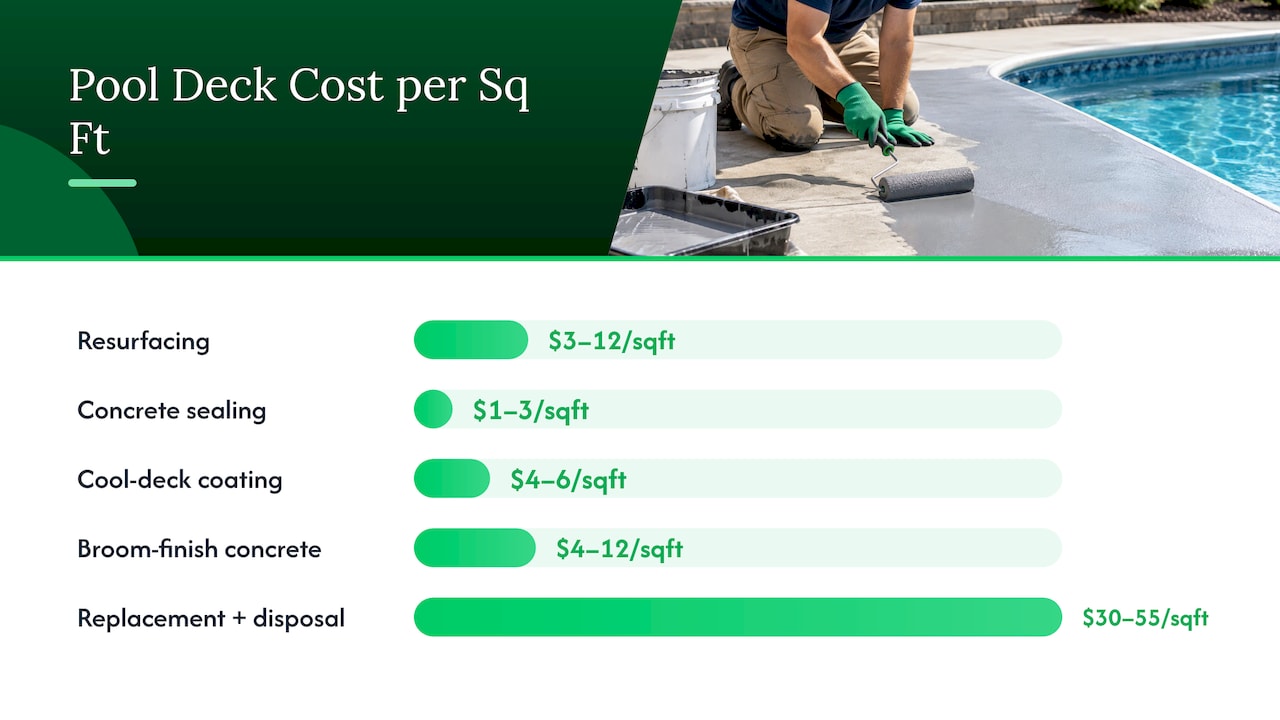
If your deck is structurally sound and only looks worn, resurfacing can be the smart move. HomeGuide’s 2026 figures put national pool deck resurfacing at $3 to $12 per square foot, with concrete sealing at $1 to $3 and a cool-deck coating at $4 to $6. New replacement decks range from $4–$12 per square foot for broom-finish concrete up to $30–$55 per square foot including disposal.
The decision is simple. If the base is stable and cracks are minor, resurface. If the slab is heaved, or the surface keeps failing in the same spots, the problem is underneath, and a new surface will fail the same way.
Permits, barriers and setbacks
A pool deck is part of a regulated project, and rules vary by township. These examples show what to expect, and your own municipality’s page is the final word.
- Butler Township says in-ground and above-ground pools more than 24 inches deep need a building permit and a four-foot enclosure with a self-latching gate. The same page notes that the 2018 I-Codes took effect statewide on February 14, 2022.
- Amity Township says new designs started in 2026 must follow the 2021 International Codes as adopted by PA Labor & Industry, and also requires permits for pools 24 inches deep or more.
- Lower Gwynedd Township requires permits for any pool installation, including pool fences, and sets setbacks of 25 feet from side and rear lines (15 feet in certain districts). It also bars pools in front yards.
Call your township’s building office before you finalize materials. For any raised deck, the 30-inch height trigger is the number to know. We explain it in our Pennsylvania deck permit guide, and our railing height and inspection guide covers the guardrail details inspectors check.
How to choose: a short decision guide
- Start with the budget per square foot, then multiply by your real square footage. Remember that features such as steps, seating and lighting come on top.
- Pick for feet first. Light-colored, textured surfaces beat dark, smooth ones.
- Match the material to the upkeep you will actually do. If you will not reseal every few years, avoid stamped concrete and travertine, or choose a surface that does not need sealing.
- Plan for winter. Drainage, base and joints decide how it holds up.
- Confirm the permit path with your township before ordering.
Where we fit in
Our work is decks and outdoor living spaces. If your pool area includes a raised deck, a composite lounge platform, built-in seating, railings, a pergola or shade structure, or an outdoor kitchen and bar, we design and build it. We also resurface and refinish existing decks, and install composite decking.
Planning a deck beside your pool in Bucks County or Montgomery County? See our custom decks and outdoor living spaces page, or reach us through JAG Home Enhancements. We handle the project from consultation through completion and keep the job site clean and safe.
Winter is a good time to start planning for spring. Our winter exterior planning guide explains how early planning gives you more choice of materials and schedule.
Our perspective
After years of building decks in Bucks County, we have learned that homeowners rarely regret spending a little more on the part of the project they cannot easily redo: the structure, the footings, the drainage and the surface that takes the weather.
For pool-side decks, we steer people toward light-colored, textured composite. It stays comfortable underfoot, does not need staining or sealing, and gives you more of your weekends back. Our composite decking installation and custom deck design are built around that long-lasting, low-upkeep idea.
We also put a lot of weight on honest recommendations and clear communication. You should know what the surface will feel like in August, what winter will ask of it, and what the township expects before we pick up a tool. That is how a project finishes on time, within budget and with a result that adds to your home’s value and beauty.
Jeff
FAQ
What is the best pool deck material for Pennsylvania?
There is no single winner, but pavers, sealed travertine and capped composite handle freeze-thaw cycles, heat and wet traction best. Plain concrete is the cheapest to install but tends to crack and run hot. Pick based on budget, how much upkeep you will do and how the deck connects to your home.
What pool deck material stays coolest?
Light-colored surfaces stay coolest. Travertine runs 20–35°F cooler than concrete in midday sun, according to Pool Cost Estimator, and TimberTech says its capped PVC decking is up to 30°F cooler than competing products. Darker colors feel hotter on any material.
How much does a pool deck cost in Pennsylvania?
National 2026 installed prices run from about $8–$12 per square foot for plain concrete to $25–$50 or more for travertine, and a typical pool needs 400 to 700 square feet. Local labor and site work change the final figure, so get a written, itemized quote.
Do I need a permit for a pool deck in Pennsylvania?
Usually yes. Many townships require permits for pools 24 inches deep or more, plus barriers and setbacks, and raised decks have their own rules. Requirements are set locally, so contact your township’s building office before you start.
Sources
- Pool Decking and Heating Costs: The Complete 2026 Backyard Guide, Pool Cost Estimator
- Paver Pool Deck Cost 2026, One and Done Prep
- The Best Composite Pool Deck Material, TimberTech
- Pool Deck Materials, Cost and Care by State (2026), PoolChecker
- How Much Does It Cost to Resurface a Pool Deck? (2026), HomeGuide
- New Codes, Butler Township
- Permits and Forms, Amity Township
- Building and Zoning, Lower Gwynedd Township
- Common Paving Material Types: Your 2026 Comparison Guide