

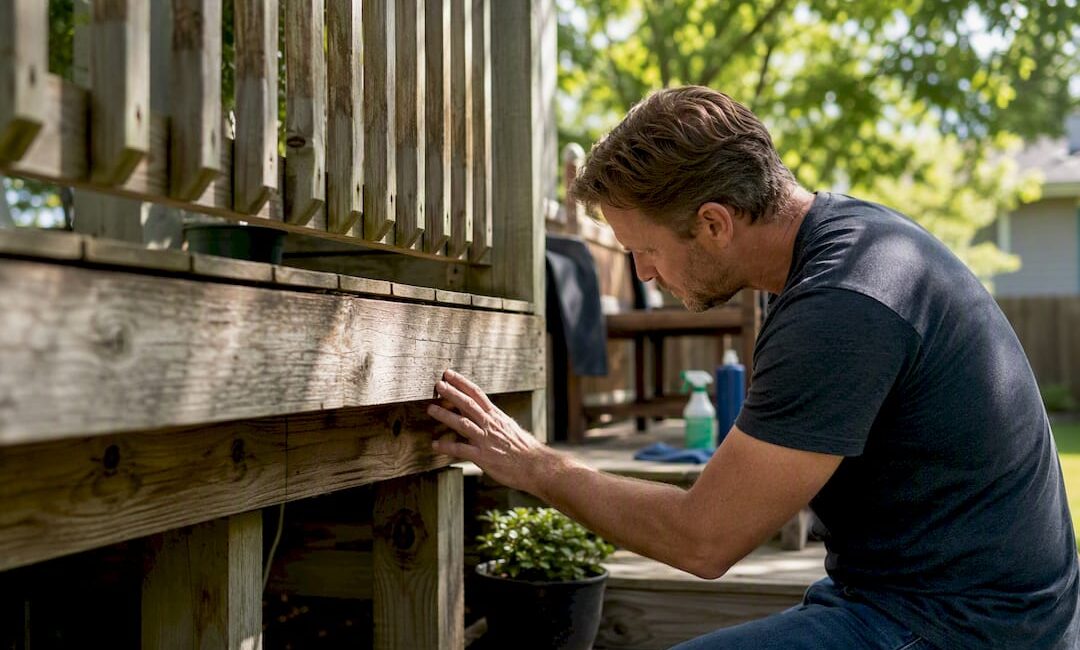
A solid deck maintenance schedule breaks down to three commitments: a full inspection every spring, cleaning twice a year, and resealing or staining every 1 to 5 years depending on your finish. This rhythm is what separates a deck that lasts decades from one that needs replacing in ten years.
Before anything else, run through this immediate checklist:
- Check the ledger board where the deck meets your house for soft or dark wood.
- Clear leaves and debris from between boards and under the structure.
- Sweep the surface and check for standing water or pooling.
- Tighten or replace any loose screws, bolts, and joist hangers.
- Press on boards near stairs and railings to feel for give or bounce.
Deck-related incidents caused about 8,700 injuries and two fatalities between 2020 and 2024, which is exactly why safety checks come before anything cosmetic. Prioritize in this order: structural safety first (loose railings, ledger issues), moisture control second (clogged drainage, standing water), and finish protection third (reseal once water soaks in instead of beading on the surface). Groups like NADRA back an annual structural inspection as the baseline, and manufacturer guidance from brands like Sherwin-Williams governs how often you actually need to recoat.
Key Takeaways
A reliable deck maintenance schedule combines an annual spring inspection, twice-yearly cleaning, and resealing timed to your specific finish type, not a generic calendar date.
| Point | Details |
|---|---|
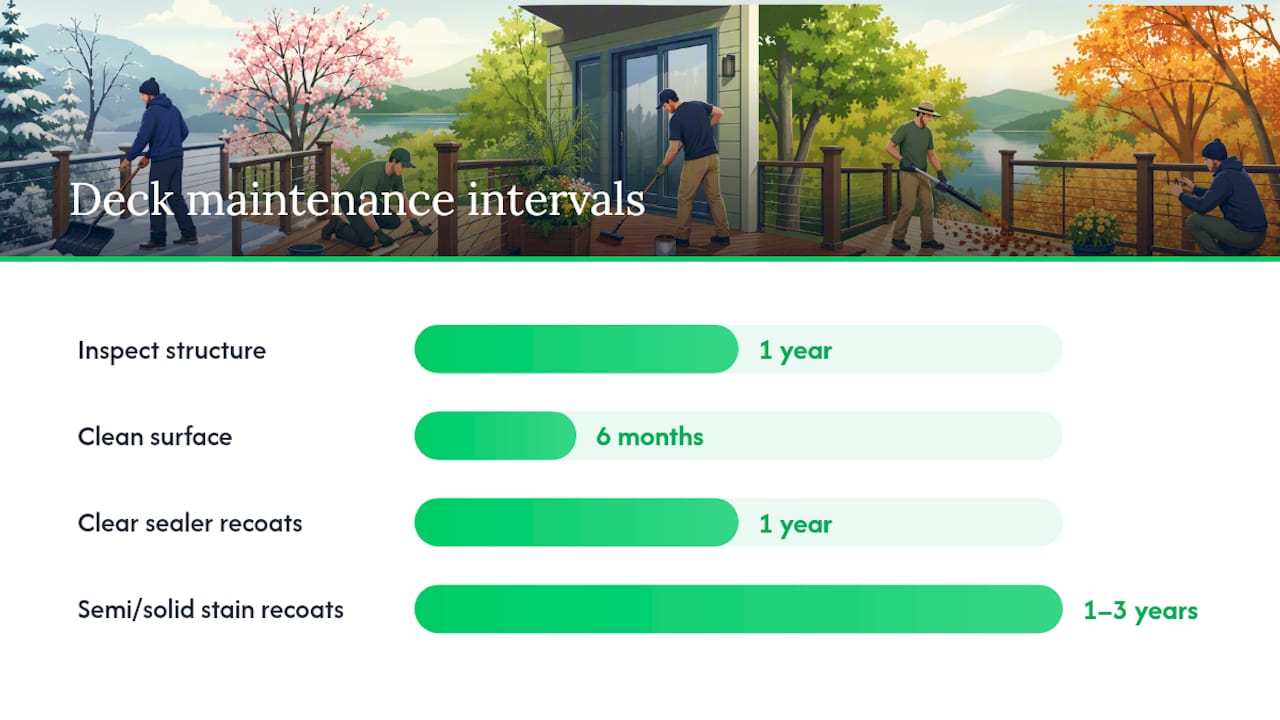
| Inspect structure yearly | Check the ledger, joists, posts, and railings every spring before anything cosmetic. |
| Clean twice a year | Wash the surface in spring and monitor through summer to prevent mildew buildup. |
| Match reseal to finish | Clear sealers need yearly recoats; semi-solid and solid stains last 1 to 3 years. |
| Know your red flags | Soft ledger wood, wobbly railings, or surface bounce mean it’s time to call a pro. |
| Get a professional assessment | Jaghomesnow offers deck inspections in Bucks County to catch structural issues early. |
Table of Contents
- What Does a Full Seasonal Deck Maintenance Schedule Look Like?
- Does Deck Maintenance Differ by Material?
- When Do You Need a Structural Inspection Instead of a Cosmetic One?
- How Should You Clean a Deck Safely?
- How Often Should You Reseal or Stain a Deck?
- What Belongs on a Printable Annual Deck Maintenance Calendar?
- Sources
What Does a Full Seasonal Deck Maintenance Schedule Look Like?
Your deck care routine should shift with the seasons, not just happen whenever you remember. Each one carries different risks and different jobs.
Spring is your biggest workload. Do a full structural inspection of the ledger, joists, and posts (30 to 45 minutes), then wash the entire surface to remove winter grime (1 to 2 hours for an average deck). Fix loose boards and swap corroded fasteners while everything is exposed. If you’re staining, plan for it now: a spring cleaning and inspection sequence means sweeping, applying cleaner, scrubbing, rinsing, and waiting 24 to 48 hours before any refinishing.
Summer is about monitoring, not overhauling. Spot-clean spills, watch drainage after storms, and check for loose boards after heavy holiday-weekend use. South-facing decks take more UV damage, so give them a closer look monthly rather than seasonally.
Fall is your prep window before freeze-thaw cycles start working against you. Clear leaves before they trap moisture, inspect fasteners for early rust, tighten railings and stair connections, and confirm flashing and drainage paths are clear. Replace any corroded hardware now rather than waiting for spring.
Winter is mostly about restraint and vigilance. Clear snow with a plastic shovel, never metal, to avoid gouging the surface. In heavy snow regions, monitor load buildup on the deck itself. Skip staining or sealing entirely. Most products won’t cure properly below 50°F or in high humidity.
| Season | Priority Tasks | Time Estimate |
|---|---|---|
| Spring | Full structural inspection, deep clean, repairs | 2 to 4 hours |
| Summer | Spot cleaning, drainage checks, fastener touch-ups | 30 to 45 minutes/month |
| Fall | Leaf removal, hardware inspection, flashing check | 1 to 2 hours |
| Winter | Snow removal, storm damage checks | As needed |
This structure mirrors the seasonal maintenance phases that most deck professionals use, and it’s the same one worth handing to a contractor if you’d rather outsource the labor.
Does Deck Maintenance Differ by Material?
Wood, composite, and PVC decks all age differently, so a one-size-fits-all cleaning routine ends up hurting one of them.
Wood decks (pressure-treated, cedar, or hardwood) need the most attention. Sand rough or splintering spots, brighten graying wood before restaining, and reapply sealer or stain on a schedule matched to your finish type. If your lumber is ACQ-treated, use stainless or hot-dip galvanized fasteners since standard steel corrodes fast against that chemical.

Composite decking resists rot and insects but still needs manufacturer-approved cleaners rather than harsh alkaline products. Never sand a capped composite board; it can strip the protective layer and void your warranty. Watch expansion gaps between boards, since composite shifts more with temperature swings than most homeowners expect.
PVC and aluminum decks are the lowest-maintenance of the three. Just clear debris and check fastener connections a couple times a year.
Pro Tip: Use oxygen-bleach cleaners on wood to brighten without damaging fibers, but skip high-alkali or chlorine-based cleaners on capped composite. They can dull the finish permanently.
When Do You Need a Structural Inspection Instead of a Cosmetic One?
Cosmetic problems can wait a weekend. Structural problems can’t. Every annual inspection should cover the ledger attachment, joist tops, post bases, beam-to-post connections, stair stringers, and guardrail bolts.
Certain signs mean you stop and call a professional immediately:
- Soft, spongy, or crumbling wood anywhere near the ledger board.
- Noticeable movement or wobble in guardrails or stair railings.
- Fasteners that spin freely or won’t hold when tightened.
- Sagging, bounce, or flex in the deck surface under normal walking.
Deck collapses and flooring failures caused roughly 8,700 injuries over four years, and ledger failure is one of the most common causes behind them. If your deck is more than 15 years old or sits in a coastal or high-humidity zone, bump your structural inspection to twice a year instead of once.
Professional structural assessments typically run $150 to $400 depending on deck size and access. That’s a reasonable price for peace of mind before hosting a backyard gathering.
Pro Tip: If you notice rust streaks running down from a fastener, that’s often the first visible sign of internal corrosion long before the wood around it looks damaged.
How Should You Clean a Deck Safely?
A safe cleaning routine follows the same basic sequence regardless of material, though the products and pressure settings change.
- Sweep off loose debris, leaves, and dirt.
- Test your cleaner on a hidden spot first to check for discoloration.
- Apply the appropriate cleaner: oxygen bleach for wood, a manufacturer-approved formula for composite.
- Scrub with a stiff synthetic brush, working with the grain on wood.
- Rinse thoroughly with a garden hose or low-pressure setting.
- Let the deck dry fully, generally 24 to 48 hours, before staining or sealing.
Sodium hypochlorite (regular chlorine bleach) can gray wood fibers and shouldn’t be your default choice; oxygen bleach is gentler and still effective. For composite, stick to cleaners the manufacturer names by product line, since generic degreasers can dull the cap layer.
If you’re pressure washing, keep it under 1,200 to 1,500 PSI for wood and use a wide fan-tip nozzle held at least 12 inches from the surface. Higher pressure tears wood fibers and can blast right through a composite cap.
Pro Tip: Always follow the specific product instructions from your cleaner and stain manufacturer. Skipping a recommended dilution or dry time is one of the fastest ways to void a product warranty.
How Often Should You Reseal or Stain a Deck?
How often to stain a deck comes down entirely to the finish you’re using, not a flat calendar rule.
| Finish Type | Typical Recoat Interval |
|---|---|
| Clear sealer | Annually |
| Transparent stain | 1 to 2 years |
| Semi-transparent stain | 1 to 3 years |
| Semi-solid stain | 2 to 3 years |
| Solid stain | 1 to 3 years (horizontal surfaces wear faster) |
| Penetrating oil | 1 to 2 years |
Manufacturer guidance generally recommends restaining every 2 to 3 years, though clear sealers wear out faster and often need annual reapplication. Watch the water test: if water soaks in instead of beading, it’s time.
Budget roughly $2 to $4 per square foot for professional staining, and $8 to $15 per linear foot for board replacement.
What Belongs on a Printable Annual Deck Maintenance Calendar?
A one-page calendar keeps this whole deck care routine from living only in your head. Weekly: sweep debris. Monthly: quick fastener and drainage checks. Spring: full inspection and cleaning. Fall: hardware tightening and flashing check. Every 1 to 3 years: reseal based on your finish.
Structure your printout with checkboxes, a “next scheduled date” line for each task, and a notes section for anything you spot mid-season. If you live somewhere with harsh winters or intense coastal humidity, shrink the intervals above by roughly a third and check high-traffic areas like stairs more often than the rest of the deck.
A Contractor’s View on Maintenance vs. Replacement
Maintenance buys you years, not forever. Once ledger rot or framing damage shows up, patching becomes a stopgap. That’s when a homeowner benefits from a professional assessment, and it’s the kind of call JAG Home Enhancements fields regularly from Bucks County homeowners weighing repair against rebuild.
How Jaghomesnow Helps You Stay Ahead of Deck Problems
Most homeowners either over-maintain out of anxiety or skip inspections until something breaks. Jaghomesnow splits the difference with a paid deck inspection that tells you exactly where you stand, typically running $150 to $400 depending on deck size, covering the ledger, framing, fasteners, and surface condition in one visit.

If the inspection turns up rot, a compromised ledger, or aging framing, our crews in Bucks County and Montgomery County handle everything from board replacement to a full rebuild. If your deck just needs a maintenance plan, we’ll hand you a seasonal calendar built around your specific material and sun exposure. Homeowners weighing repair against a full rebuild can start by reviewing how to choose a remodeling contractor so you know what questions to ask before signing anything. Ready to get your deck assessed before the next season shift? Reach out to schedule an inspection.
Sources
- Consumer Reports — Deck maintenance and safety guide
- National Deck Authority — Deck maintenance schedule
- DeckMath — Deck maintenance guide
- Sherwin-Williams — How to plan deck staining
- DeckStainHelp — How often should you stain your deck?
Recommended
- How Winter Weather Impacts Your Home’s Exterior — and What Bucks County Homeowners Can Do Now – JAG Home Enhancements How Winter Weather Impacts Your Home’s Exterior in Bucks County, PA | JAG Home Enhancements
- Why Winter Is the Perfect Time to Plan Your Spring Exterior Renovations in Bucks County, PA – JAG Home Enhancements Winter Exterior Renovation Planning in Bucks County, PA | JAG Home Enhancements
- Why Winter Is the Perfect Time to Plan Your Spring Exterior Renovations in Bucks County, PA – JAG Home Enhancements
- Preparing Your Home’s Exterior for Spring After a Bucks County Winter – JAG Home Enhancements Spring Exterior Home Maintenance in Bucks County, PA | JAG Home Enhancements