
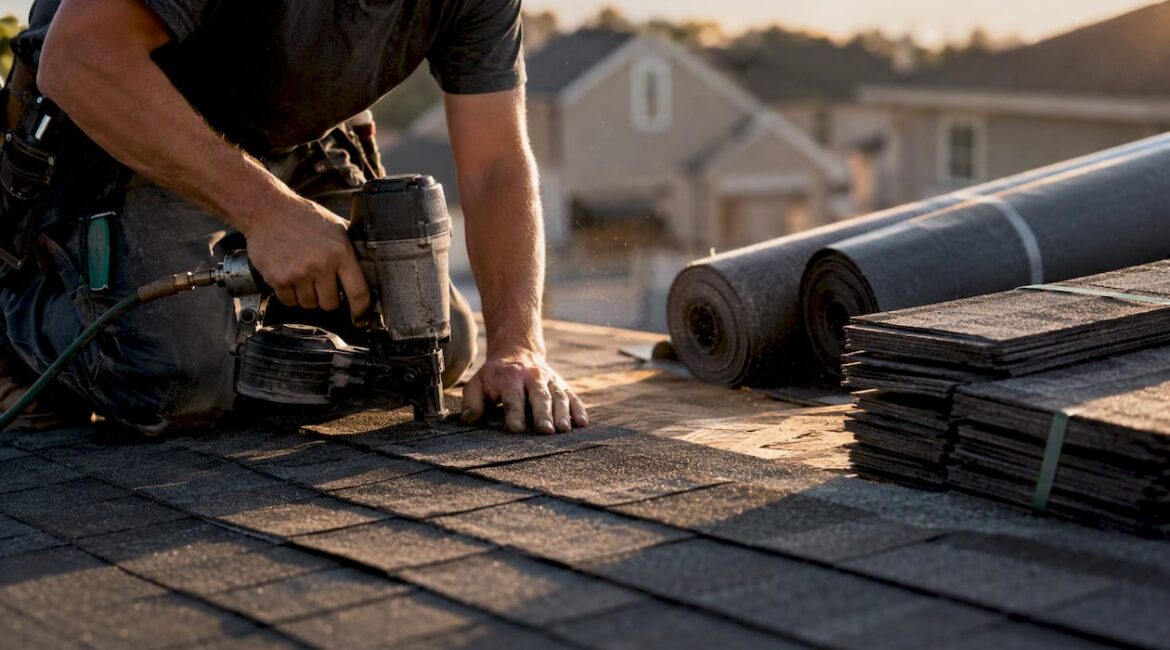
Roofing warranties explained simply: there are three types you need to know, and only one of them typically protects against a bad installation. Manufacturer (product) warranties cover material defects. Contractor (workmanship) warranties cover installation mistakes, but only as long as the company stands behind them. Enhanced system warranties combine both, provided you use a certified installer.
Here’s your immediate action list:
- Keep your contract, invoice, and any product packaging.
- Confirm your registration window before it closes.
- Verify your contractor’s certification status directly with the manufacturer.
The Magnuson-Moss Warranty Act sets baseline consumer protections for these written promises, and groups like the NRCIA regularly field questions from homeowners confused about what a leak actually covers. If you’re mid-project, Jaghomesnow can walk you through registration paperwork so nothing falls through the cracks.
Key Takeaways
The strongest warranty protection comes from pairing a certified contractor with an enhanced manufacturer system warranty, since that combination survives even if the original installer goes out of business.
| Point | Details |
|---|---|
| Three warranty types exist | Manufacturer, contractor, and enhanced system warranties each cover a different failure point. |
| Registration deadlines are strict | Most manufacturers require registration within 30 to 90 days of installation. |
| Workmanship coverage depends on solvency | A contractor warranty is only as good as the company still being in business to honor it. |
| Interior damage isn’t included | Water stains and drywall damage from a leak fall under homeowners insurance, not the roof warranty. |
| Jaghomesnow handles registration | Jaghomesnow uses certified installers and completes warranty registration paperwork for every qualifying system install. |
Table of Contents
- Understanding Roof Warranty Terms Before You Sign Anything
- What a Standard Manufacturer’s Warranty Actually Covers
- Why Contractor Workmanship Warranties Deserve Your Attention
- How Enhanced Manufacturer Warranties Close the Coverage Gap
- What Voids a Roof Warranty and What You’re Responsible For
- Registering Your Warranty and Keeping the Paperwork That Protects You
- Filing a Warranty Claim Without the Runaround
- What GAF’s Warranty Tiers Reveal About Real-World Coverage Gaps
- What Contractors Wish Homeowners Knew About Warranties
- How Jaghomesnow Protects Your Roof Warranty From Day One
- Frequently Asked Questions
- Sources
Understanding Roof Warranty Terms Before You Sign Anything
Before you can evaluate a quote, you need to know what you’re reading. Roof warranty coverage generally splits into three buckets, and each one answers a different question about who pays when something goes wrong.
- Manufacturer/product warranty: covers defects in the shingles, underlayment, or accessories themselves.
- Contractor/workmanship warranty: covers mistakes made during installation, like a poorly sealed flashing.
- Enhanced/system warranty: bundles both, but only when you use matching components from one brand and a certified installer.
Duration language matters just as much as category. A “non-prorated” period means you get full replacement value if a defect shows up. Once you cross into the “prorated” tail of a policy, the payout shrinks each year. “Limited lifetime” almost always means non-prorated coverage for a set window, then a declining payout after that, according to Owens Corning’s own explanation of the three main warranty types.
What a Standard Manufacturer’s Warranty Actually Covers
Product warranties protect against manufacturing defects, not human error. If your shingles crack because of a bad production batch, you’re covered. If they fail because they were nailed wrong, you’re not. That gap is exactly why a separate workmanship warranty exists.
Most manufacturer warranties open with a non-prorated period, often 10 to 15 years, where you’d get a full replacement value if a defect surfaces. After that window, coverage prorates based on the shingle’s expected lifespan, meaning your payout shrinks with age.
Pro Tip: Read the proration schedule before you sign anything. Two shingles with the same “50-year limited warranty” label can have wildly different non-prorated windows, and that difference is what actually determines your payout at year 20.
When you’re reading the PDF from a manufacturer like GAF or CertainTeed, check for:
- Length of the non-prorated period versus the prorated tail
- Wind and algae rider terms, which often carry separate, shorter timelines
- Registration deadlines and required documentation
- Whether the remedy is repair, replacement, or a cash payout
GAF’s own warranty tiers show algae riders that vary with the product line, illustrating that these riders are not interchangeable boilerplate.
Why Contractor Workmanship Warranties Deserve Your Attention
Workmanship warranties cover the part manufacturer warranties skip: installation errors. Bad flashing, improper nailing patterns, or skipped deck preparation are classic causes of leaks, and none of them are the shingle’s fault. A workmanship warranty is your recourse when the installer, not the product, made the mistake.
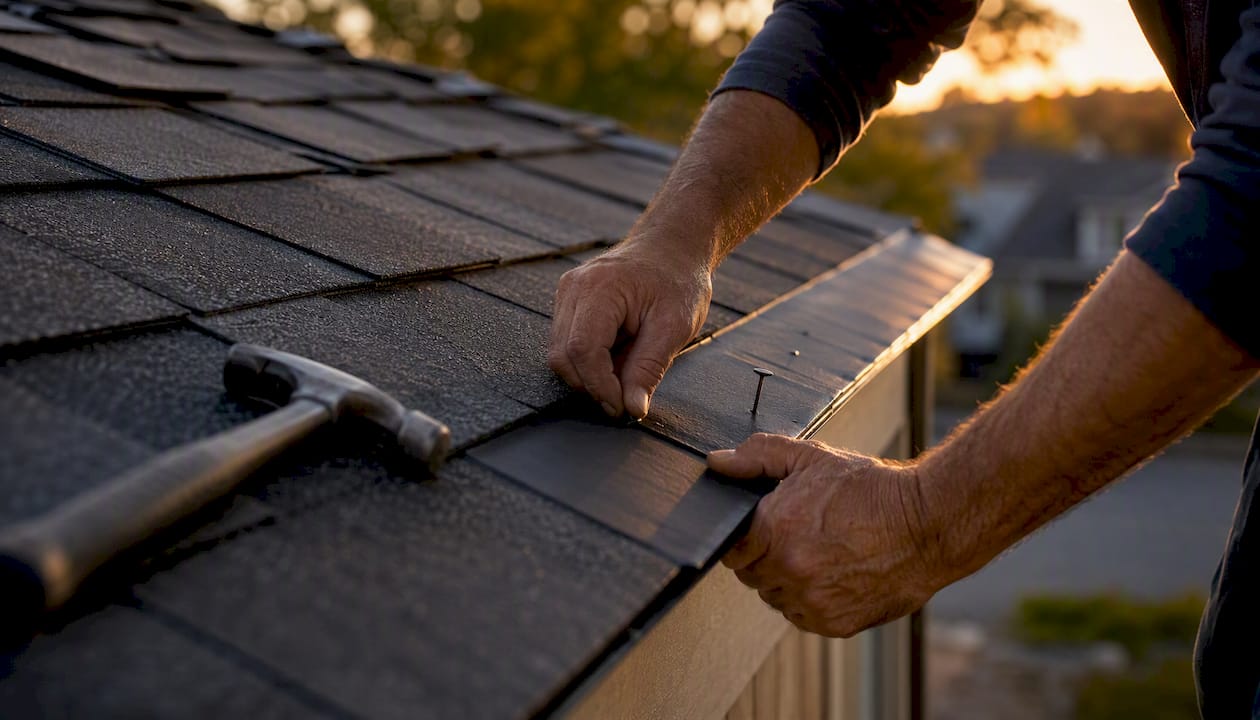
Here’s the catch: this warranty is only as solid as the company issuing it. A five-year workmanship promise from a contractor who closes shop in year two is worthless paper.
Before signing a contract, require:
- A written workmanship warranty with a specific term length, not a verbal promise.
- Clear transferability terms if you plan to sell the home.
- Proof of active liability insurance.
- A documented claims process, including who to call and expected response times.
Pro Tip: Ask how long the company has operated under its current name. A contractor with a decade of local jobs and a documented certification is a safer bet than a workmanship warranty on its own, no matter how many years it promises.
How Enhanced Manufacturer Warranties Close the Coverage Gap
Enhanced system warranties solve the biggest weakness of a standalone workmanship warranty: they survive even if your contractor goes out of business. Because the manufacturer, not the installer, backs the workmanship promise, this is often the only way homeowners get durable protection against installation errors long after the crew has moved on to other jobs.
These upgraded warranties typically extend your non-prorated period well beyond the base product warranty and add workmanship coverage, sometimes tear-off and disposal costs too. GAF’s Golden Pledge tier, for example, sits well above its automatic Shingle & Accessory Limited Warranty in both scope and duration.
Qualifying for this tier isn’t automatic. Here’s what’s usually required:
- A full system install using one manufacturer’s components exclusively, not a mix of brands.
- A certified installer at the specific tier level the enhanced warranty demands.
- Formal registration completed within the manufacturer’s deadline, often 30 to 90 days.
Before signing, ask your contractor which specific components qualify, request proof of their certification tier, and get the registration process in writing.
What Voids a Roof Warranty and What You’re Responsible For
Warranties get voided more often by avoidable mistakes than by bad luck. Most denied claims trace back to installation issues or homeowner and third-party modifications rather than pure manufacturing defects, which is exactly why the following list matters.
Common actions that void coverage:
- Improper attic ventilation that traps heat and moisture against the underside of the deck.
- Installing a new roof over an old one instead of a full tear-off.
- Mixing shingle brands or accessory brands on a system warranty.
- Missing the registration deadline entirely.
- Letting an unauthorized contractor perform repairs.
- Pressure washing shingles, which strips granules and voids most manufacturer terms.
Typical exclusions, separate from voiding actions, include storm damage beyond a shingle’s wind rating and any consequential interior damage. That second one surprises a lot of homeowners: water stains on your ceiling or ruined drywall are almost always excluded from roof warranties and fall under your homeowners insurance claim instead, according to NRCIA’s guidance on leak coverage.
On the maintenance side, keep your installation records, schedule periodic inspections, clear debris regularly, and follow the manufacturer’s specific upkeep instructions, since poor attic ventilation is one of the most common voiding triggers for homeowners in humid climates.
Registering Your Warranty and Keeping the Paperwork That Protects You
Registration isn’t optional paperwork. It’s often the single condition that determines whether your warranty exists at all.
- Register within the manufacturer’s deadline, commonly 30 to 90 days after installation.
- Save your signed contract, itemized invoice, and product packaging or receipts.
- File your warranty certificate and registration confirmation email somewhere you won’t lose them.
- Photograph the completed roof before scaffolding comes down.
Beyond that, schedule an inspection annually and after major storms. Most manufacturers allow the original contractor, or another certified installer, to perform covered repairs without voiding anything, but an uncertified handyman patch job is a common way coverage quietly disappears.
Filing a Warranty Claim Without the Runaround
Start with the right point of contact. If the problem looks like a material failure, cracked shingles, granule loss, call the manufacturer. If it looks like an installation flaw, a leak at a flashing seam, call your contractor first.
Gather this before you make the call:
- Dated photos of the damage
- Your original invoice and signed contract
- Any maintenance or inspection logs
- The warranty certificate and registration confirmation
Response timelines vary, but most manufacturers schedule an inspection within a few weeks and issue a decision shortly after. Contractors backing their own workmanship warranty are often faster, assuming they’re still in business. Denials usually cite unauthorized repairs, missed registration, or damage classified as storm related rather than defect related.
If you’re denied, ask for a copy of the inspection report, submit additional documentation if you have it, and don’t assume the first answer is final. Consumer protections under the Magnuson-Moss Warranty Act exist precisely for disputes like this.
What GAF’s Warranty Tiers Reveal About Real-World Coverage Gaps
GAF’s structure is a useful example because it shows, in concrete terms, how much protection changes between tiers. Every GAF shingle purchase comes with an automatic Shingle & Accessory Limited Warranty, covering material defects with no certification required.
Move up to System Plus, and you add workmanship coverage for a limited period, but only if you install a qualifying set of GAF accessories alongside the shingles. At the top, Golden Pledge extends non-prorated protection substantially and adds tear-off and disposal coverage, but it requires a Master Elite certified contractor and full registration.
| Tier | Coverage scope | Workmanship included | Certified installer required |
|---|---|---|---|
| Shingle & Accessory Limited | Materials only | No | No |
| System Plus | Materials plus limited workmanship | Yes, limited term | Yes, standard certification |
| Golden Pledge | Full system including tear-off/disposal | Yes, extended term | Yes, Master Elite tier |
Owens Corning and CertainTeed run comparable tiered structures, so the pattern holds across brands: the more protection you want, the more specific the installer requirements become.
What Contractors Wish Homeowners Knew About Warranties
Most warranty disputes I’ve seen traced back to a homeowner who never registered, not a manufacturer refusing to honor a legitimate defect. Registration confirmation is the one document people lose track of, and it’s the one that matters most when a claim gets filed years later.
We build warranty checks into every install: confirming certification tier before the crew starts, registering the job the same week it’s completed, and handing the homeowner a folder with every document a future claim would need. When you’re choosing a contractor, ask directly how they verify certification status and what their written claims process looks like. If they can’t answer specifically, that’s your answer.
How Jaghomesnow Protects Your Roof Warranty From Day One
A lot of roofing warranty problems start before the first shingle goes down, when a homeowner hires a contractor who isn’t certified for the coverage tier they were promised. Jaghomesnow handles installations with certified crews, completes manufacturer registration on your behalf, and hands you a documentation folder built for a future claim, not just a stack of receipts.
Our services for warranty-backed roofing include full inspections before you commit to a project, system installs designed to qualify for enhanced manufacturer coverage, and hands-on registration assistance so you’re never guessing whether your paperwork went through. If you’re evaluating contractors for an upcoming roof project, our guide on choosing the right remodeling contractor in Bucks County covers the certification questions worth asking before you sign anything. Ready to talk through your roof? Request an inspection and we’ll walk you through exactly what coverage tier your home qualifies for.
Frequently Asked Questions
What is the difference between a manufacturer and a contractor roof warranty?
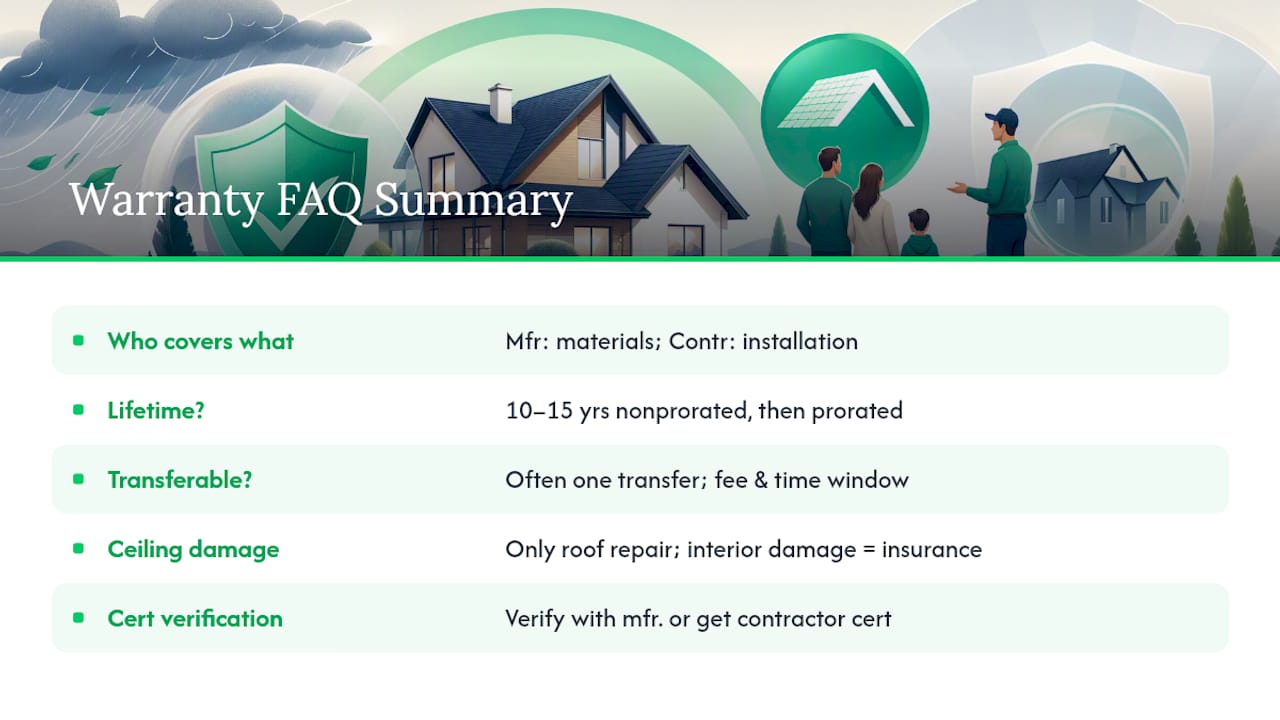
A manufacturer warranty covers defects in the materials themselves. A contractor warranty covers installation mistakes, and it’s only as reliable as the company backing it.
Are lifetime roofing warranties really lifetime?
Usually not in the way that sounds. “Limited lifetime” typically means a non-prorated period of 10 to 15 years, followed by a prorated payout that shrinks over time.
Can a roof warranty be transferred to a new homeowner?
Many manufacturer and enhanced warranties allow one transfer to a new owner, often within a set window after the sale and sometimes for a small fee, according to LegalClarity’s warranty explainer.
Does a roof warranty cover a leak that damaged my ceiling?
Only the roof repair itself is typically covered. The ceiling and drywall damage usually falls under your homeowners insurance policy instead.
How do I check if my contractor is certified for an enhanced warranty?
Contact the manufacturer directly, or ask your contractor for their certification number and tier, which you can verify against the manufacturer’s certified contractor directory.
Sources
Check the GAF warranty tier details and LegalClarity’s warranty coverage breakdown before signing. Save your registration confirmation email the moment it arrives.
- Owens Corning: Understanding the 3 main types of roofing warranties
- Does a roof warranty cover leaks? (NRCIA)
Recommended
- Roof Insurance Claim Process: What Homeowners Need to Know
- How to Know It’s Time for a Roof Replacement in Yardley or Doylestown – JAG Home Enhancements
- Why Proper Roofing Ventilation Matters for Homes in Bucks County and Montgomery County – JAG Home Enhancements Roofing Ventilation in Bucks County | JAG Home Enhancements