
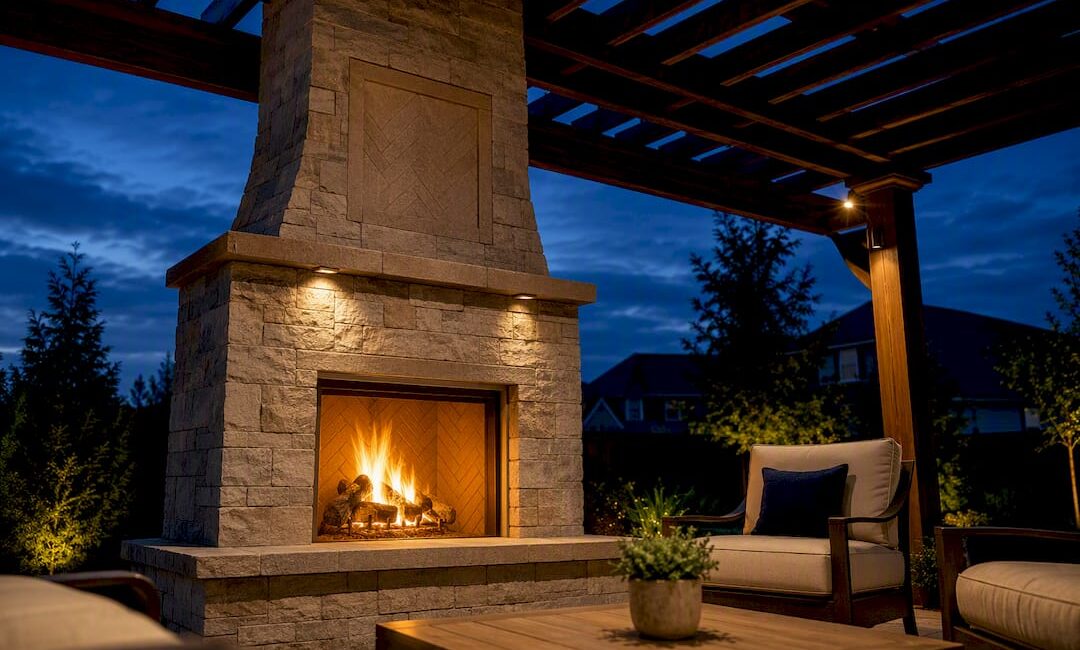
Most homeowners land on one of three winners: a prefab gas fireplace for low-maintenance heat, a masonry wood-burning fireplace for permanence and old-world ambience, or a portable fire pit for flexibility on a tight budget. The deciding factor is rarely taste. It’s how much upkeep you want, whether you plan to stay in the house long term, and what you’re willing to spend upfront versus over time. If low effort matters most, choose gas and hire a licensed installer. If you want a lasting centerpiece, masonry wins.
TL;DR:
- Prefabricated units offer faster installation, lower upfront costs, and warranties, but masonry fireplaces last longer and may boost resale value.
- Gas fuel provides cleaner, easier operation with no ash or smoke, while wood offers authentic crackling sound but requires more maintenance and space.
- Fireplaces must be placed at least 10 to 15 feet from structures, with wind and overhang considerations affecting smoke and ember safety.
- Building permits and professional hookups are usually required for masonry and gas models, especially when running new gas lines or constructing chimneys.
- Proper seasonal protection and maintenance extend the fireplace’s safety and lifespan, including winter storage, chimney sweeping, and checking for rust or damage.
Table of Contents
- What Outdoor Fireplace Materials and Fuel Types Work Best?
- Where Should You Place an Outdoor Fireplace?
- How Much Does an Outdoor Fireplace Cost?
- DIY Kit, Prefab Unit, or Contractor: How Do You Decide?
- How Do You Keep an Outdoor Fireplace Safe Year-Round?
- How Does a Contractor Manage an Outdoor Fireplace Project?
- Which Fuel Type Performs Best for the Environment?
- DIY Installation vs Hiring a Professional: What’s the Real Difference?
- How Should the Seasons Affect Your Outdoor Fireplace Plans?
- What Size Outdoor Fireplace Fits Your Yard?
- How Do You Handle Fuel Storage and Supply?
- Jeff’s Quick Take on Planning an Outdoor Fireplace
- Ready to Build Your Outdoor Fireplace With JAG Home Enhancements?
- Where to Learn More
- Sources
What Outdoor Fireplace Materials and Fuel Types Work Best?
Masonry fireplaces built from stone, brick, or stucco-covered block last decades and tend to boost resale appeal more than any other outdoor addition. The tradeoff is real: expect a poured foundation, possible permits, and a bigger check written to a contractor. Prefabricated units skip most of that. A prefab kit installs faster, costs less upfront, and comes with a manufacturer warranty, which matters if something fails in year three.
Fuel choice shapes the daily experience more than the shell material does:
- Wood delivers the crackle and smell people actually want from an outdoor fireplace, but it demands storage space, regular cleaning, and tolerance for smoke drifting toward the neighbors.
- Gas lights with a switch, produces no ash, and burns cleaner, though it requires a certified hookup.
- Electric skips flame realism for pure convenience. It’s the easiest to install and the safest around kids or pets.
Whichever shell you choose, protect it properly. Firebrick liners or a metal fire ring keep masonry from cracking under repeated heat cycles, and fire-rated mortar holds up far longer than standard mortar mix.
Where Should You Place an Outdoor Fireplace?
Keep any open flame structure at least 10 to 15 feet from your house, fence, or overhanging trees. That clearance isn’t a suggestion. It’s the baseline most fire-safety guidance and local codes build from, and it also happens to be the right distance for smoke to clear before it hits your siding.
Design options split roughly four ways:
- Single-sided wall fireplaces anchor a patio and direct heat toward seating.
- Double-sided units separate two zones, like a dining area and a lounge space.
- Freestanding fire pits offer 360-degree seating and the lowest cost of entry.
- Fireplace-kitchen combos turn one structure into the backyard’s whole gathering point.
Wind matters more than most people expect. A fireplace tucked against a solid wall can trap smoke and push it back at your guests, so leave at least one open side or add a taller chimney to pull smoke upward.
Pro Tip: If your patio sits under a pergola or roof overhang, skip the wood-burning option entirely and go gas or electric. Overhead structures trap heat and embers in ways that violate most local fire codes.
How Much Does an Outdoor Fireplace Cost?
Budget drives almost every decision here, so start with realistic numbers instead of inspiration photos. A basic DIY fire pit kit runs $200 to $800 in materials, assuming you’re comfortable with a weekend of block-laying. Mid-range prefab units, including gas fire tables and freestanding fireplaces, typically land between $1,000 and $5,000 depending on brand and BTU output. Full contractor-built masonry fireplaces range from $3,000 to $15,000 or more once you factor in foundation work, gas lines, and stone veneer.
What actually drives the price up:
- Foundation excavation and footings for permanent structures.
- Running a new gas line versus tapping an existing one.
- Chimney construction and flue liners.
- Finish materials like natural stone versus poured concrete or veneer.
Build in a 10 to 20 percent contingency no matter which route you pick, and ask any contractor for an itemized quote before signing anything.
DIY Kit, Prefab Unit, or Contractor: How Do You Decide?
Run through this before you buy anything:
- Check your skill level honestly. Laying block for a fire pit is manageable for a confident DIYer; running gas line or building a full chimney is not.
- Call your local building department. Permanent masonry structures and any new gas hookup almost always trigger a permit requirement, and some municipalities restrict open wood burning outright.
- Weigh permanence against flexibility. A bolted-together prefab kit can be relocated; a poured foundation cannot.
A licensed contractor earns their fee on the parts you can’t see once the project is finished: a code-compliant gas connection, a properly sized chimney liner, and flashing that keeps water out of the foundation for good.
How Do You Keep an Outdoor Fireplace Safe Year-Round?
Safety starts with the same clearance rule as siting: 10 to 15 feet from any structure, with seating arranged so no one sits directly downwind of smoke. Beyond that, a short annual checklist keeps the fireplace safe and extends its life:
- Have wood-burning chimneys swept once a year to clear soot and creosote buildup.
- Have a technician inspect gas connections and burner components before each season.
- Check metal caps, screens, and liners for rust and replace anything compromised.
- Burn only seasoned hardwood, and store propane tanks upright, outdoors, away from any heat source.
- Never use gasoline or other accelerants to start a fire.
Roughly 8 feet of vertical clearance is standard for overhead infrared heaters mounted near covered patios, a detail worth checking before you install a heater under a pergola. Cover masonry and prefab units during winter and drain any gas lines your manufacturer flags for cold-weather storage.
How Does a Contractor Manage an Outdoor Fireplace Project?
A professional build follows a set sequence: site assessment, design, permitting, foundation and utility work, installation, finish work, and cleanup. Drainage issues, buried utility lines, and tight clearances near existing decks are the most common surprises on site, and catching them early avoids costly rework later. Prefab installations typically wrap in a few days; masonry builds with gas and chimney work often stretch two to four weeks. A solid estimate should spell out every phase, not just materials.
Which Fuel Type Performs Best for the Environment?
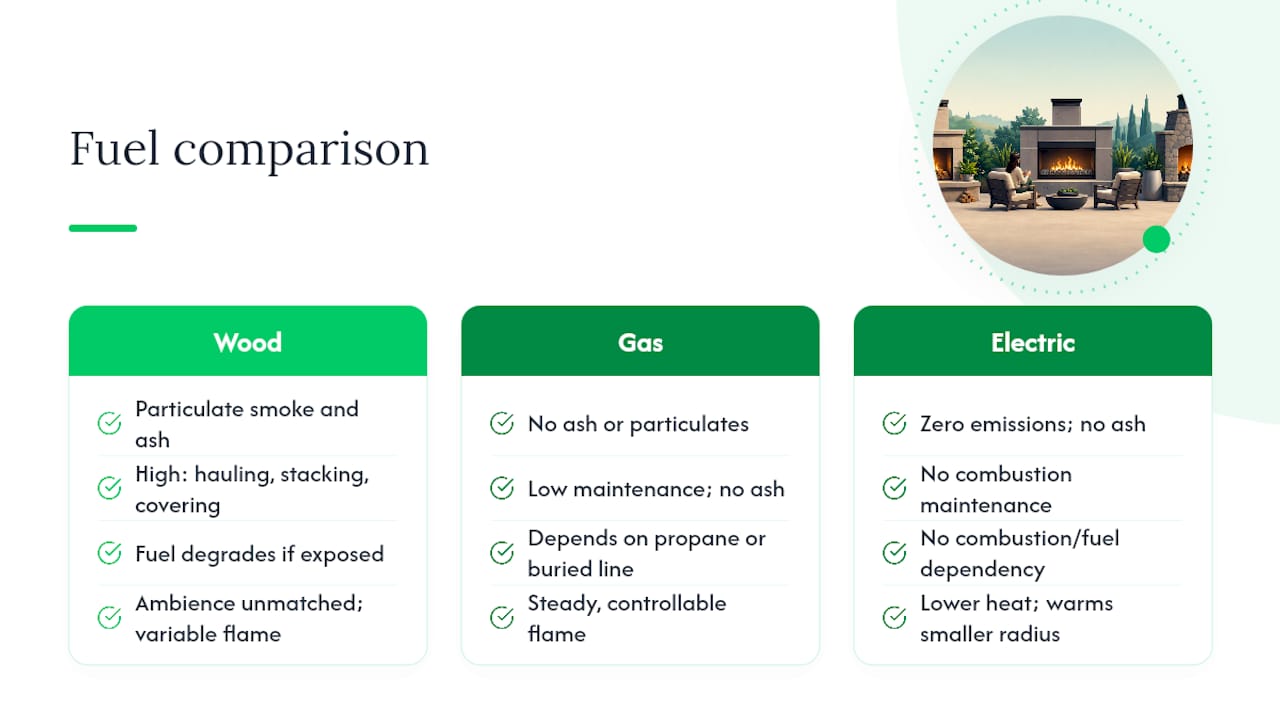
Wood delivers unmatched ambience but produces particulate smoke that affects air quality, especially in tight suburban lots where neighbors sit close by. It also requires the most physical maintenance: hauling, stacking, and covering fuel that degrades if left exposed.
Gas burns far cleaner, with no ash or particulate output, and lights instantly without the wait for a bed of coals. The tradeoff is a dependency on propane delivery or a buried natural gas line, plus the upfront cost of professional hookup. Performance-wise, gas fireplaces hold a steady, controllable flame that’s easier to manage around kids or during dinner parties.
Electric units skip combustion entirely, which means zero emissions and no ash, embers, or smoke smell clinging to your patio furniture. Electric heaters suit small or partially enclosed spaces better than open-air propane units, which need more airflow to perform well. The catch is heat output. Electric models rarely match the BTU punch of propane or natural gas, so on a cold night, they warm a smaller radius.
For most backyards, the real environmental tradeoff isn’t about which fuel is “green.” It’s about frequency of use. A fireplace that gets used twice a month has a smaller footprint than a “cleaner” unit running every weekend. Match the fuel to how often you’ll realistically light it, not just to its emissions profile on paper.
DIY Installation vs Hiring a Professional: What’s the Real Difference?
A basic fire pit kit is genuinely a weekend project for most homeowners. Standard builds run 36 to 44 inches in outside diameter, require a modest block count, and follow a straightforward layer-and-level sequence that doesn’t call for specialized tools.
Complexity jumps sharply once gas or masonry enters the picture. A gas fireplace needs a code-compliant line run either from a buried natural gas source or a propane tank, and that work typically requires a licensed plumber or gas fitter, not a weekend warrior with a wrench. Masonry chimneys add another layer: proper flue sizing, fire-rated liners, and flashing details that, if done wrong, can lead to water intrusion or worse, a fire hazard hidden inside a wall you can’t easily inspect later.
There’s a middle tier worth knowing about: prefabricated units that bolt or stack together without a poured foundation. These split the difference. Setup is faster than full masonry, but you’ll still want a level, fire-rated base and, for gas models, a professional hookup.
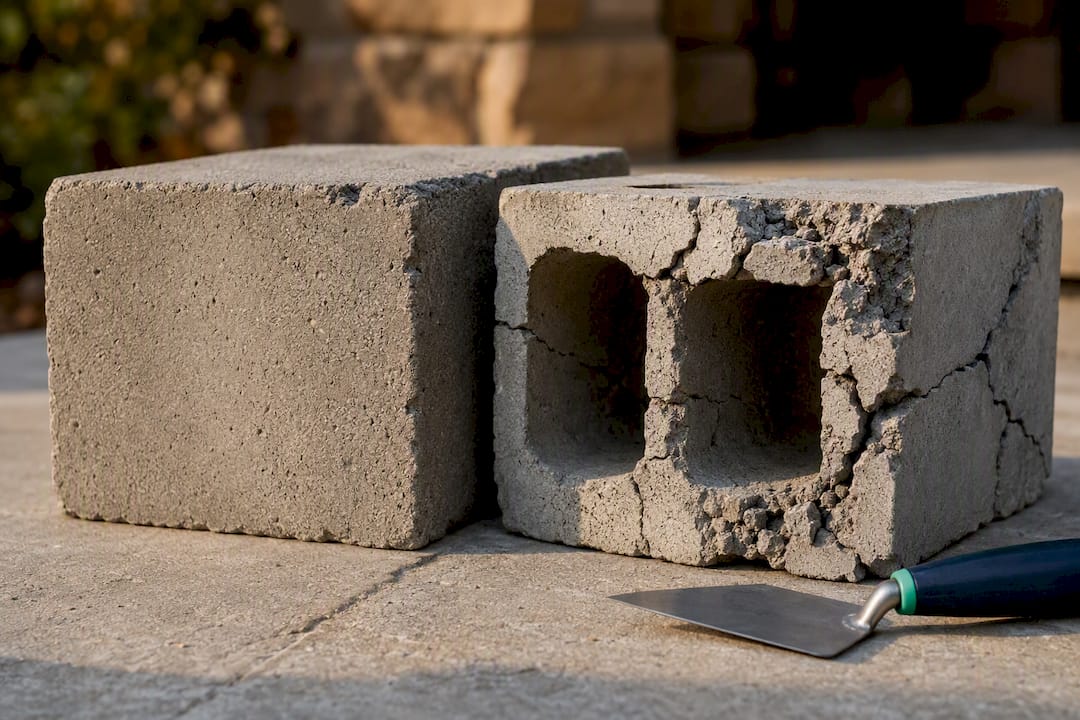
Practitioner advice consistently warns against hollow-core concrete blocks for any DIY fire pit. Moisture gets trapped inside the block, and repeated heat cycling causes it to crack or spall within a season or two. Solid, fire-rated blocks or a metal fire ring solve the problem for a modest added cost. It’s the single most common mistake among first-time builders, and the cheapest one to avoid.
How Should the Seasons Affect Your Outdoor Fireplace Plans?
Spring and fall are peak usage windows for most climates, when a fireplace turns a chilly evening into usable outdoor time. Summer use often drops off except after sunset, while winter use depends heavily on wind exposure and whether your seating area has any wind break at all.
Weather protection matters more than most buyers plan for. Masonry fireplaces tolerate rain and snow reasonably well, but ferrous metal components, screens, dampers, and caps, rust faster than people expect without a protective cover or periodic inspection. Prefab gas units are more vulnerable: control knobs, ignition systems, and burner trays can corrode or seize if left exposed to freeze-thaw cycles for multiple winters.
A few weather-specific habits pay off:
- Cover gas and electric units completely during winter storage, and disconnect propane tanks rather than leaving them attached in freezing temperatures.
- Drain any water that collects in a fireplace base or hearth pan before the first hard freeze.
- Trim back overhanging branches before fall storms, since dead limbs near an open flame are both a fire risk and a falling hazard.
- If you live somewhere with heavy snow load, check that any roof or pergola structure over the fireplace is rated for the added weight.
None of this is complicated, but skipping it for two or three seasons is exactly how a $3,000 fireplace turns into a $3,000 eyesore with a rusted-out burner.
What Size Outdoor Fireplace Fits Your Yard?
Size should follow your seating plan, not the other way around. A fireplace that’s too large for a small patio pushes furniture uncomfortably close to the heat, while one that’s too small leaves guests on the edges of the group shivering.
For a compact patio or townhouse yard, a freestanding fire pit in the 30 to 36 inch range paired with four to six chairs usually fits without crowding walkways. Mid-size backyards, the kind with room for a dining set and a separate lounge area, can support a 40 to 44 inch pit or a modest single-sided fireplace with bench seating for six to eight. Larger properties with room to spare open the door to double-sided fireplaces or full masonry builds that anchor an eight-to-twelve-person gathering space.
The seating radius matters as much as the fireplace itself. Keep chairs roughly 3 to 5 feet back from the firebox edge for comfortable heat exposure without scorching anyone’s shins, and preserve at least one clear walking path so guests aren’t climbing over furniture to refill a drink. If your yard slopes or has an irregular shape, a corner-anchored single-sided fireplace often works better than a freestanding pit, since it uses the terrain instead of fighting it.
How Do You Handle Fuel Storage and Supply?
Fuel logistics rarely make it into the planning conversation until the fireplace is already installed, which is exactly backward.
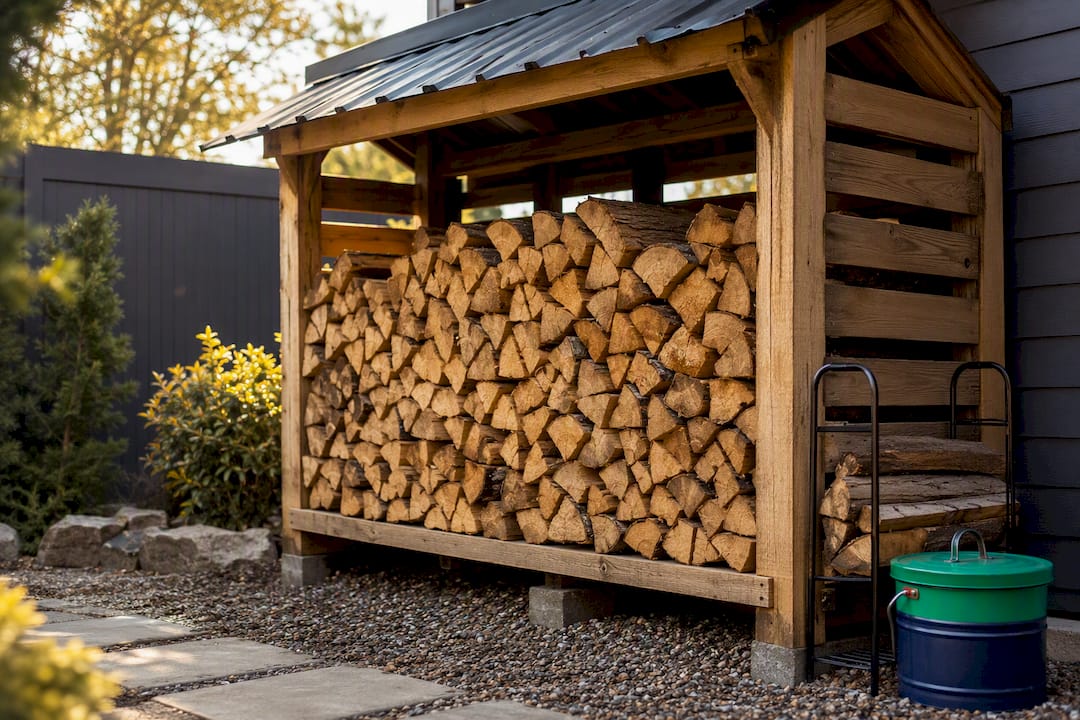
Wood-burning setups need dry, covered storage, ideally raised off the ground and positioned where airflow can season the wood properly. A rick or two of hardwood takes up real yard space, and green or wet wood burns dirty and inefficiently, so plan storage before you plan the fireplace’s footprint.
Propane-fueled units require a tank, typically a standard 20-pound cylinder for smaller fire tables or a larger 100-pound tank plumbed in for full-size fireplaces with higher BTU demand. Tanks must sit upright, outdoors, away from the fireplace itself and any other heat source, and swapping an empty tank mid-gathering is a common annoyance worth planning around with a spare on hand. Natural gas sidesteps the tank problem entirely by tying into your home’s existing gas line, but that requires the professional hookup discussed earlier and isn’t something to retrofit casually.
Electric units need nothing but an outdoor-rated outlet, which makes them the simplest fuel logistics of the three, though that convenience comes at the cost of lower heat output on cold nights.
Jeff’s Quick Take on Planning an Outdoor Fireplace
Homeowners lose money by choosing the design before checking the code. Get the permit question answered first, hire a licensed pro for anything involving gas or a chimney, and let the aesthetic follow the plan. That order keeps projects safe and on budget, and it’s exactly how a professional contractor approaches every outdoor build: clean job sites, honest timelines, and solutions matched to your yard, not a catalog photo.
— Jeff
Ready to Build Your Outdoor Fireplace With JAG Home Enhancements?
Skip the permit guesswork and the trial-and-error masonry work. A professional remodeling company can handle the full project, from siting and gas hookups to finish stonework, to deliver a code-compliant fireplace built once, correctly.
A consultation with JAG starts with a site walk to check drainage, clearances, and any existing deck or patio you want the fireplace to work with. From there, you get a design suited to your yard’s actual layout and a detailed, itemized quote covering foundation, gas or chimney work, and finish materials. If your project pairs a fireplace with a new patio or deck, our custom deck and outdoor living team can design both together, and our exterior renovations page covers the broader scope of what we build. Not sure what to ask a contractor before signing? Read our guide to choosing a remodeling contractor first, then reach out to schedule your on-site consultation.
Where to Learn More
- NFPA: clearance and open-burning safety standards.
- The Spruce: fire pit siting and build basics.
- HomeNestor: DIY dimensions and sequencing.
- Angi: cost drivers and clearance notes.
- NFICertified: installer credential resources.
Sources
- National Fire Protection Association (NFPA)
- How to DIY a fire pit that actually works — The Spruce
- How to Build a Backyard Fire Pit – HomeNestor
- NFICertified