

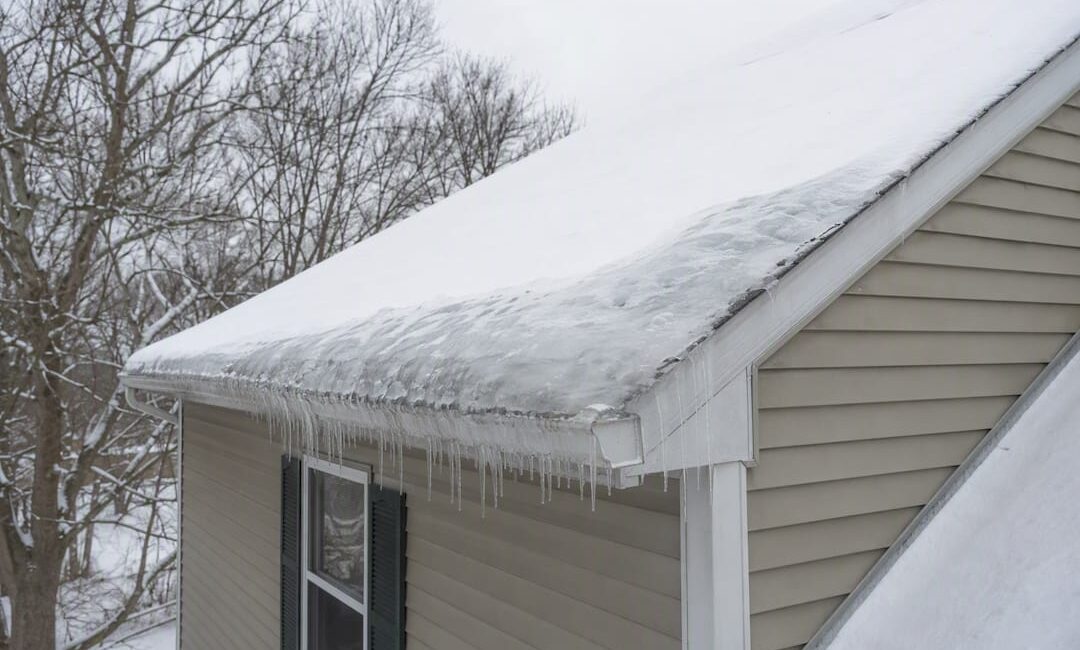
Prevent ice dams by keeping your roof deck cold: air-seal your attic, add insulation to recommended levels, and maintain continuous soffit-to-ridge ventilation. That’s the permanent fix. Right now, in the middle of a cold snap, the priority is different: clear snow off the lower few feet of roof with a roof rake and keep gutters free of debris so meltwater has somewhere to go.
If you’re already seeing icicles thicker than a broom handle or water stains creeping across a ceiling, ice dam prevention in Bucks County starts with a phone call, not a ladder. Jaghomesnow (JAG Home Enhancements) inspects attics, identifies the heat leaks causing the problem, and builds a permanent fix around insulation and ventilation rather than a Band-Aid.
- Air-seal, insulate, and ventilate the attic. This is the only permanent solution.
- Clear the bottom 3 to 6 feet of roof after heavy snow using a roof rake from the ground.
- Keep gutters and downspouts clear so melting snow has an exit path.
Pro Tip: Never climb onto an icy roof or chip at an ice dam with a hammer or ice pick. You risk a fall, and you can tear shingles loose, turning a $200 gutter problem into a $4,000 roof repair.
Key Takeaways
Permanent ice dam prevention in Bucks County depends on air-sealing the attic, insulating to R-38 through R-49, and maintaining continuous soffit-to-ridge ventilation with baffles at every rafter bay.
| Point | Details |
|---|---|
| Root cause | Ice dams form from attic heat escaping into the roof, not from snowfall alone. |
| Short-term safety | Rake the lower roof edge and use calcium chloride socks; never climb on ice or chip at it. |
| Insulation target | Aim for R-38 to R-49 attic insulation, per National Weather Service guidance for this climate. |
| Insurance reality | Water damage from ice dams is usually covered; the removal cost itself typically is not. |
| Local fix | Jaghomesnow inspects attics and builds a permanent air-seal, insulate, and ventilate plan for Bucks County homes. |
Table of Contents
- What Causes Ice Dams on Bucks County Homes?
- What Can You Do From The Ground To Stop Ice Dams?
- How Do You Permanently Fix Ice Dams?
- Do Heat Cables And Gutter Guards Actually Work?
- When Should You Call A Professional For Ice Dam Removal?
- What Does Ice Dam Removal Cost, And Does Insurance Cover It?
- How Does JAG Home Enhancements Approach Ice Dam Prevention?
- Does Bucks County Have Building Codes That Affect Ice Dam Repairs?
- Get Your Attic Inspected Before The Next Freeze Hits
- Frequently Asked Questions
- Sources
What Causes Ice Dams on Bucks County Homes?
An ice dam forms when snow on your roof melts, runs down to the cold eaves, and refreezes into a ridge of ice. That ridge then traps more meltwater behind it, which backs up under your shingles and finds its way into your ceiling and walls. It’s not the snow that damages your home. It’s the water that has nowhere to go.
Three conditions have to line up for this to happen: snow sitting on the roof, heat escaping from the living space into the attic, and eaves cold enough to refreeze the runoff. Ice dams form specifically because attic heat melts snow unevenly across the roof surface, not because of the snowfall itself.
Bucks County’s winter pattern makes this worse than in steadier cold climates. Our freeze-thaw cycles swing temperatures up and down repeatedly between December and March, and a lot of the county’s older colonials and capes have shallow attic spaces that make air-sealing harder to get right the first time. Common heat leaks include:
- Recessed can lights punched straight through the ceiling drywall
- Uninsulated or poorly sealed ductwork running through the attic
- Attic hatches and pull-down stairs without a weatherstripped seal
- Bath fans vented into the attic instead of outside
What Can You Do From The Ground To Stop Ice Dams?
- Rake the lower roof edge after every significant snowfall. Use a roof rake with a long telescoping handle and pull snow down and toward you while standing on the ground, working the bottom 3 to 6 feet of roof where dams typically form.
- Use calcium chloride ice melt in old panty hose or mesh socks. Lay the filled sock vertically across an existing ice dam, from the gutter line up and over the ridge, so it melts a channel that lets trapped water drain. Avoid rock salt, which can pit metal roofing and gutters.
- Skip anything that involves climbing or chipping. Standing on an icy roof or swinging a hammer at an ice ridge is how minor problems turn into ER visits and torn-up shingles.
These steps buy you time. Removing snow with a roof rake reduces the meltwater feeding an ice dam, but it doesn’t touch the attic heat loss causing the problem in the first place.
Pro Tip: Never use an open flame, a blowtorch, or a heat gun to melt roof ice. It’s a house fire waiting to happen, and it can crack your shingles from thermal shock.
How Do You Permanently Fix Ice Dams?
Permanent ice dam prevention rests on three legs working together, not one fix alone. Building science guidance is blunt about this: air sealing, insulating, and ventilating have to happen as a set. Skip one, and the other two often underperform or create new moisture problems.
Air-seal the ceiling plane first. Before adding insulation, seal every gap where warm air leaks into the attic: around recessed lights, plumbing stacks, chimney chases, attic hatches, and the top plates of interior walls. Spray foam and caulk handle most of these; ductwork often needs mastic sealant at the joints.
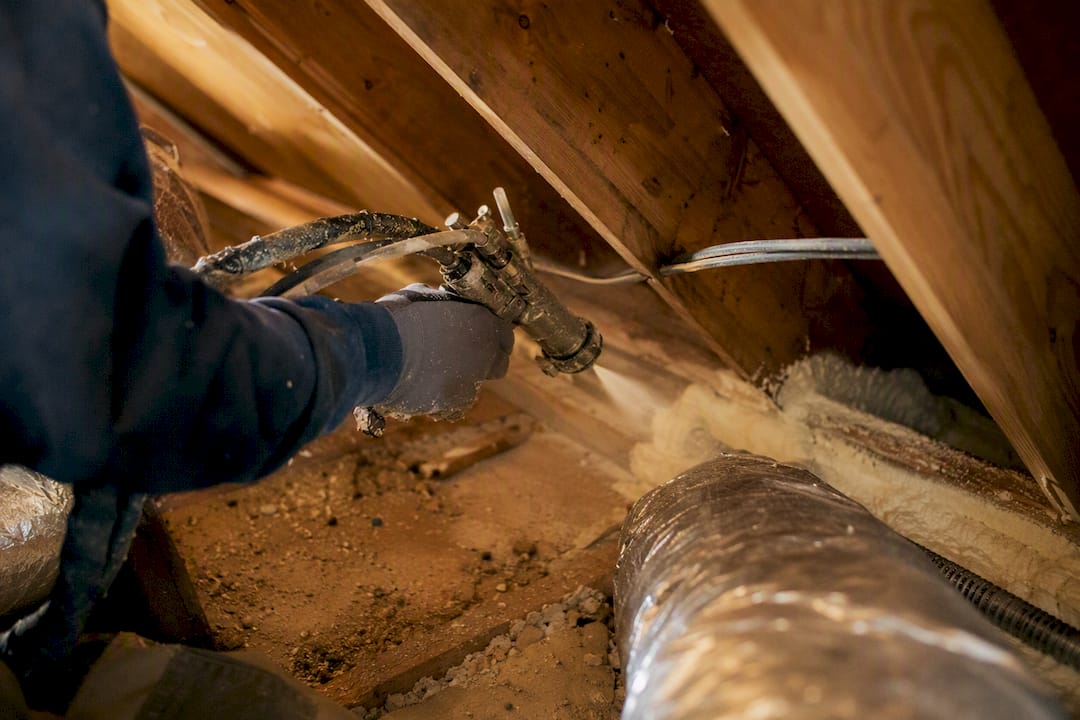
Insulate to the right depth. National Weather Service guidance recommends R-38 to R-49 of attic insulation for our climate zone, whether it’s blown-in cellulose, fiberglass batts, or spray foam. Blown-in cellulose fills irregular joist bays well in older Bucks County homes; spray foam works better when you’re also sealing air leaks in the same pass.
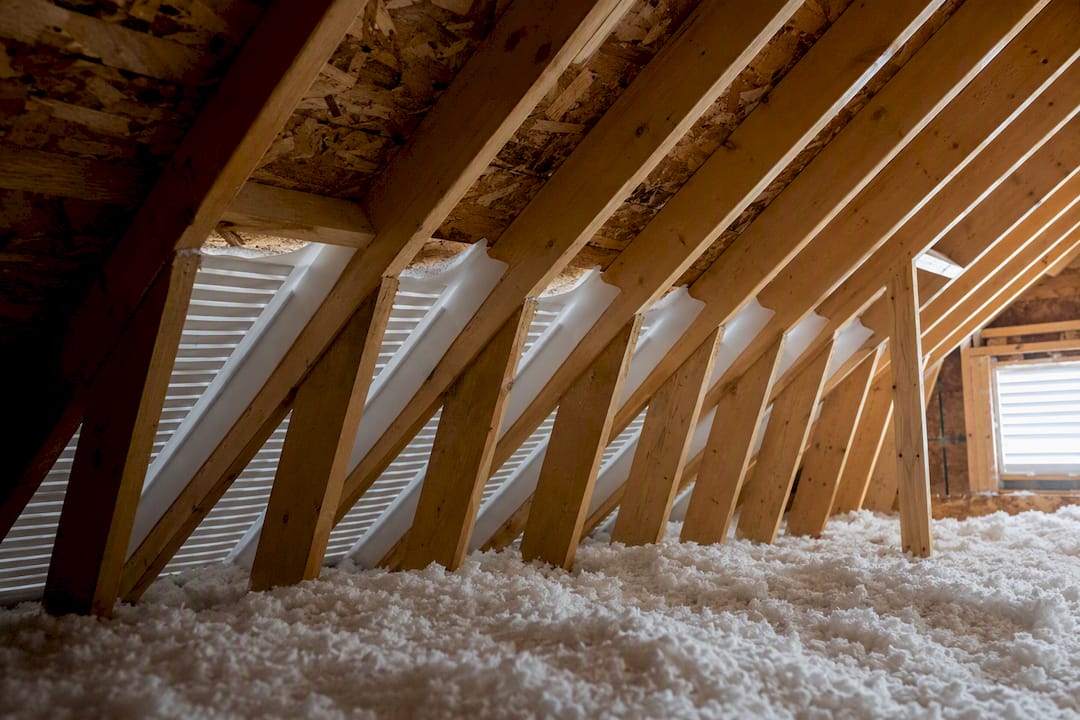
Ventilate from soffit to ridge, continuously. Cold outside air needs to move in at the soffits and out at the ridge to keep the entire roof deck at a uniform, cold temperature. This only works if baffles are installed at every rafter bay, holding insulation back from blocking the soffit vents. Skip the baffles and you can have vents that do nothing.
For homes with cathedral ceilings or finished attics where there’s no room to ventilate, the fix shifts to an unvented “hot roof” approach using closed-cell spray foam directly against the roof deck. That’s a contractor-level call, since vapor control details have to be engineered correctly to avoid trapping moisture. Ice and water shield membrane at the eaves and properly sloped gutters add a second layer of leak protection, but they don’t stop the ice dam from forming. They just reduce the damage when one does.
Do Heat Cables And Gutter Guards Actually Work?
Heat cables have a real but limited job: they melt a channel through ice so water can drain, which helps on roofs with tricky valleys or where a full attic retrofit isn’t happening this season. They’re a backup measure, not a fix. Run one without addressing attic heat loss, and you can simply relocate where the ice forms instead of eliminating it.
Gutter guards and clean gutters matter too, but mostly for water management once melting starts, not for the underlying heat problem:
- Heat cables reduce ice buildup at valleys and gutter lines but need to be reinstalled and checked every season.
- Clean gutters and correctly sloped downspouts move meltwater away from the foundation and fascia.
- Complex rooflines with multiple valleys concentrate more snow and ice, often needing ice and water shield membrane under the roofing material at those spots.
When Should You Call A Professional For Ice Dam Removal?
Some situations aren’t a wait-and-see. Call for professional help immediately if you see:
- An active leak inside the house, especially water staining a ceiling or running down an interior wall.
- An ice ridge thicker than 4 to 6 inches, or one that’s visibly growing day over day.
- Any sagging in the roofline or soffit, which can signal structural water intrusion.
- Bathroom or kitchen exhaust vents blocked by ice, since that traps moisture and combustion byproducts indoors.
Professional crews typically use low-pressure steam to melt ice dams without damaging shingles, which is safer and faster than any ground-level method a homeowner can use. When vetting a contractor, ask whether they carry liability insurance, whether they have Bucks County references, whether they’ll recommend a permanent attic fix alongside removal, and whether they provide a written estimate with a timeline. A legitimate emergency visit should include an assessment, temporary drainage channels cut into the ice, and a scheduled follow-up for the permanent work.
Pro Tip: Ask any contractor quoting ice dam removal whether they inspect the attic while they’re there. If they only mention the roof surface, they’re treating a symptom, not the cause.
What Does Ice Dam Removal Cost, And Does Insurance Cover It?
Professional removal costs vary with roof access, ice volume, and whether it’s an emergency same-day call, with national estimates ranging from a few hundred dollars to over a thousand depending on severity. A straightforward valley clearing costs far less than a whole-roof emergency visit during a storm.
Homeowners insurance usually splits the difference on coverage:
- Typically covered: water damage to ceilings, drywall, and insulation caused by an ice dam backup.
- Typically not covered: the cost of removing the ice dam itself, since insurers usually classify that as routine maintenance.
Policygenius confirms this pattern holds across most standard policies, so call your agent as soon as you spot interior water damage rather than waiting until spring. If you need to file a claim, our roof insurance claim guide walks through documentation and timing. Emergency removal happens within a day or two of your call in most cases; permanent insulation and ventilation upgrades are better scheduled in the fall, before freeze-thaw season starts.
How Does JAG Home Enhancements Approach Ice Dam Prevention?
A JAG inspection starts in the attic, not on the roof. We check insulation depth and coverage, look for daylight or draft at penetrations like can lights and hatches, and trace ductwork for leaks. On homes with a history of dams, we’ll use a blower-door or infrared check to pinpoint exactly where heat is escaping before writing up a prioritized recommendation.
Bucks County’s housing stock isn’t uniform, and neither is our approach. A stone colonial in Doylestown with a shallow attic gets a different air-sealing plan than a Warwick Township ranch with more open attic space. Fall, before the freeze-thaw cycles set in, is consistently the best window for this work.
| Approach | What It Fixes | Limitation |
|---|---|---|
| Heat cables only | Melts a drainage channel through existing ice | Doesn’t address attic heat loss |
| Gutter cleaning only | Improves meltwater drainage | Won’t stop dam formation if attic is under-insulated |
| Air seal + insulate + ventilate | Keeps roof deck uniformly cold, prevents dam formation | Requires attic access and upfront investment |
If a leaking roof has been patched more than once, sometimes the honest answer is replacement rather than repeated repair. Our guide on knowing when it’s time for a roof replacement covers how to make that call. And if you’re ever facing a severe storm event beyond what any contractor can reach quickly, the Bucks County Emergency Management Agency is a resource for coordination during widespread winter emergencies.
We keep job sites clean, show up when we say we will, and put every recommendation in writing before work starts. That’s not a marketing line. It’s what separates a contractor you’ll call again from one you won’t.
Does Bucks County Have Building Codes That Affect Ice Dam Repairs?
Pennsylvania has adopted versions of the International Residential Code (IRC) at the state level, and most Bucks County municipalities, including Doylestown, Warwick Township, and Buckingham, enforce it through their local building departments. For ice dam prevention work, two code areas matter most.
Attic ventilation ratios are specified under the IRC’s ventilation requirements, generally requiring a minimum net free ventilating area relative to attic floor space, split between intake at the soffits and exhaust at the ridge or gable vents. If your contractor is adding ventilation as part of an ice dam fix, that ratio isn’t optional; it’s inspected. Ice and water shield membrane at eaves is also addressed by code in areas prone to ice damming, typically requiring the membrane to extend from the eave edge to at least 24 inches inside the exterior wall line, measured along the roof slope.
Permitting requirements vary by township for larger scope work. Adding insulation alone in an existing attic often doesn’t require a permit in most Bucks County municipalities, but structural changes, such as converting to an unvented roof assembly with spray foam against the deck, typically do, since it affects the building’s moisture and fire-rated assembly. Reroofing projects that include ice and water shield installation as part of a full roof replacement almost always require a permit and inspection.
Before starting attic or roofing work, check with your specific township’s building department, since Doylestown Borough, Warwick Township, and Buckingham Township each issue permits independently. A licensed local contractor should already know these requirements and pull the correct permits without you having to chase it down.
A Contractor’s Honest Take On Why This Matters
I’ve seen too many homeowners pay for the same emergency steam removal three winters running because nobody ever touched the attic. That’s money spent treating the symptom, year after year. Schedule your inspection in the fall, before the first hard freeze, and fix the cause once.
Get Your Attic Inspected Before The Next Freeze Hits
Waiting until ice is already hanging off your gutters means you’re choosing between an emergency steam bill and roof damage. Jaghomesnow is the local alternative to that gamble. We inspect the attic, insulation, and ventilation together, then give you one written plan instead of a patchwork of quick fixes from three different companies.

That’s the real advantage for Bucks County homeowners: one contractor who handles the diagnosis and the permanent repair, whether that means air sealing, adding insulation to R-38 or higher, correcting ventilation, or replacing a roof that’s taken one too many ice dam seasons. If your home has had ice dams more than once, that pattern alone is worth a fall inspection before the next storm rolls through. Read our guide on choosing the right remodeling contractor in Bucks County, then reach out to schedule an attic assessment while there’s still time before winter sets in.
Frequently Asked Questions
What can I put on my roof to stop ice dams?
Calcium chloride ice melt in a fabric sock, laid across the dam from gutter to ridge, opens a temporary drainage channel. It’s a stopgap. The permanent fix is attic air sealing, insulation, and ventilation, not anything applied to the roof surface itself.
How much does it cost to have someone remove ice dams?
Professional removal typically runs from a few hundred dollars to over a thousand, depending on roof access, ice severity, and whether it’s emergency service, according to Consumer Reports. Complex rooflines with multiple valleys or hard-to-reach eaves push costs higher.
Does homeowners insurance cover ice damming?
Usually, insurance covers the resulting water damage inside your home, like ceiling stains or soaked drywall, but not the cost of removing the ice dam itself, since that’s typically classified as maintenance. Policygenius confirms this split across most standard policies.
Can ice damming be prevented?
Yes, but only by addressing the attic, not the roof surface. Air-sealing the ceiling plane, adding insulation to R-38 or higher, and maintaining continuous soffit-to-ridge ventilation together stop the heat loss that causes ice dams in the first place.
Sources
- Attic air sealing, insulating and ventilating for ice-dam prevention (BASC/PNNL)
- Dealing and preventing ice dams (University of Minnesota Extension)
- Does homeowners insurance cover ice dam damage? (Policygenius)
- Ice Dam USA
- Bucks County Emergency Management Agency
Recommended
- How Winter Weather Impacts Your Home’s Exterior — and What Bucks County Homeowners Can Do Now – JAG Home Enhancements How Winter Weather Impacts Your Home’s Exterior in Bucks County, PA | JAG Home Enhancements
- Why Winter Is the Perfect Time to Plan Your Spring Exterior Renovations in Bucks County, PA – JAG Home Enhancements Winter Exterior Renovation Planning in Bucks County, PA | JAG Home Enhancements