
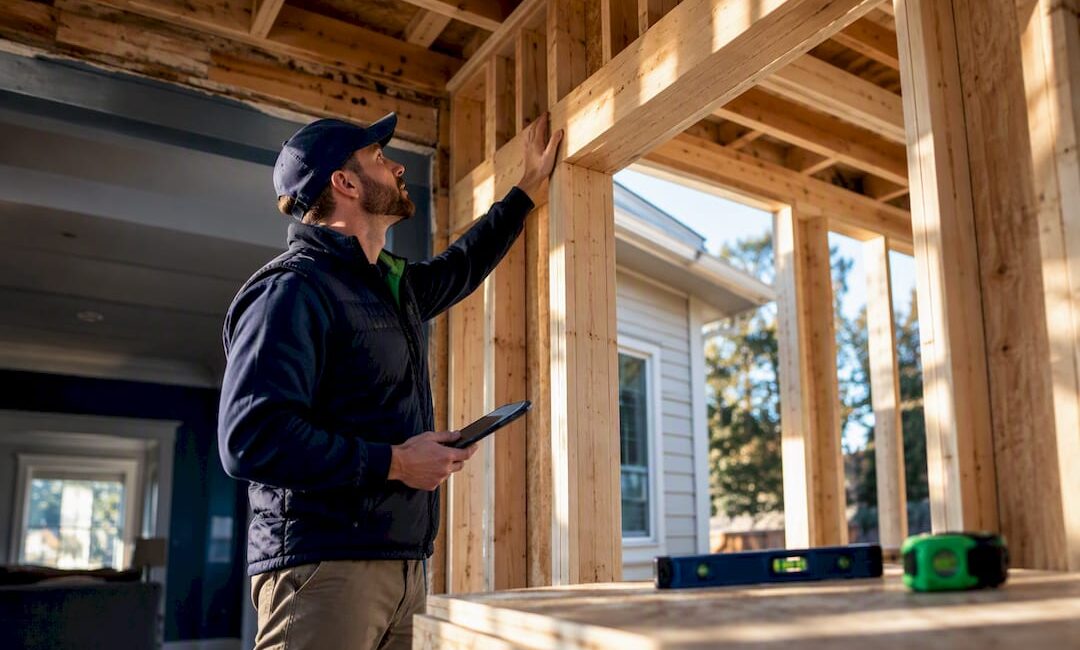
Every Bucks County home addition needs a building permit, and that permit comes from your township or borough, not the county. Pennsylvania’s Uniform Construction Code sets the baseline rules, but each municipality administers its own application, fees, and inspection schedule. Call your local Building and Zoning office before you draw a single wall, and line up a contractor who already knows that office’s checklist.
TL;DR:
- Ensuring your contractor has recent permit filing experience in your township helps prevent delays caused by setbacks, lot coverage, or zoning violations.
- A complete technical package, including engineer-stamped structural drawings and all spec sheets, significantly increases the likelihood of first-pass permit approval.
- Most townships require multiple permits, such as building, zoning, electrical, plumbing, and stormwater reviews, which must be obtained before beginning construction.
- Calling your township’s zoning officer early can reveal potential conflicts with setbacks or easements, saving weeks of redesign and resubmission time.
- Using a knowledgeable contractor who manages permit submissions can streamline the process and reduce the risk of inspection rejections or further delays.
Table of Contents
- Verified Bucks County Contractors: A Concise Shortlist For Additions
- Which Permits You Actually Need For A Bucks County Addition
- How To Apply: The Permit Submission Process For Bucks County Additions
- Why Permits Get Delayed And How To Avoid It
- A Contractor’s View On Reducing Permit Friction
- Want Help? JAG Home Enhancements’ Permit-Aware Addition Service
- Official Township And PA UCC Resources Worth Checking
- Sources
- FAQ
Verified Bucks County Contractors: A Concise Shortlist For Additions
Picking a contractor for an addition is really two decisions at once: who can build it well, and who can get it through your township’s plan review without three rounds of corrections. Here’s a shortlist of verified Bucks County providers, built around Google ratings, review volume, and their core specialty.
- VSM Remodeling — 5★ (over one hundred reviews). Core service: kitchen remodeling. Best for kitchen-focused remodels with a strong volume of local reviews behind it.
- JAG Home Enhancements — 4.7★ (dozens of reviews). Core service: general contracting with a focus on additions. Best for full home additions and contractor-managed permit submissions.
- Additions by B&H — 5★ (several dozen reviews). Core service: kitchen remodeling. Best for kitchen-centered additions and remodels.
- Weikel Contracting, LLC — 5★ (nearly thirty reviews). Core service: kitchen remodeling. Best for kitchen remodels and related additions.
- Bee Happy Home Remodeling — 5★ (over twenty reviews). Core service: kitchen remodeling. Best for kitchen remodels and smaller additions.
- Goldbricks Builds — 5★ (around twenty reviews). Core service: general contracting. Best for general contracting on additions and larger renovations.
- John G. Moser & Son, Inc. — 5★ (12 reviews). Core service: kitchen remodeling. Best for kitchen remodels and renovation work.
- Garay Legacy Remodeling — 5★ (single review). Core service: general contracting. Best for smaller additions and remodeling projects.
Before you sign with any of them, ask three things:
- Which townships have you filed permits with in the last year, and can you name the zoning officer you worked with?
- Can you show a sample permit package, including a stamped structural drawing and HVAC or plumbing cut sheets?
- Can you provide proof of workers’ compensation insurance or a documented exemption?
A high rating tells you the work turned out well. It does not tell you whether the contractor knows Doylestown’s plan-review quirks versus Buckingham’s. Weigh review score alongside documented permit experience and insurance paperwork, not review count alone.
Which Permits You Actually Need For A Bucks County Addition
Your township or borough issues and enforces the permit, not Bucks County itself. Municipalities like Warwick, Lower Makefield, Doylestown, and Bensalem each administer permits under the Pennsylvania Uniform Construction Code, and most have adopted the 2021 International Residential and Building Code family as their baseline, sometimes with local amendments.
An addition almost always triggers more than one approval. Expect to need:
- A building permit for any structural addition, including new framing, foundations, or roof work.
- Zoning approval confirming the addition respects setbacks, lot coverage limits, and height restrictions.
- Electrical, plumbing, and mechanical permits for any new wiring, fixtures, or HVAC equipment tied to the addition.
- A stormwater review if the addition increases impervious surface beyond your township’s threshold.
Purely cosmetic work, such as repainting or swapping flooring in existing space, typically doesn’t need a permit. The moment you add square footage, move a wall, or introduce new mechanical systems, you’re in permit territory.
How To Apply: The Permit Submission Process For Bucks County Additions
Getting a permit approved on the first pass comes down to sequencing. Skip a step and you’ll likely be resubmitting in a few weeks instead of breaking ground.
- Confirm your township and call Building & Zoning first. Every municipality has its own checklist, and a five-minute call can flag setback or easement conflicts before you finalize plans.
- Assemble your document package. Most townships want a scaled site plan, two full sets of construction drawings, HVAC and plumbing spec sheets, plumbing riser diagrams, electrical cut cards, and engineer-stamped truss or beam documentation where applicable, which you can source from local experts like One Day Doors & Closets of Delaware Valley. Buckingham Township’s addition checklist is a good reference for what a complete package looks like.
- File and pay fees. A zoning fee is typically due at application, before technical review even starts. Buckingham, for example, charges $150 at the zoning stage, with building permit fees assessed afterward. Some townships, including Tinicum, also require a signed professional services agreement and escrow before the permit can be issued.
- Schedule inspections and close the permit. Expect separate inspections for footings, framing, mechanical, electrical, and plumbing, followed by a final inspection. A permit stays open on your township’s records until that final inspection passes.
Pro Tip: Call your township zoning officer before you finalize architectural drawings. A quick pre-check on setbacks and easements can save weeks of redesign if your addition sits closer to a property line than you thought.
Why Permits Get Delayed And How To Avoid It
Most rejected applications trace back to a handful of preventable gaps. Missing HVAC or plumbing cut sheets, absent engineer stamps on trusses or long-span beams, and zoning non-compliance on setbacks or lot coverage account for the bulk of resubmittals. Incomplete workers’ compensation documentation from the contractor is another common holdup.
Providing a complete technical packet on the first submission is one of the strongest predictors of a fast approval. Before you file, confirm:
- Site plan is drawn to scale and shows all setbacks accurately.
- Structural drawings carry an engineer’s stamp where the township requires one.
- HVAC, plumbing, and electrical spec sheets are attached, not just referenced.
- Your contractor’s workers’ comp certificate or exemption is current and included.
A short call to the zoning officer to pre-check your plans against local rules costs a few minutes and can prevent a resubmittal cycle that eats a month.
A Contractor’s View On Reducing Permit Friction
Contractors who work Bucks County townships regularly build a habit of calling the zoning office before finalizing drawings, not after. That single step catches most setback and coverage conflicts early. Complete technical packages on the first submission, paired with a contractor who already knows a given township’s documentation preferences, tend to see fewer inspection rejections and a faster path from application to closed permit. For homeowners weighing whether to manage permits themselves, the time saved by contractor-managed submission is often the deciding factor.
— Jeff
Want Help? JAG Home Enhancements’ Permit-Aware Addition Service
Hiring a knowledgeable general contractor is a practical alternative to hunting through township PDFs and hoping your plans clear zoning on the first try. As a Bucks County general contractor, JAG Home Enhancements builds permit-ready documentation into every addition project from the start, rather than treating it as paperwork tacked on after design.
When you request a quote, ask directly about permit experience in your specific township, request a sample permit package, and confirm proof of insurance and workers’ compensation coverage. If your addition includes a kitchen expansion, JAG’s kitchen and bathroom remodeling work can be scoped alongside the addition itself. For the addition project on its own, start with a consultation on the Home Additions page and get a permit-ready plan built around your township’s actual requirements.
Official Township And PA UCC Resources Worth Checking
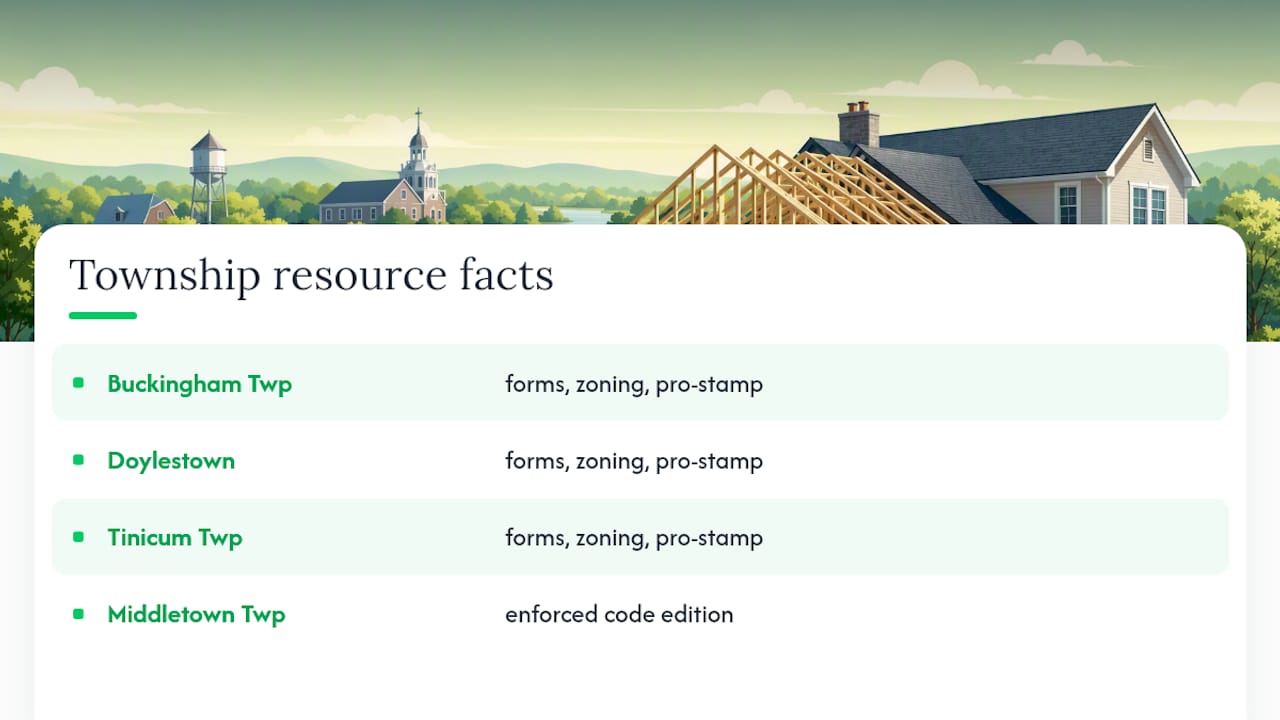
Before you file anything, pull up your township’s own checklist. Buckingham Township’s addition requirements, Doylestown’s addition guidance, and Tinicum’s permit procedures each spell out required forms, zoning limits, and whether plans need a professional stamp. Middletown Township’s building regulations page confirms which code edition it enforces.
Sources
- Bucks County building permit guide — PermitFlow
- Additions, Alterations, Repairs and Accessory Structure Requirements — Buckingham Township
- Building permit procedures — Tinicum Township
FAQ
Does Bucks County Issue Home Addition Permits?
No. Bucks County generally does not issue building permits directly. Your township or borough handles permit issuance under the Pennsylvania Uniform Construction Code, so the exact process depends on where you live.
How Long Does Addition Permit Approval Take?
Standard residential permits typically take one to four weeks to approve, depending on the municipality’s workload and whether your first submission is complete. Missing documents almost always add weeks to that timeline.
What Documents Do I Need To Apply?
Most townships require a scaled site plan, two sets of construction drawings, HVAC and plumbing spec sheets, and proof of workers’ compensation or an exemption, as outlined in Buckingham Township’s checklist. Engineer-stamped structural drawings are required for many additions.
Can A Contractor Handle My Permit Application?
Yes, and it’s common practice in Bucks County. JAG Home Enhancements manages permit submissions as part of its home addition service, preparing site plans and technical packages so the application matches your township’s requirements from the start.
What Happens If I Don’t Close My Permit?
An open permit stays on your municipal record until the final inspection is passed. Unclosed permits commonly surface as problems during a future home sale, so scheduling that final inspection matters as much as getting the permit approved in the first place.