

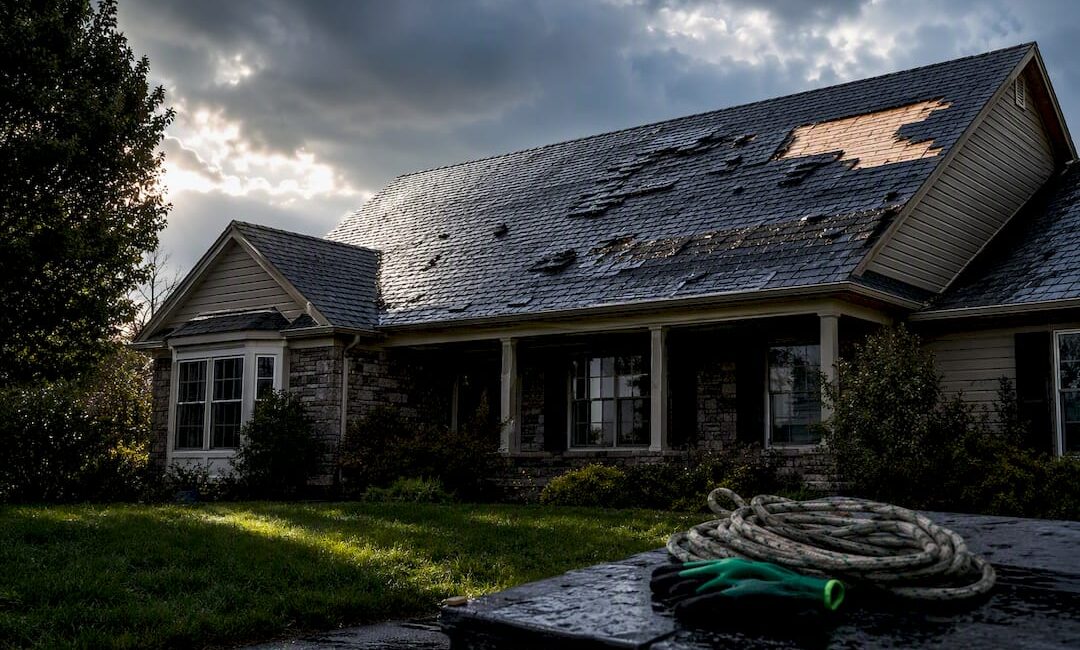
If your roof was just hit by a storm, do four things now: stay safe and off the roof, document every bit of damage, tarp only what you safely can, and call your insurer to open a claim while lining up an independent inspection. Skip any of these and you risk a denied claim, a bigger repair bill, or a hurt homeowner.
TL;DR:
- Proper documentation, including wide-angle photos, close-ups with scale, and a narrated video walkthrough, is essential to secure faster and more accurate insurance settlements.
- Temporary tarping should use heavy-duty, securely fastened materials that extend past the roof ridge and eaves to withstand wind and prevent water pooling, with receipts kept for reimbursement.
- Call your insurer within 24 to 48 hours to confirm claim details, get assigned adjuster information, and line up independent roof inspections to identify hidden damage.
- Avoid letting unverified contractors handle both estimates and repairs, and always check for valid licensing, local presence, references, and comprehensive, line-item repair quotes.
- The timeline for storm damage roof repairs depends on adjuster scheduling, material availability, and crew workload, often taking several weeks from damage assessment to project completion.
Table of Contents
- Storm Damage Roof Repair Steps: Start With Safety, Not the Roof
- How Do I Document Roof Storm Damage for Insurance?
- What Temporary Roof Repairs Will Insurance Accept?
- What Should I Say When I Call My Insurance Company?
- How Do I Choose a Roofer After Storm Damage?
- How Long Does Storm Damage Roof Repair Take?
- What Bucks County Homeowners Get Wrong About Storm Repairs
- Get a Local Storm Damage Roof Inspection From JAG
- Sources
- FAQ
Storm Damage Roof Repair Steps: Start With Safety, Not the Roof
Before you touch a ladder, walk your attic and ceilings. Interior clues often show up before you ever spot missing shingles from the yard, and checking the attic and ceilings first is standard advice across the roofing industry for good reason.
Call 911 and your utility company immediately if you see downed power lines anywhere near your property, sparking wires, or gas odors. None of that is a wait-and-see situation.
Inside the house, look for:
- Water stains spreading across ceiling drywall or around light fixtures
- Wet, matted, or sagging attic insulation
- Daylight visible through the roof deck
- Sagging ceiling sections, which can mean structural water weight
Outside, stay on the ground. Use binoculars or your phone’s zoom to scan for missing or curled shingles, dented gutters, and debris on the roof, and check our signs of a roof leak checklist for what else to watch for over the following days.
Pro Tip: If you must use a ladder for a closer look, never step onto a wet or storm-damaged roof. A soaked deck can hide a soft spot you won’t feel until it’s too late. Stop and call a licensed roofer the moment anything feels uncertain.
How Do I Document Roof Storm Damage for Insurance?
Good documentation is what separates a smooth claim from a fight. Work through the property methodically and treat this like building a case file, because that’s exactly what it is.
- Shoot wide establishing shots of each affected roof slope, gutter line, and any damaged siding or windows.
- Move in for close-up shots of individual shingles, dents, or punctures, placing a tape measure or coin next to the damage for scale.
- Photograph interior damage: ceiling stains, wet insulation, and any items damaged by leaking water.
- Record a narrated video walkthrough, stating the date and describing what you see as you move through each room and around the exterior.
- Pull the local storm report from NOAA’s National Weather Service to independently confirm the date, wind speed, or hail size in your area.
Guides across the roofing industry consistently recommend this wide-to-close, photo-plus-video approach paired with outside verification from NOAA storm records. Homeowners who hand adjusters organized, time-stamped evidence tend to get more accurate scopes and faster claim decisions than those who show up with a handful of blurry phone photos.
Keep a simple written log alongside the photos: the date of the storm, every call you make, and every receipt you collect. If your damage involves hail bruising on shingles specifically, our guide on documenting hail damage within 72 hours walks through the extra detail insurers look for on those claims.
What Temporary Roof Repairs Will Insurance Accept?
Insurers expect you to prevent further damage, but they also expect you to stop short of anything that looks like a permanent fix. The line matters more than most homeowners realize.
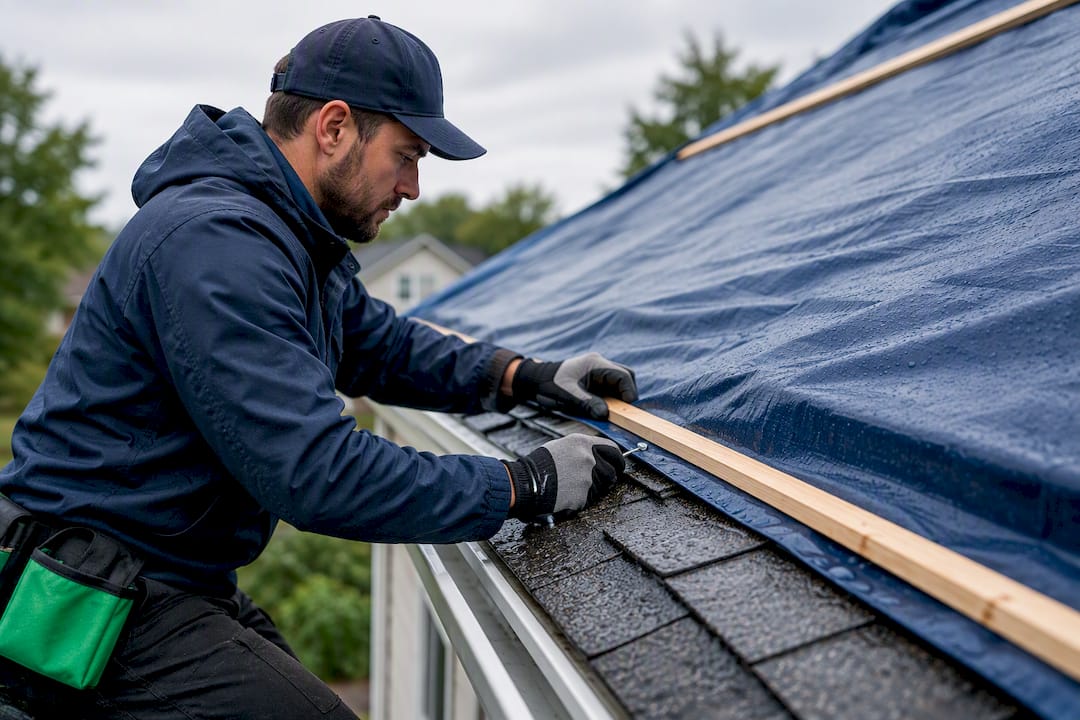
For tarping, use a heavy-duty tarp rated for outdoor use, not a thin painter’s drop cloth. Extend it past the roof ridge and down over the eaves so wind can’t get underneath, and anchor it with furring strips screwed into the roof deck rather than nails punched straight through the tarp.
- Avoid letting the tarp pool water. Pooled water finds a way in eventually.
- Move furniture, electronics, and valuables away from active leak paths.
- Set buckets under drips and, if a ceiling is visibly bulging with trapped water, controlled drainage into a bucket beats a surprise collapse.
- Run a dehumidifier or fans in affected rooms to slow mold growth.
Proper tarping technique, extending past the ridge and securing with furring strips, prevents the tarp from failing in the next round of wind. Photograph the tarp installation before and after, and save every receipt for the tarp, fasteners, and any emergency service. Most policies reimburse reasonable mitigation costs. What insurers will not cover is a DIY shingle patch or roof cement smeared over a problem area that hides the real extent of the damage. That kind of quick fix can also complicate the adjuster’s assessment later.
Pro Tip: If a section of roof is too steep, too high, or too damaged to tarp safely yourself, call an emergency board-up or tarping service instead of risking a fall. A tarp installed by a professional beats no tarp at all.
What Should I Say When I Call My Insurance Company?
Call your insurer within 24 to 48 hours of the storm. Waiting a week or more gives some adjusters a reason to question the timeline, and starting the claim promptly protects you if there’s any dispute later about when the damage actually happened.
On that first call, get answers to these questions:
- What is my claim number, and who is my assigned adjuster?
- When will the adjuster schedule an inspection?
- Is my deductible a flat dollar amount or a percentage, and does it apply per occurrence?
- Does my policy pay Replacement Cost Value (RCV) or Actual Cash Value (ACV), and how does depreciation get released?
- Are my temporary repairs, like tarping, reimbursable, and what receipts do you need?
Write down the adjuster’s name, direct number, and every date discussed. Logging these details matters because insurance claims often stretch across weeks, and memory fades fast once repair estimates start flying around.
When the adjuster arrives, hand over your photo log, video walkthrough, and NOAA storm report. It also pays to line up an independent licensed roofer’s estimate before or shortly after that visit. Adjusters sometimes miss hidden decking or flashing damage during a quick walk-through, and a second set of eyes with a written scope gives you leverage if the insurer’s number comes in low. Full details on how the claim process typically unfolds are in our guide to the roof insurance claim process.
If the settlement offer still feels short after that, request a written explanation of the denial or reduction and ask what additional documentation would change it. Many policies allow a formal appraisal process or a second adjuster review before you need to involve an attorney.
How Do I Choose a Roofer After Storm Damage?
Storms bring out door-knocking “storm chasers” almost as fast as the wind clears. Before you sign anything, verify:
- A valid state contractor license and current liability insurance, with the policy number available on request
- A local business address, not just a P.O. box or an out-of-state phone number
- References or reviews you can actually check, not just photos on a truck door
Once you’ve picked a contractor, a full inspection should cover the decking, underlayment, flashing around chimneys and vents, ventilation, and every roof penetration, backed by photos and a written scope of work. Chimney flashing in particular fails in a handful of predictable ways, which our flashing repair guide breaks down in more detail. Insist on a line-item estimate that spells out materials, labor, permit costs, and cleanup, not a vague one-page quote.
The repair process itself generally moves through the same stages: tear-off of the damaged section, decking replacement where the deck is soft or rotted, new underlayment, installation of the new roofing material, flashing replacement, ventilation checks, full site cleanup, and a final walkthrough with you before the crew leaves.
Whether you need a targeted repair or a full replacement usually comes down to three things: the roof’s age, how much hidden decking damage the tear-off reveals, and how widespread hail bruising is across the field of the roof. A 6-year-old roof with damage on one slope is often a repair. A 20-year-old roof with bruising scattered across every plane is usually a replacement. Our breakdown of repair versus replacement walks through those decision points in more depth, and a contractor selection guide from an outside source can round out your vetting checklist.
Pro Tip: Ask any contractor how they handle sealant and repair products on flashing and penetrations before work starts. Manufacturers like GAF make specific sealants for different surfaces, and using the wrong one is a common shortcut that fails within a season.
How Long Does Storm Damage Roof Repair Take?
The first 24 to 48 hours belong to safety, documentation, and temporary protection. After that, the timeline shifts to the insurer’s schedule, then the contractor’s.
- Adjuster inspection: typically scheduled within a few days to two weeks after your claim is opened, depending on regional storm volume.
- Contractor scheduling: once the claim is approved, licensed roofers in storm-hit areas often book out several weeks, since labor gets tight fast after a regional event.
- Materials and permits: availability and local permit turnaround both affect start date, especially after wide-area hailstorms.
- Final inspection and closeout: happens after the last shingle and flashing piece is installed, once the crew completes the walkthrough with you.
Cost swings mainly on three levers: how much decking needs replacing, current material and labor pricing in your area, and how backed up local crews are after a major storm. On the insurance side, remember your payout usually arrives in two pieces: an initial check based on ACV, then a second depreciation payment once the work is done and documented, plus any approved supplements for damage discovered mid-repair.
What Bucks County Homeowners Get Wrong About Storm Repairs
The biggest mistake we see after a storm isn’t skipping documentation. It’s letting the first roofer who knocks on the door handle both the estimate and the repair, with no second opinion in between. That contractor has every incentive to write the estimate that gets them the job, not the one that reflects what your insurer will actually cover.
Three things we tell every homeowner: document before you touch anything, be wary of any crew that shows up uninvited offering a “free inspection” right after a storm, and always get an independent licensed inspection separate from whoever you eventually hire. When we document storm damage for insurance purposes, we build a dated photo log, a written line-item scope, and a formatted estimate that adjusters can actually work from, not a one-page sketch on a clipboard.
— Jeff
Get a Local Storm Damage Roof Inspection From JAG
Most homeowners calling around after a storm end up choosing between a national franchise crew that’s in town for the season or a solo contractor working out of a truck. There are local options for storm damage roof repair in Bucks County and the surrounding communities offering documented damage reports, line-item scopes for adjusters, and ongoing local presence after repairs.

We handle everything from the initial inspection through permanent repair or full roofing and storm damage restoration, including flashing, decking, and ventilation work most crews rush past. If your home also took siding, window, or gutter damage in the same storm, our exterior renovation services cover that in the same visit. Request a free inspection through our main service page and get a written, photo-backed estimate before you sign anything with anyone.
Sources
For technical roofing standards, the NRCA is a solid reference. For storm verification, check your local NOAA office, and revisit our roof insurance claim process guide for claim specifics.
- Storm Damage Roof Repair: The Complete Homeowner’s Guide (2026) | WeatherShield
- Storm Damage Roof Repair: What to Do | CPS
- Roof Repair Storm Damage: A Step-by-Step Recovery Guide | Defend Roofing
FAQ
What Are the First Steps After Storm Roof Damage?
Stay off the roof, check your attic and ceilings for leaks, and document everything with photos and video before making any temporary repairs. Then call your insurer to open a claim, ideally within 24 to 48 hours of the storm.
Should I Get My Own Roof Inspection Before the Adjuster Arrives?
Yes. An independent licensed roofer often catches hidden decking or flashing damage that adjusters miss during a quick walk-through, and a written estimate gives you leverage if the insurance offer comes in low.
How Do I Know if My Roof Needs Repair or Full Replacement?
It depends on the roof’s age, how much decking is damaged underneath the surface, and how widely hail bruising or wind damage is spread across the roof. A newer roof with isolated damage is usually a repair; an older roof with damage on every slope typically points to replacement.
What Does JAG Home Enhancements Charge for Storm Damage Repairs?
Pricing depends on the scope of decking, materials, and labor needed after inspection, so current estimates aren’t published online. Request a free inspection through the JAG Home Enhancements site to get a written, line-item quote for your specific damage.
Can a Tarp Really Protect My Roof Until Repairs Start?
A properly installed heavy-duty tarp, extended past the ridge and eaves and secured with furring strips, can hold up through additional wind and rain while you wait for permanent repairs. It’s not a permanent fix, but it buys you time and protects your claim.