

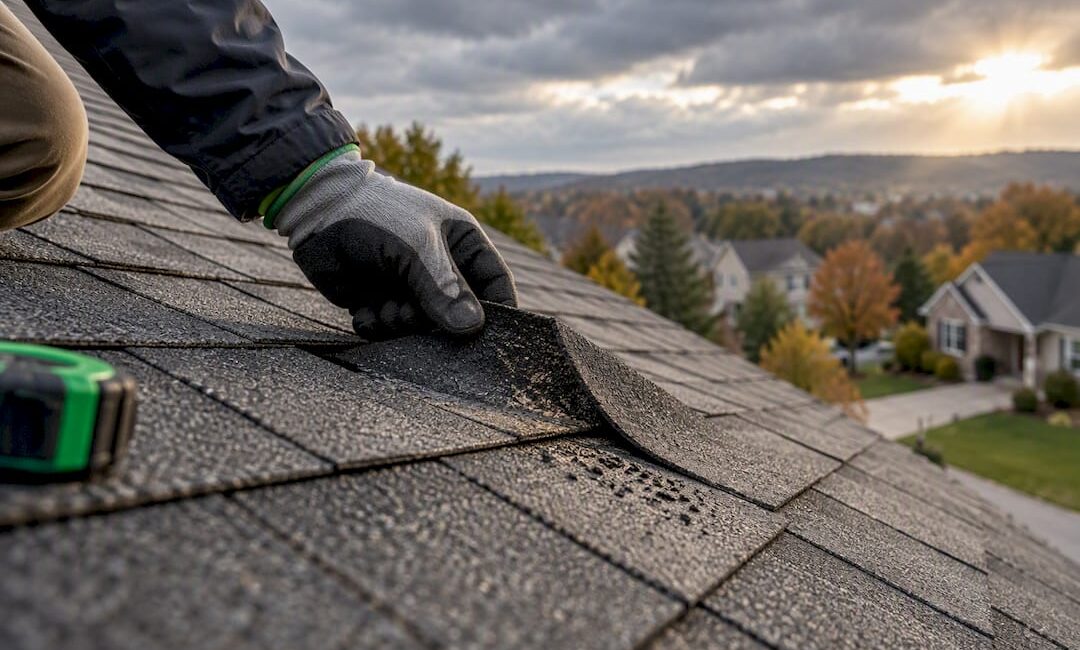
If a storm caused your roof damage, and you document it correctly, your claim is typically payable under a standard Pennsylvania homeowners policy. The first move matters most: photograph everything before you touch a thing, call your insurer promptly, and get a tarp or temporary fix in place to stop further damage. Pennsylvania insurers work under regulated response deadlines, so acting fast protects both your roof and your claim.
TL;DR:
- Document damage with photos and videos from the ground immediately after the storm, focusing on visible exterior and interior signs of storm-related damage.
- A qualified roof inspection before filing can prevent claim denials due to ambiguous cause or minor-looking damage.
- Insurers typically pay either actual cash value or replacement cost value, with the latter involving a two-payment process that includes recoverable depreciation.
- Having a local contractor present during the adjuster’s inspection helps ensure all scope items, especially code-mandated repairs, are accurately accounted for.
- Acting fast, keeping detailed records, and verifying contractor credentials are essential to maximize your claim payout and avoid issues with storm chasers or delayed responses.
Table of Contents
- How Do I Know If My Roof Damage Is From a Storm?
- What Should I Do in the First 24 to 72 Hours?
- How Do I File a Roof Insurance Claim in Pennsylvania?
- What Does Homeowners Insurance Actually Pay for Roof Damage?
- Why Should a Contractor Be at the Adjuster Inspection?
- How Do I Avoid Storm Chasers After a Big Storm?
- What Are Pennsylvania’s Claim Response Deadlines?
- What If My Roof Claim Is Denied or Underpaid?
- What Does a Local Contractor Check That Adjusters Might Miss?
- A Straightforward Path Through a Stressful Process
- Get a Local Inspection Before You Call the Adjuster
- Where to Verify These Rules Yourself
- Sources
- FAQ
How Do I Know If My Roof Damage Is From a Storm?
Wind and hail leave patterns that wear-and-tear doesn’t. Look for shingles that are creased, lifted, or missing in a directional pattern (a sign of wind), or small circular bruises and granule loss scattered across the roof (classic hail). Fallen branches or debris strikes usually leave a visible impact point with cracked or punctured material right at the contact spot.
Inside your home, watch for new water stains on ceilings, damp insulation in the attic, or daylight showing through the roof deck. These interior clues often support a storm claim even when the exterior damage looks minor from the ground.
Cause matters more than how bad the damage looks. A minor-looking dent from hail during a documented storm is often covered, while gradual wear from years of sun exposure typically is not, regardless of severity. That’s why matching your damage to an actual weather event is so important.
- Missing, curled, or creased shingles in a wind pattern
- Hail bruising or soft spots you can press with a finger
- Cracked flashing around chimneys, vents, or skylights
- Ceiling stains, attic dampness, or visible daylight through the deck
When you’re unsure, a qualified roof inspection before you file can save you from a denied claim over ambiguous cause-of-loss.
What Should I Do in the First 24 to 72 Hours?
The actions you take right after a storm often determine how smoothly your claim moves. Insurers expect homeowners to document damage and prevent it from getting worse, and both steps protect your payout.
- Check for safety first. Never climb onto a wet, sagging, or storm-damaged roof. Photograph what you can see from the ground or use a zoom lens.
- Capture time-stamped photos and video of every visible damage area, plus wide shots showing the whole roof and property.
- Pull the storm record. The NOAA NCEI Storm Events database lets you confirm the date, location, and type of storm that hit your area, which strengthens your claim narrative.
- Arrange temporary protection, like a tarp over exposed areas, to prevent interior water damage.
- Save every receipt tied to temporary repairs. Most policies reimburse reasonable mitigation costs.
Pro Tip: Keep a simple written log with dates, times, and short notes on what you observed each day. Adjusters trust a clear paper trail more than memory alone.
For hail-specific documentation, see our guide on photographing hail damage within the critical first three days.
How Do I File a Roof Insurance Claim in Pennsylvania?
Filing follows a fairly predictable sequence once you’ve documented the damage and stabilized the roof.
Before you call: gather your policy number, the date of loss, your photos, and, if you already have one, a written inspection report from a contractor. Having this ready speeds up the intake call significantly.
When you call the claims hotline, you’ll report the loss, describe the damage, and receive a claim number. Write this number down immediately. From there, most insurers schedule an adjuster visit within one to two weeks, though weather-related surges can push that timeline out.
What happens next:
- The adjuster inspects the roof and interior damage, often photographing the same areas you already documented.
- You’ll likely be asked for additional records, like your photo log, receipts, and any contractor estimates.
- The insurer issues a written estimate outlining what’s covered and the payment amount.
- You review that estimate against your own contractor’s findings.
- If items are missing, you submit a supplement request with supporting documentation.
Reviewing the adjuster’s estimate line by line is where many homeowners lose money without realizing it. A detailed breakdown of the claim process can help you spot gaps before you sign off. Local claims guidance also recommends keeping a contractor in the loop throughout, since their scope estimate often catches items the adjuster’s estimate leaves out.
What Does Homeowners Insurance Actually Pay for Roof Damage?
Most Pennsylvania policies pay on either an Actual Cash Value (ACV) or Replacement Cost Value (RCV) basis, and the difference changes your final check significantly.
ACV pays the depreciated value of your roof. If your 15-year-old roof has a 30-year lifespan, the insurer subtracts age-related wear from the replacement cost before paying you.
RCV pays the full cost to replace the roof with similar materials, but it’s usually released in two payments:
- An initial check for the depreciated (ACV) amount
- A second check for the recoverable depreciation once repairs are complete and you submit final invoices
That two-stage structure catches a lot of homeowners off guard. Skip the second submission, and you leave money on the table that your policy already entitles you to.
- Confirm whether your policy is RCV or ACV on the declarations page
- Save every invoice and receipt from your contractor to claim recoverable depreciation
- Know your deductible amount before the adjuster visit
- Check for roof-age endorsements, which some PA carriers add to older roofs
Pennsylvania has no mandatory roof-matching law, so if only part of your roof is damaged, matching the rest of the roof to the repaired section is negotiated, not guaranteed. That’s a detail worth raising directly with your adjuster rather than assuming.
Why Should a Contractor Be at the Adjuster Inspection?
Adjusters cover a lot of ground in a single day, and roofing scope details are easy to miss without someone who knows what to look for. Having your own contractor present, walking the roof alongside the adjuster, tends to produce a more complete and accurate estimate.
Line items adjusters commonly miss or underestimate include:
- Underlayment and ice barrier replacement
- Flashing around chimneys, valleys, and skylights
- Starter course shingles along eaves
- Proper ridge and soffit ventilation
- Disposal fees and permit costs required by local code
If your estimate is missing these, you’re not stuck. Your contractor can document each missing item with photos and a written line-item scope, then submit that as a formal supplement request to the insurer. This is standard practice, and insurers expect it, especially on older or complex roofs where the first estimate rarely captures everything. Reviewing PA roofing code requirements beforehand helps you recognize when a code-mandated item, like an ice barrier, has been left off the estimate entirely.
How Do I Avoid Storm Chasers After a Big Storm?
After any major storm, out-of-state contractors show up fast, offering rock-bottom quotes and pressuring homeowners to sign on the spot. These “storm chasers” often disappear once they’ve been paid, or they do work so poor it creates new insurance headaches down the road.
Red flags include door-to-door solicitation right after a storm, out-of-state license plates, demands for full payment upfront, and pressure to sign before you’ve even called your insurer.
Before hiring anyone, verify:
- Their business is registered as required under Pennsylvania’s Home Improvement Consumer Protection Act, searchable through the Attorney General’s office
- Manufacturer certifications for the shingle brand they plan to install
- A physical local business address, not just a phone number
Insist on a written contract that spells out warranty terms, who pulls the permit, cleanup responsibilities, and a payment schedule tied to project milestones, never full payment upfront.
Pro Tip: A reputable local contractor will walk your roof with you and explain findings in plain language, not rush you toward a signature.
What Are Pennsylvania’s Claim Response Deadlines?
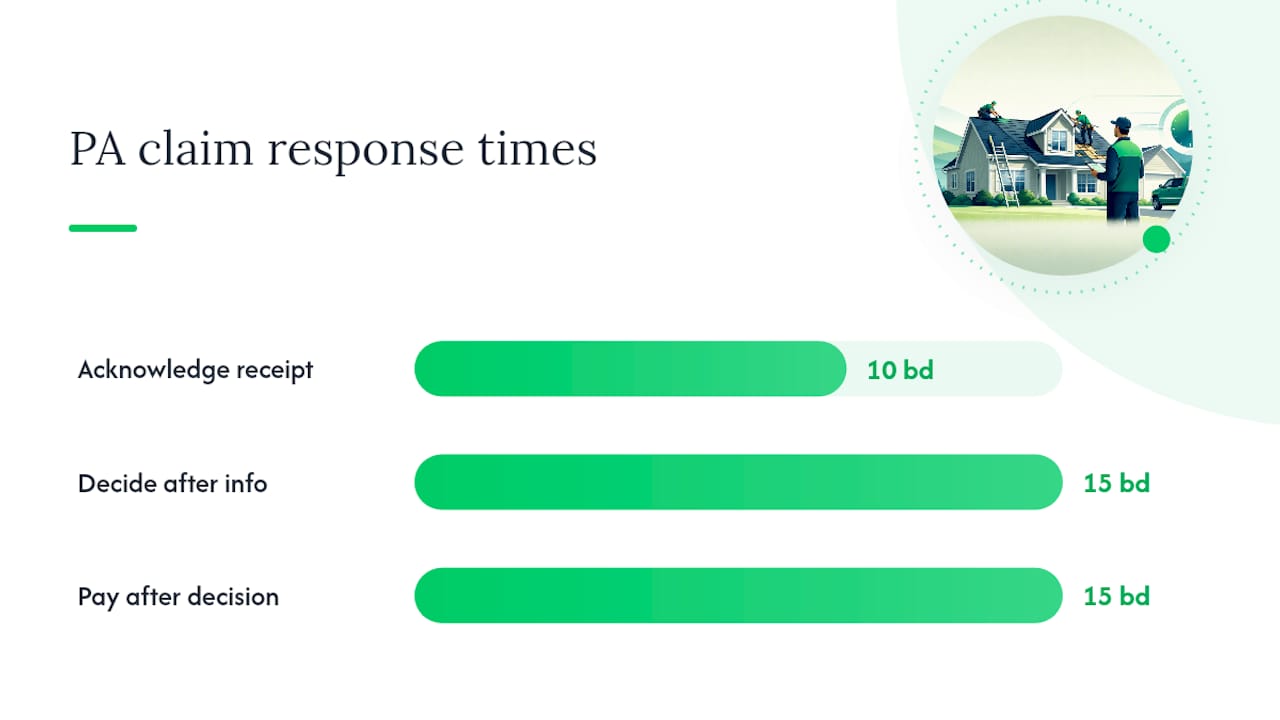
Pennsylvania insurance regulations set specific windows insurers must follow once you file. Knowing these numbers helps you recognize when a carrier is dragging its feet.
| Claim stage | Regulatory deadline |
|---|---|
| Acknowledge receipt of claim | 10 business days |
| Decide on claim after receiving necessary information | 15 business days |
| Issue payment after the decision | 15 business days |
Beyond these state rules, check your own policy’s declarations page for two things: the window you have to report damage after it occurs (often one year, but it varies by carrier) and any suit-limitation clause that shortens how long you have to sue over a denial. The Pennsylvania Insurance Department’s disaster guide is the best place to confirm current consumer protections tied to these timelines.
Keep a simple written timeline: date of loss, date filed, date acknowledged, date of adjuster visit, date of decision. If any stage runs past its window with no explanation, that’s your cue to follow up in writing.
What If My Roof Claim Is Denied or Underpaid?
A denial isn’t the end of the road. It’s the start of a different process.
- Read the denial letter closely and request the adjuster’s complete inspection report, including photos, so you know exactly what reasoning was used.
- Get an independent inspection from a contractor who can document damage the adjuster may have missed or misread.
- Submit a supplement with photo evidence and a written scope if the dispute is about missing items rather than outright denial.
- Invoke the appraisal clause when the disagreement is purely about the dollar amount. Each side picks an appraiser, and an umpire settles disputes between them, which resolves valuation disagreements faster than a lawsuit, though it doesn’t apply if the insurer denies coverage outright.
- File a complaint with the Pennsylvania Insurance Department if you suspect unfair handling, or consult an attorney about Pennsylvania’s bad-faith statute if the delay or denial seems unreasonable.
What Does a Local Contractor Check That Adjusters Might Miss?
Local roofing crews know the code items Pennsylvania inspectors actually enforce, and that knowledge shapes how JAG Home Enhancements approaches every storm inspection. We check for proper ice barrier installation along eaves, adequate attic ventilation, correctly sealed flashing at every roof transition, and code compliance that older homes in Bucks County frequently lack.
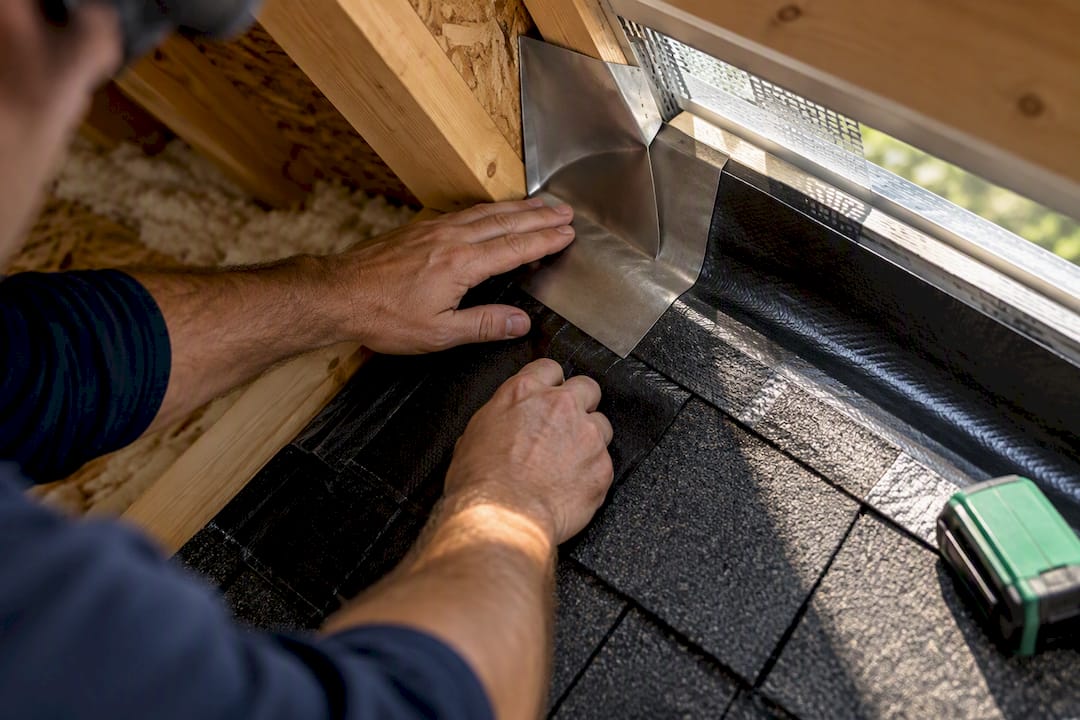
When we document damage for a claim, we build a photo set that pairs wide establishing shots with close-up detail shots of each affected area, organized into a line-item scope that mirrors how insurers structure their own estimates. That structure makes supplements easier to approve, because the adjuster is comparing apples to apples instead of untangling a stack of random photos.
A Straightforward Path Through a Stressful Process
Storm damage claims feel overwhelming mostly because homeowners don’t know what order to do things in. Document the damage before you touch anything. Get a tarp up if water is getting in. Call your insurer the same day if you can, and schedule a contractor inspection before the adjuster shows up, not after.
Keep every photo, receipt, and note. Vet any contractor locally before you sign anything. We’ve walked enough Bucks County roofs after a storm to know that the homeowners who come out ahead are the ones who moved fast and kept good records.
— Jeff
Get a Local Inspection Before You Call the Adjuster
Local contractors provide homeowners ongoing support after a storm, unlike transient storm-chasing crews from out of state. Instead of a rushed estimate scrawled on a clipboard, we build a documented inspection with organized photo evidence and a line-item scope that matches how Pennsylvania insurers actually evaluate claims.
Our roof repair and storm damage services cover the full arc of a claim: the initial inspection, photo and scope documentation you can hand directly to your adjuster, support attending that adjuster meeting, and permit-ready repair work once your claim is approved. We also help homeowners track recoverable depreciation so the second payment doesn’t get lost in the paperwork. If your roof took a hit this season, scheduling a free inspection before you file can help you walk into that adjuster meeting with real documentation instead of guesswork.
Where to Verify These Rules Yourself
- Pennsylvania Insurance Department’s natural disaster guide for coverage rules and consumer steps
- PA public adjuster licensing information to confirm a public adjuster’s credentials
- NOAA NCEI Storm Events database to confirm storm dates and severity in your area
This article is general information, not a substitute for advice from a qualified financial advisor. Consult a qualified financial professional about your own circumstances before acting on anything here.
Sources
- Pa
- PA Insurance Department — Public adjuster license
- NOAA NCEI — Storm Events
- RoofVista — PA roof insurance claims guide
FAQ
How Do Roof Insurance Claims Work in Pennsylvania?
You report the damage to your insurer, receive a claim number, and an adjuster inspects the roof, usually alongside your own contractor. The insurer then issues a written estimate, and you can request supplements for any missing scope items before final payment.
What Should I Avoid Saying to a Roof Insurance Adjuster?
Avoid guessing about the cause of damage or admitting you’ve noticed the problem for a long time, since insurers look for statements suggesting gradual wear rather than a sudden storm event. Stick to what you directly observed and let your photos and the NOAA storm record speak for the timeline.
What Is the 25 Percent Rule for Roofing?
Some contractors and insurers informally reference a rule that if a substantial portion of one roof slope is damaged, the whole slope (sometimes the whole roof) should be replaced for a uniform result. This isn’t a Pennsylvania statute, since the state has no mandatory matching law, so it’s a negotiating point with your insurer rather than a guaranteed outcome.
How Long Does an Insurance Company Have to Settle a Claim in Pennsylvania?
Pennsylvania regulations require insurers to acknowledge your claim within 10 business days, decide on it within 15 business days of receiving all necessary information, and issue payment within 15 business days of that decision. If your insurer misses these windows without explanation, that’s grounds to follow up in writing or contact the state insurance department.
Can Jaghomesnow Help Document My Roof Claim?
Yes. Jaghomesnow provides inspection, photo documentation, and line-item scope reports that homeowners can bring directly to their adjuster meeting, along with the permit-ready repair work once a claim is approved. Contact us through our roofing services page to schedule a free inspection.